Rostock is a city of two distinct yet inseparable halves. Situated on the banks of the River Warnow, near the Baltic coast of northern Germany, its historic centre is home to imposing medieval churches, colourful merchants’ houses and monumental gateways that recall its prosperous Hanseatic past. A short train ride away, the river meets the Baltic Sea at Warnemünde, where fishing boats bob beside waterfront cafés, cruise ships glide past a broad sandy beach and a lighthouse watches over the harbour entrance. Often overlooked, Rostock and Warnemünde form a delightful pairing, seamlessly combining grand monuments, urban vibes and a rich maritime history, with a relaxing beach atmosphere. There are lots of things to see and do in Rostock and Warnemünde, making it more than worthwhile to spend a few days there.

I visited Rostock for the first time several years ago. However, due to poor weather, I didn’t get to see much of the city. During my recent rail journey through northern Germany, created in partnership with Historic Highlights of Germany, I had the opportunity to revisit, and found a city that was far more layered than I’d expected. It may not possess the perfectly preserved historic centre of Lübeck or the maritime grandeur of Hamburg, but that is part of its appeal. Rostock feels lived-in rather than polished: a university city, working port and former Hanseatic powerhouse whose history emerges gradually as you wander its streets. Add the salty air and seaside atmosphere of Warnemünde, and Rostock becomes an especially rewarding destination for a city break on Germany’s Baltic coast. Together, Rostock and Warnemünde form one of northern Germany’s most rewarding city-and-coast combinations.
A brief history of Rostock
Rostock grew around a settlement on the River Warnow and received city rights in the early 13th century. Its location, with access to the Baltic Sea, soon turned it into an important trading centre. As a member of the Hanseatic League, Rostock became part of the vast commercial network that connected cities across northern Europe. Its merchants grew wealthy, its harbour bustled with ships and warehouses, and increasingly grand brick churches rose above the city.
Rostock’s intellectual importance also stretches back centuries. The University of Rostock was founded in 1419 and is the oldest university in the Baltic Sea region.
Like many German cities, Rostock suffered extensive destruction during the Second World War. Later, as part of East Germany (German Democratic Republic), it developed into a major industrial and shipbuilding centre. The cityscape today is consequently a patchwork: reconstructed medieval landmarks, surviving merchants’ houses, East German buildings and modern developments stand side by side. Rather than diminishing Rostock, these contrasts tell the story of a city that has repeatedly adapted while retaining its maritime identity.
Rostock and Warnemünde walking routes
I’ve included my walking routes and the highlights of Rostock and Warnemünde in the map below:
I stayed at the ScanHotels Stadthafen (more about this hotel below) in the harbour area. From there, I embarked on my walking tour across the city’s northeastern quarter before making my way westward along the medieval city walls to Neuer Markt, in the heart of the historic city centre. I continued westward along Kröpeliner Strasse to the Kröpeliner Tor, and from there, I completed the loop via Lange Strasse and the harbourfront.
Rostock’s eastern quarter
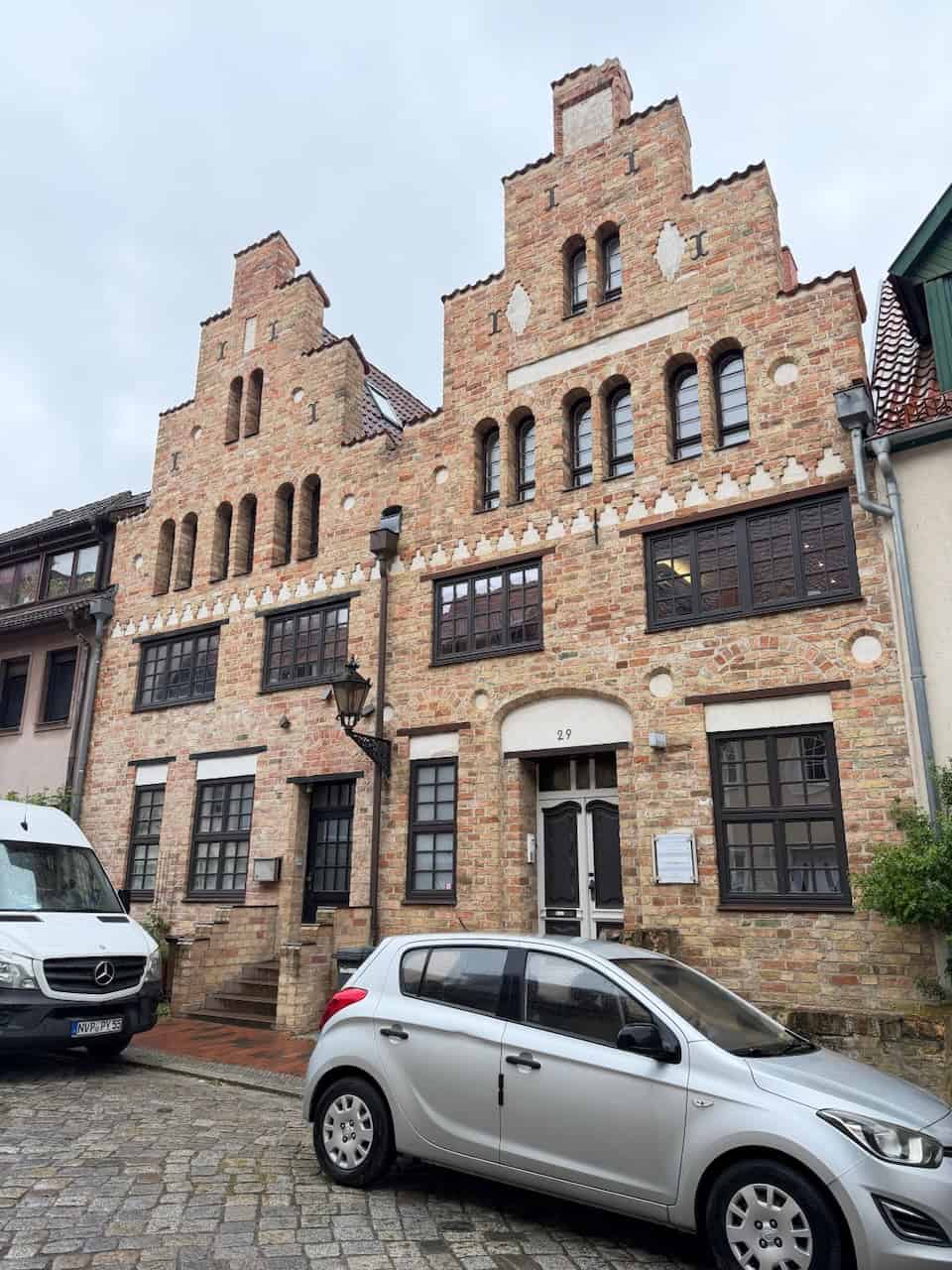
The streets east of Neuer Markt contain some of Rostock’s most atmospheric corners. Here, cobbled lanes wind between restored houses, brick churches and quiet courtyards.
St. Peter’s Church once served as an essential landmark for sailors approaching Rostock. Its tall 117m tower could be seen from far across the flat surrounding landscape, helping ships orient themselves as they navigated towards the River Warnow.
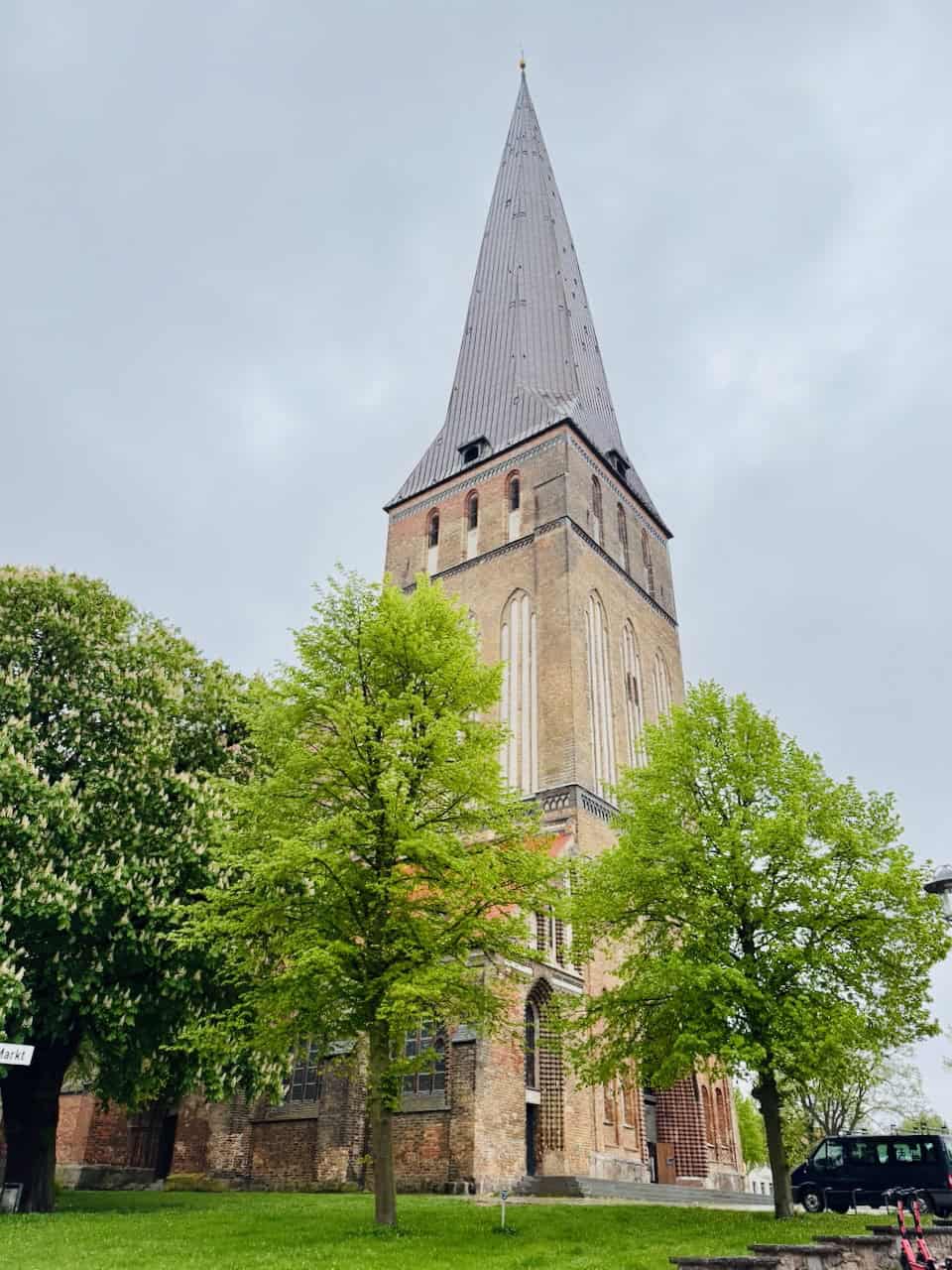
It’s possible to climb the church tower for panoramic views across the old centre, harbour and surrounding districts.
Not far away stands St. Nicholas’ Church. Parts of the building have been converted into homes, making it an unusual example of a medieval church adapted for modern use. It’s a striking illustration of Rostock’s pragmatic relationship with its architectural heritage: old structures are not only preserved but incorporated into contemporary city life.
Medieval city walls
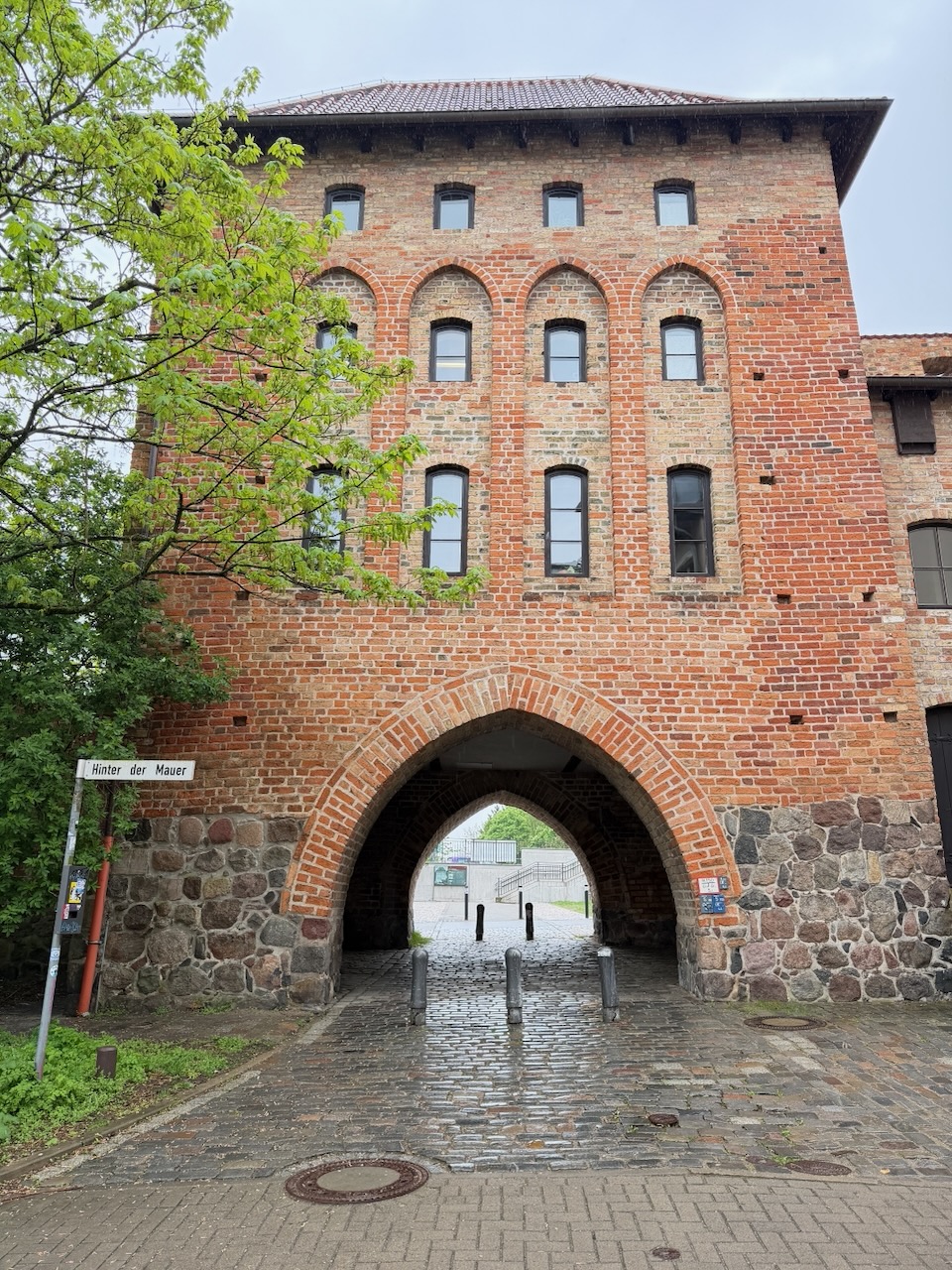
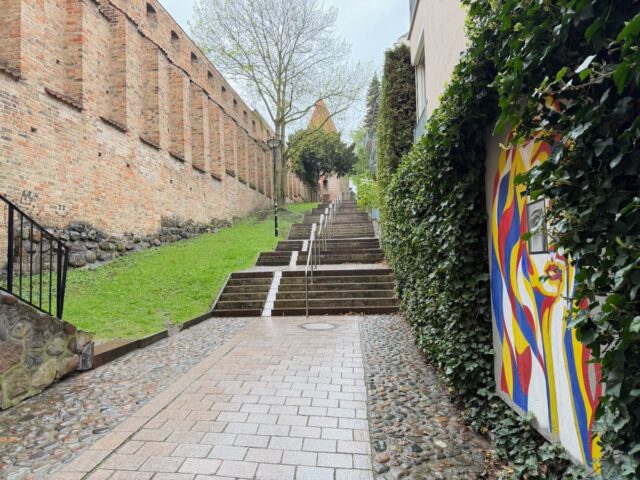
Sections of the old city walls still survive, providing a glimpse of medieval Rostock’s scale. From St. Nicholas’ Church, it’s a short walk to Kuhtor (Cow Gate). Built in the 13th century, it’s one of the oldest city gates and has been beautifully restored. From here, I followed the walls to Steintor.
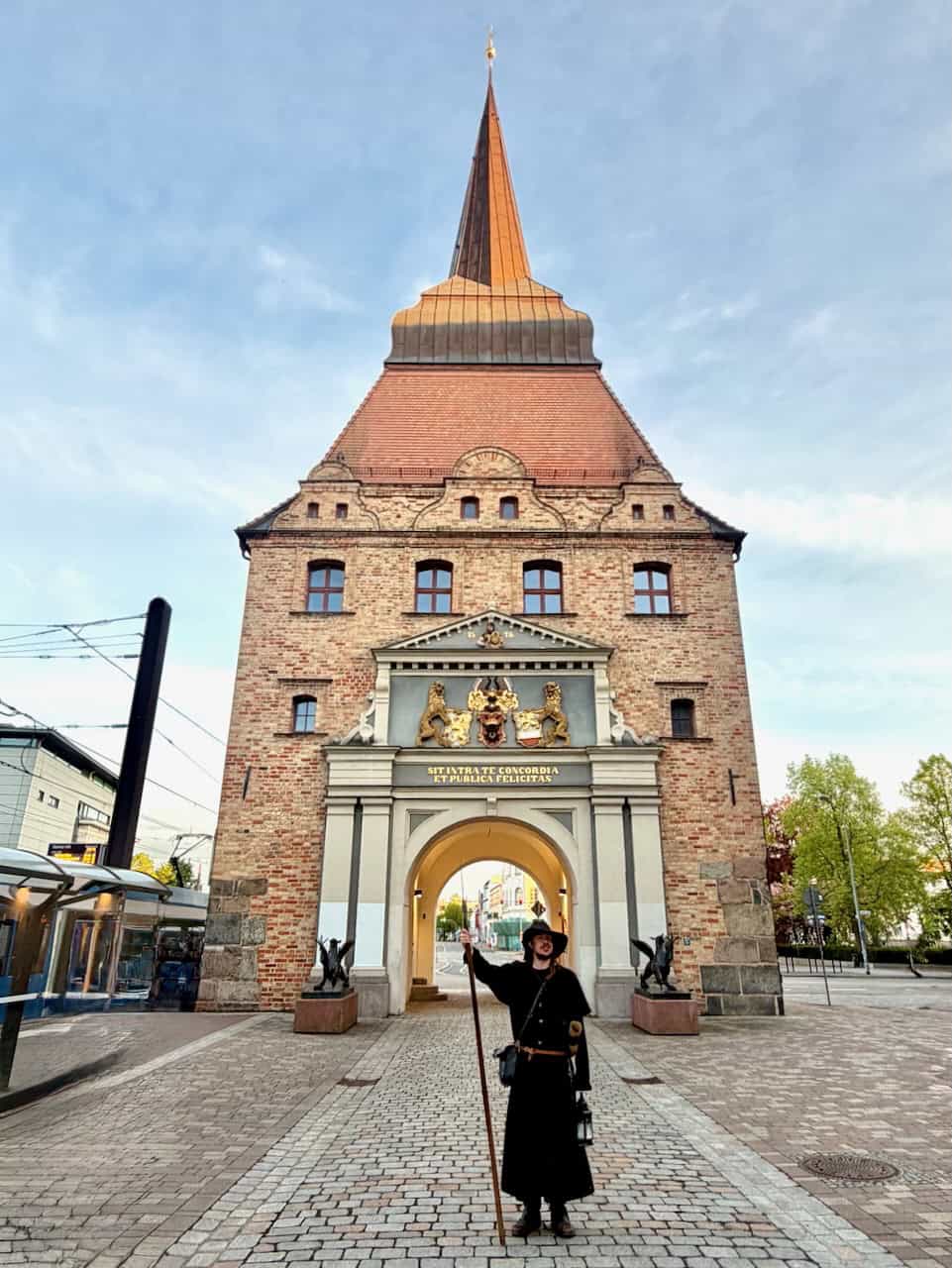
Steintor
The 16th century Steintor (Stone Gate) was built in a Dutch Renaissance style on the site of the former medieval fortifications. It’s an elegant tower guarded by griffin sculptures. Its elaborate Renaissance decoration replaced the austere appearance associated with a purely defensive gateway, showing how Rostock’s priorities shifted as the city became more prosperous.
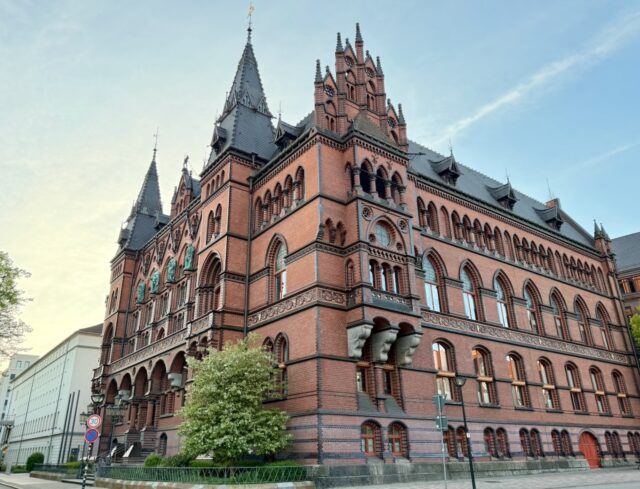
Across the road stands the stunning Neo-Gothic Ständehaus, that houses the Rostock regional court.
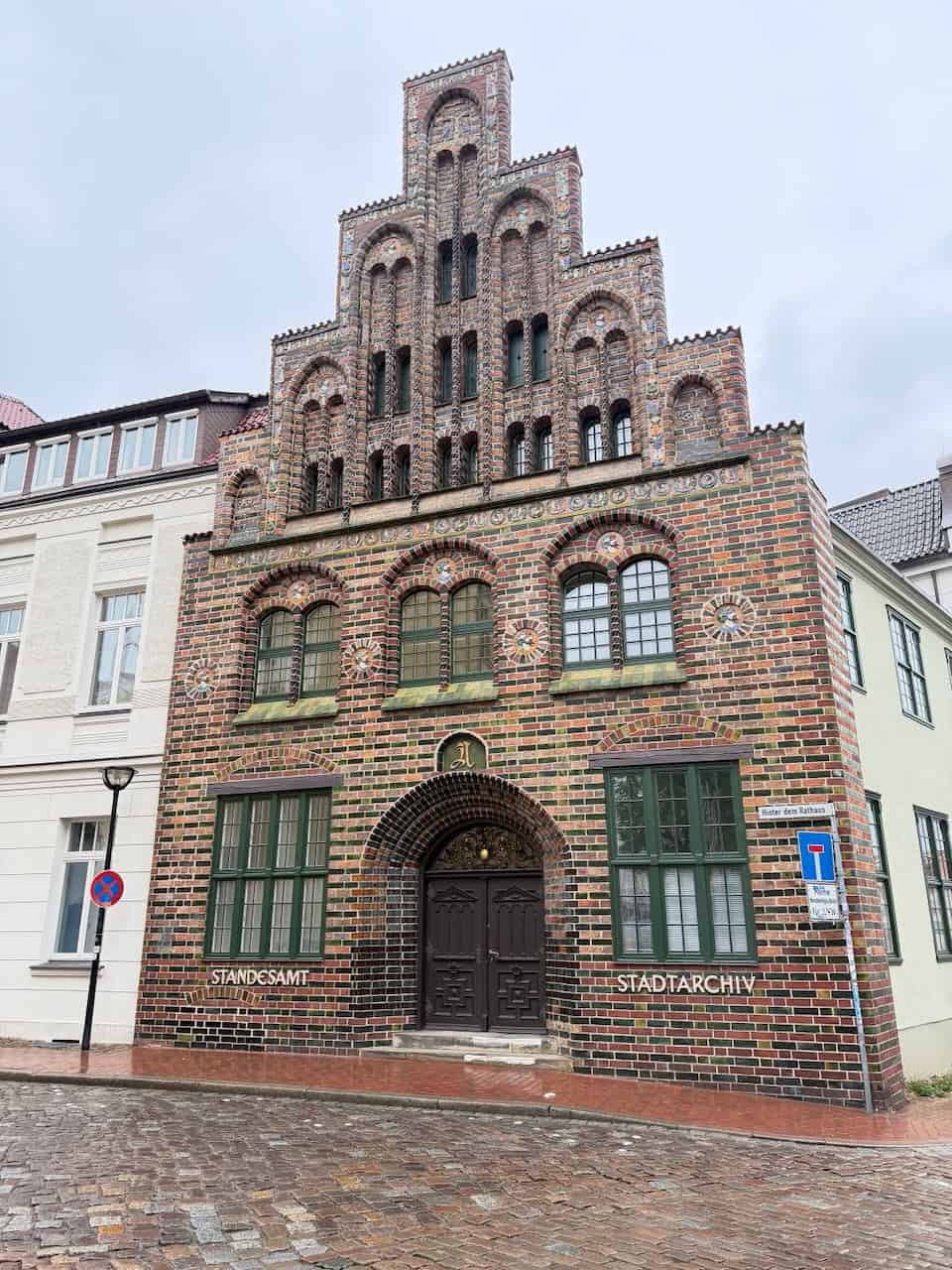
Kerkhoffhaus
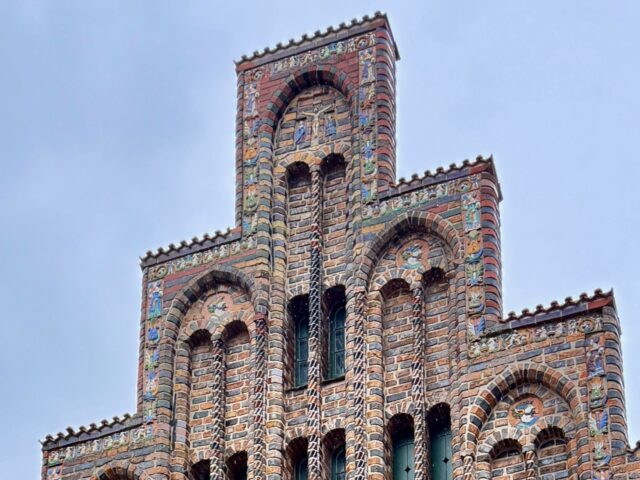
Tucked away behind the Town Hall is one of Rostock’s architectural treasures: the Kerkhoffhaus. It’s easy to miss if you don’t know it’s there, but this late Gothic merchant’s house is one of the city’s most beautiful surviving examples of Hanseatic domestic architecture. Built around 1470 for the wealthy merchant and mayor Berthold Kerkhof, the house reflects the prosperity that trade brought to medieval Rostock. Its stepped gable is richly decorated with glazed terracotta panels and Renaissance ornaments that were added in the early 16th century. These colourful embellishments made the Kerkhoffhaus one of the first buildings in Rostock to embrace Renaissance decoration, signalling a shift away from the more austere Gothic style.
Take a closer look at the façade and you’ll discover that its decorations are surprisingly playful. Alongside dolphins, mythical creatures and classical motifs are terracotta reliefs depicting expressive human faces.
Neuer Markt
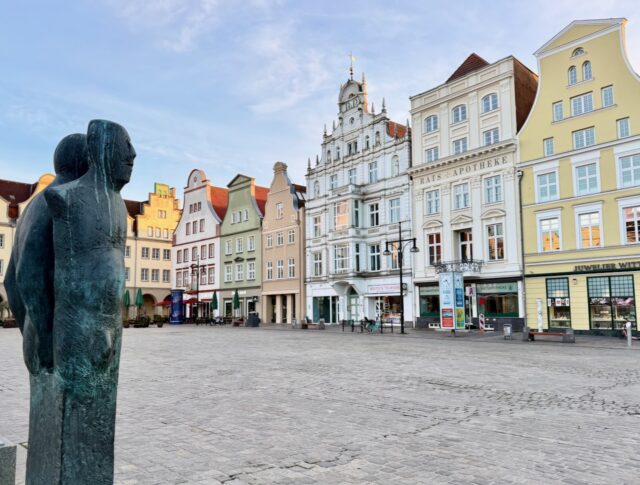
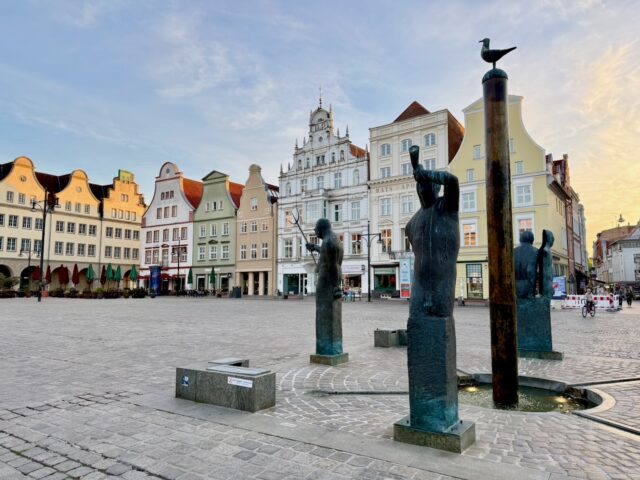
A short stroll from the Kerkhoffhaus lies Neuer Markt, the spacious main square at the heart of the Altstadt (Old Town). Its western side is lined with a row of colourful gabled houses whose pastel façades immediately evoke the city’s merchant past.
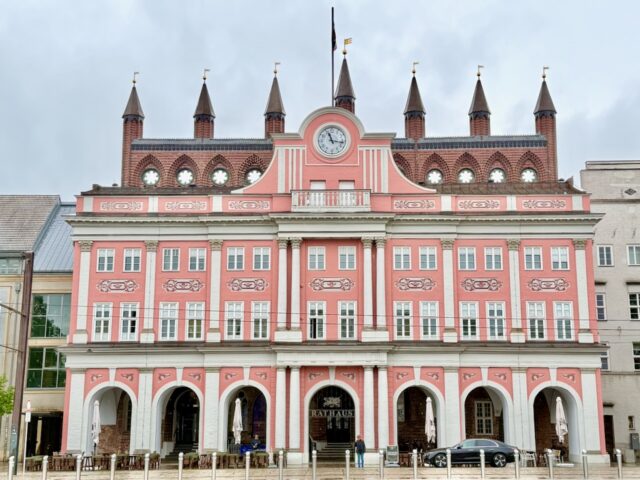
The most prominent building is the Rathaus, or Town Hall. Look closely and you’ll see that its elegant Baroque façade conceals a much older medieval structure. Behind the pink frontage rise a series of Gothic turrets, reminders of the original 13th-century brick building. This architectural layering is characteristic of Rostock. Buildings were enlarged, rebuilt and given fashionable new façades while earlier structures were retained behind them.
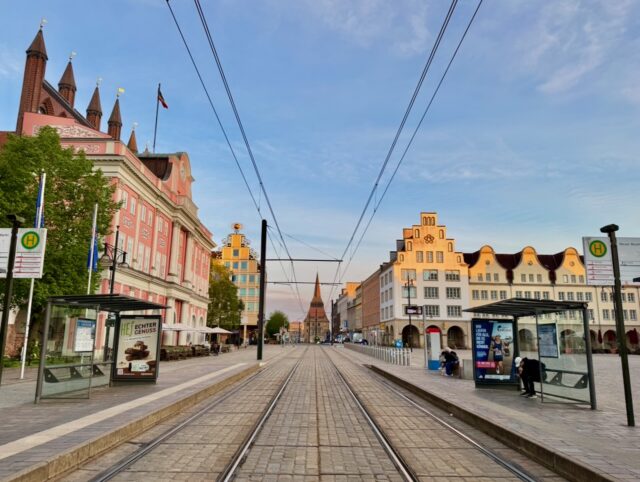
Neuer Markt is also an excellent spot to pause at a café and watch the rhythm of daily life. Trams cross the square, university students cycle past and locals browse the nearby shops.
Kröpeliner Strasse
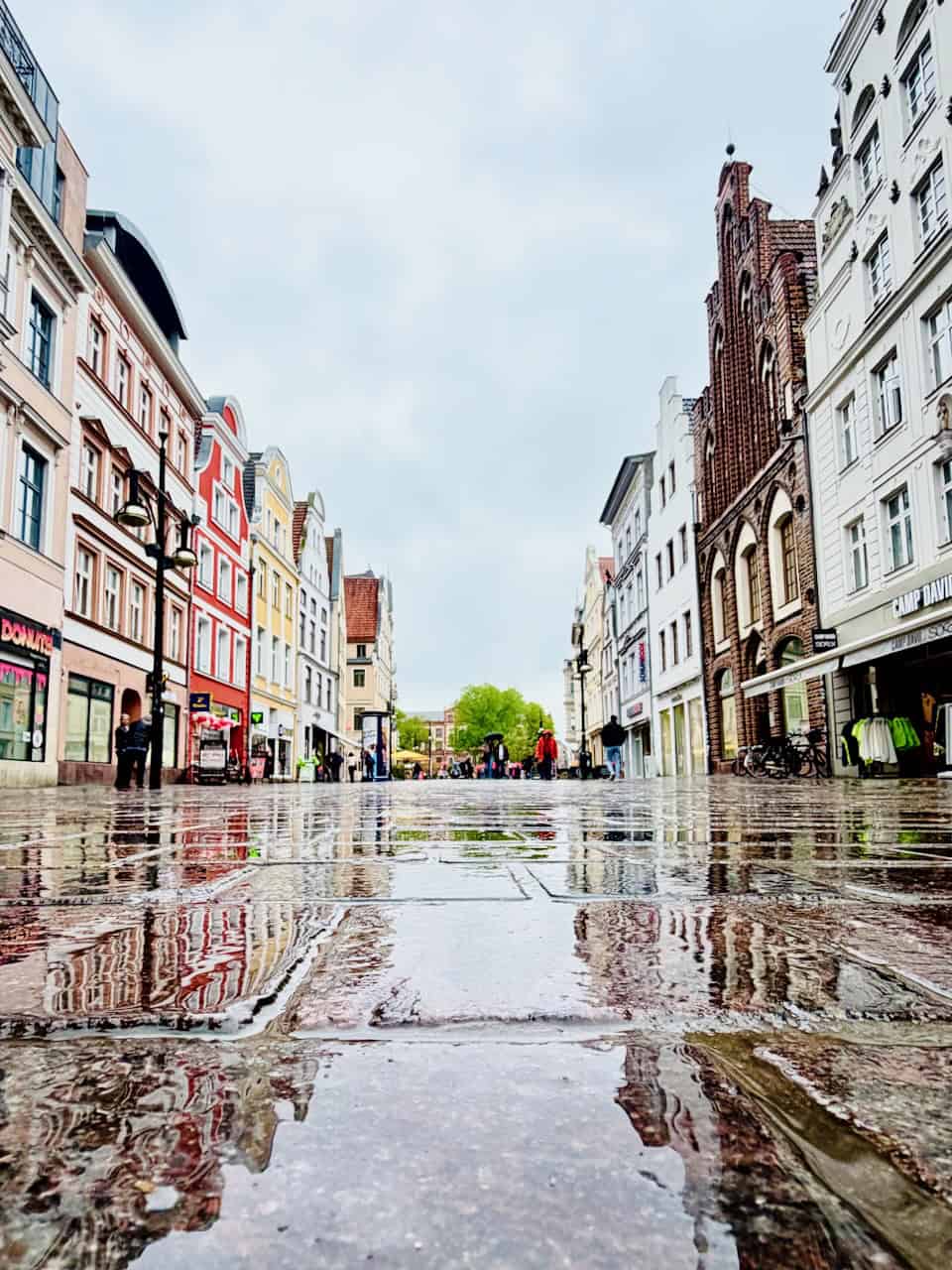
From Neuer Markt, I continued along Kröpeliner Strasse, Rostock’s principal shopping street. Though lined with modern stores, it contains numerous historic façades, ornate gables and narrow side streets that reward closer inspection.
One of the most beautiful buildings is the university’s main building at Universitätsplatz. Its richly decorated 19th-century façade is filled with arches, columns, statues and carved details.
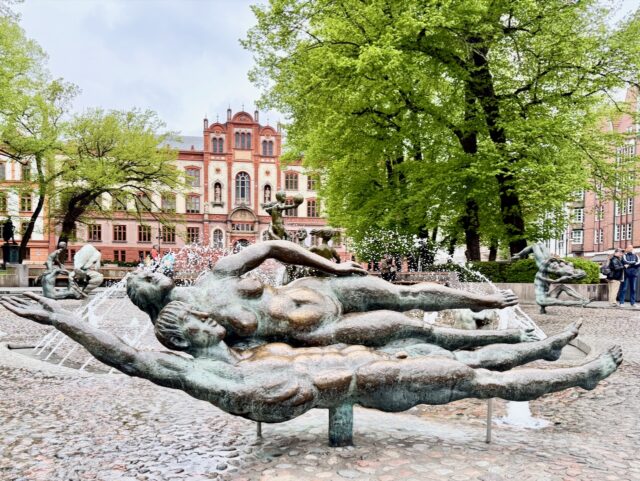
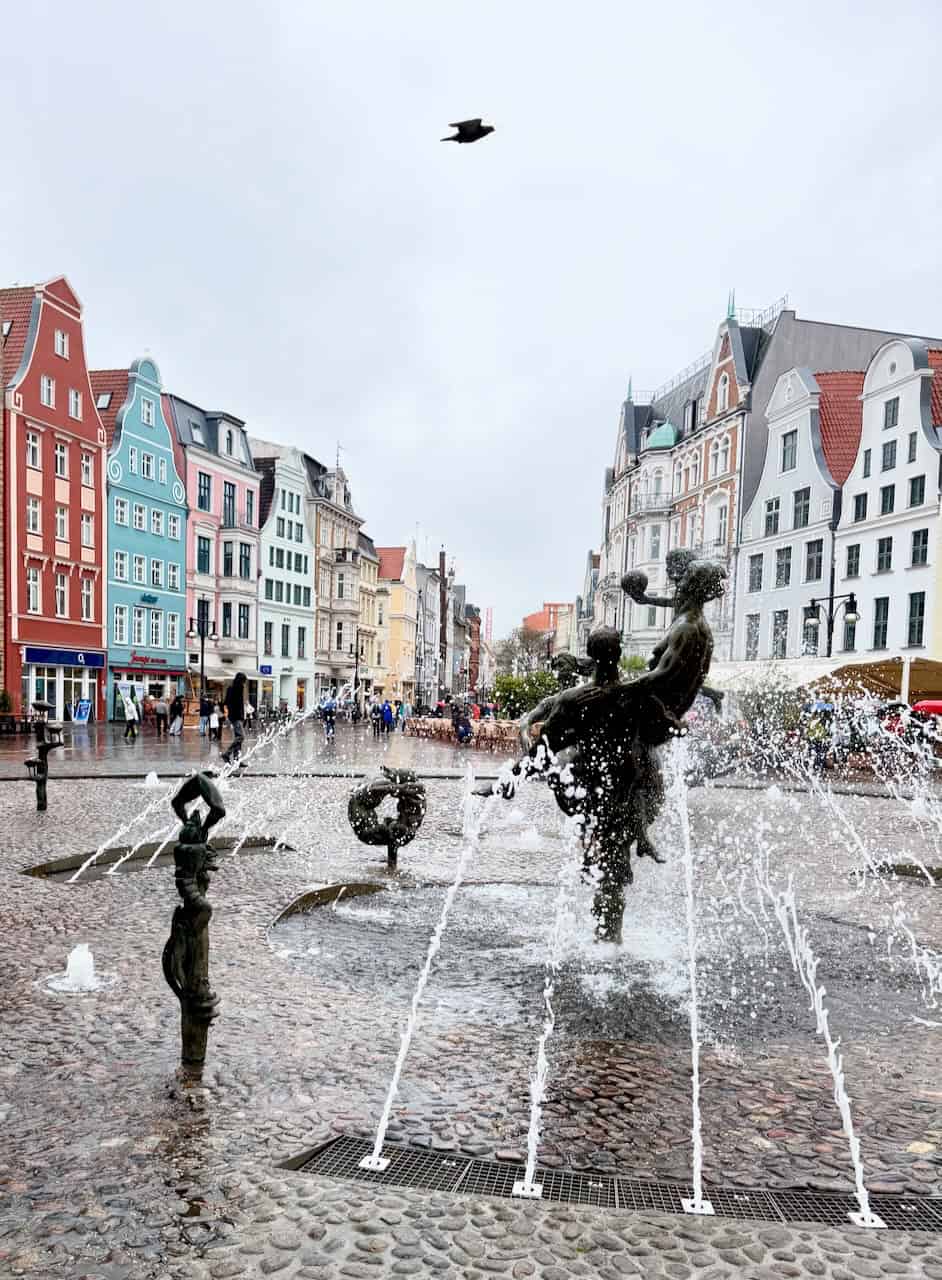
The busy square in front of it captures another side of Rostock: young, energetic and unmistakably shaped by its student population. In one corner of the square is the ‘Zest for Life’ fountain, which forms a lively modern contrast to the historic surroundings. Bronze figures splash and tumble through the water, and on warm days, children play among them while people gather on the surrounding steps.
Kulturhistorisches Museum
To delve deeper into Rostock’s past, visit the Kulturhistorisches Museum, housed in the former Convent of the Holy Cross. A short walk from Universitätsplatz, its peaceful cloisters and historic rooms are attractions in themselves, while the collections span religious art, paintings, decorative objects and artefacts connected with the city’s everyday life.
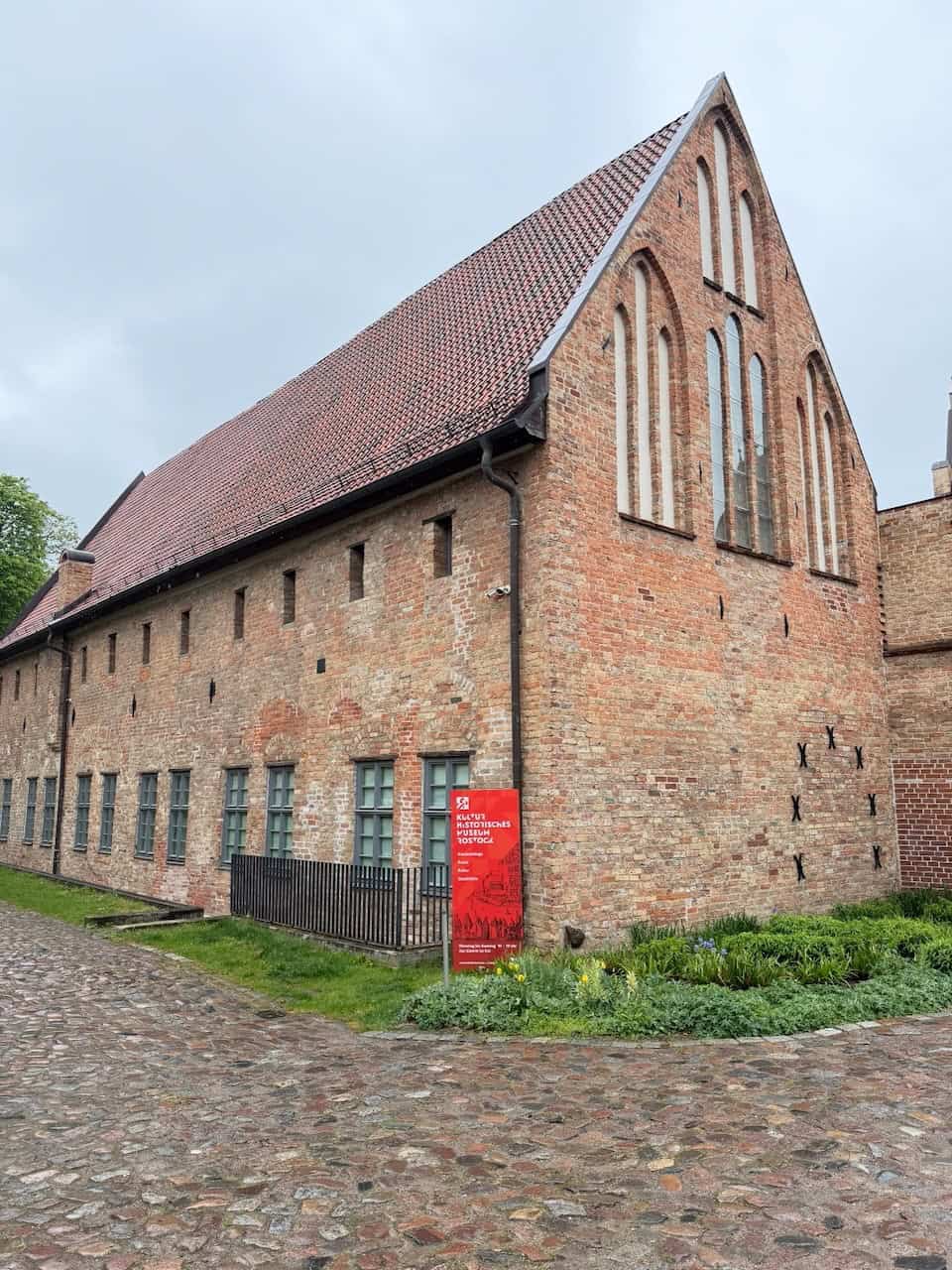
The adjacent convent church is another lovely example of the Brick Gothic tradition that defines so much of the Baltic region’s architectural heritage.
Kröpeliner Tor
From the Kulturhistorisches Museum, I followed the old city walls to the Kröpeliner Tor, another of Rostock’s surviving medieval gates.
Lange Strasse
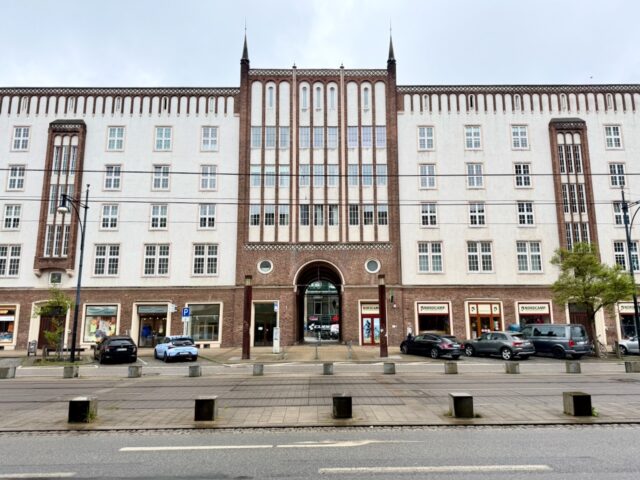
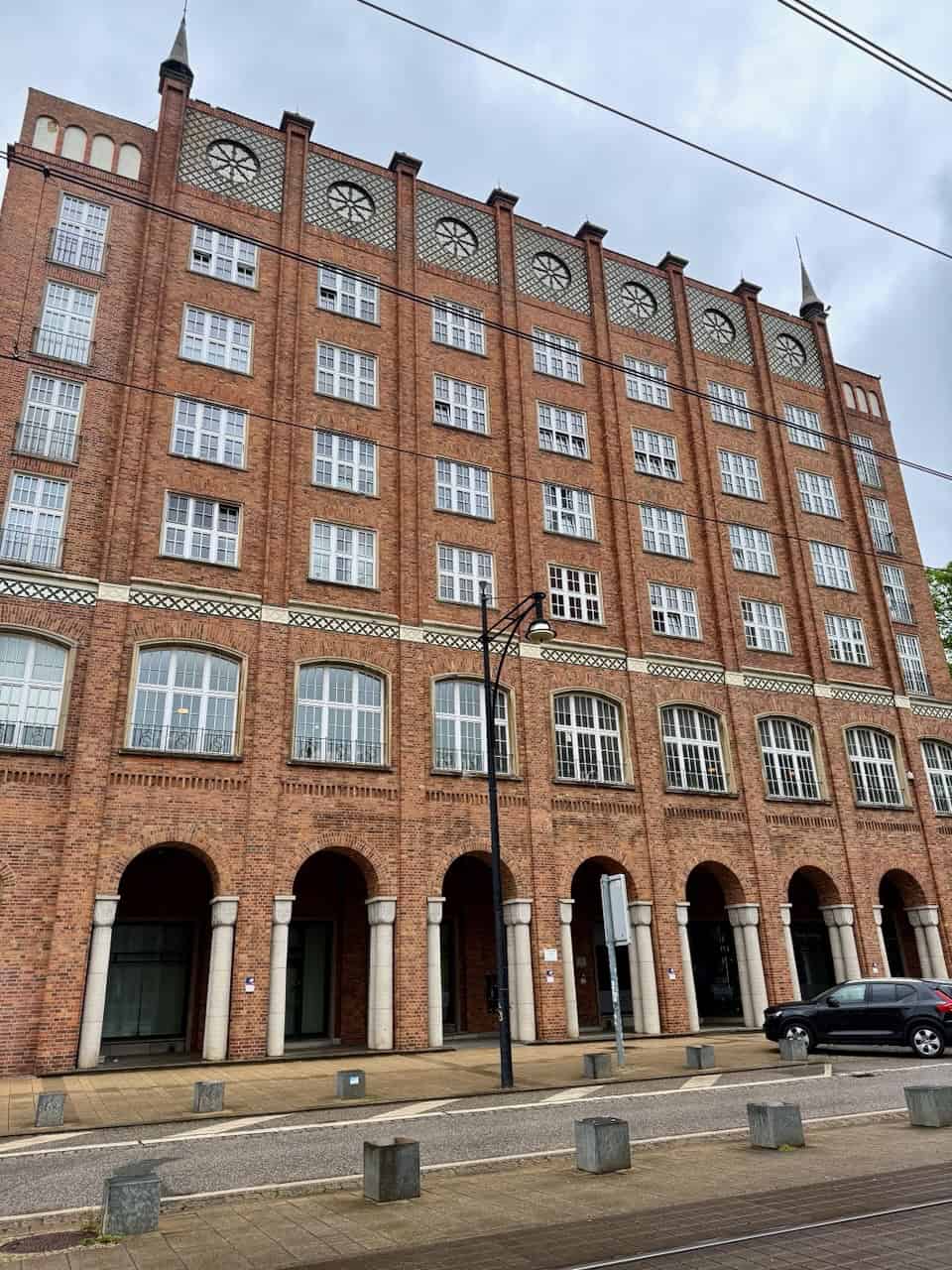
I continued down the road from Kröpeliner Tor to Lange Strasse, in my book, one of Rostock’s most fascinating streets. Before WWII, it was one of the city’s principal thoroughfares, lined with elegant Hanseatic merchants’ houses. Much of the street was destroyed during Allied bombing raids in 1942, and when Rostock became part of East Germany, the socialist authorities chose not to reconstruct it as it had been. Instead, they transformed it into a grand boulevard intended to showcase the ideals of the new socialist state, and as a location for Soviet-style parades.
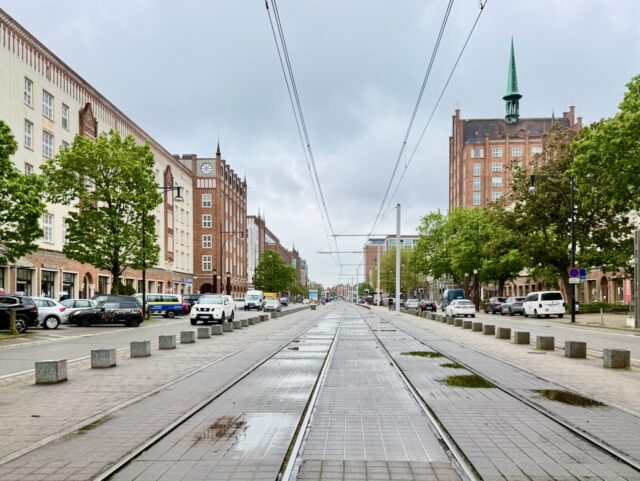
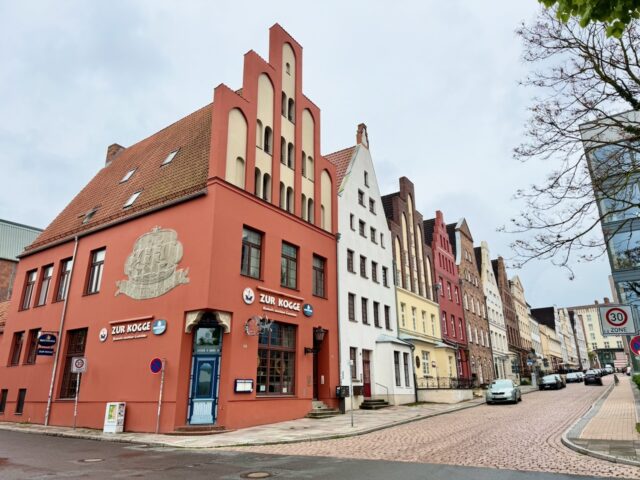
Broad pavements and imposing apartment blocks in the Socialist Classicist style line much of the street. Unlike the stark concrete apartment blocks that many associate with the former East Germany, these buildings were designed to project optimism and prestige. One aspect I found particularly striking is that the architects also borrowed elements from Rostock’s Hanseatic heritage. Stepped gables, red brick, pointed arches and decorative motifs echo the city’s medieval architecture, creating a unique blend of centuries-old traditions and mid-20th-century socialist urban planning.
Hausbaumhaus
Located behind Lange Strasse, stands one of Rostock’s surviving merchant houses: Hausbaumhaus. Dating from around 1490, it’s one of the oldest Hanseatic merchant houses in the city.
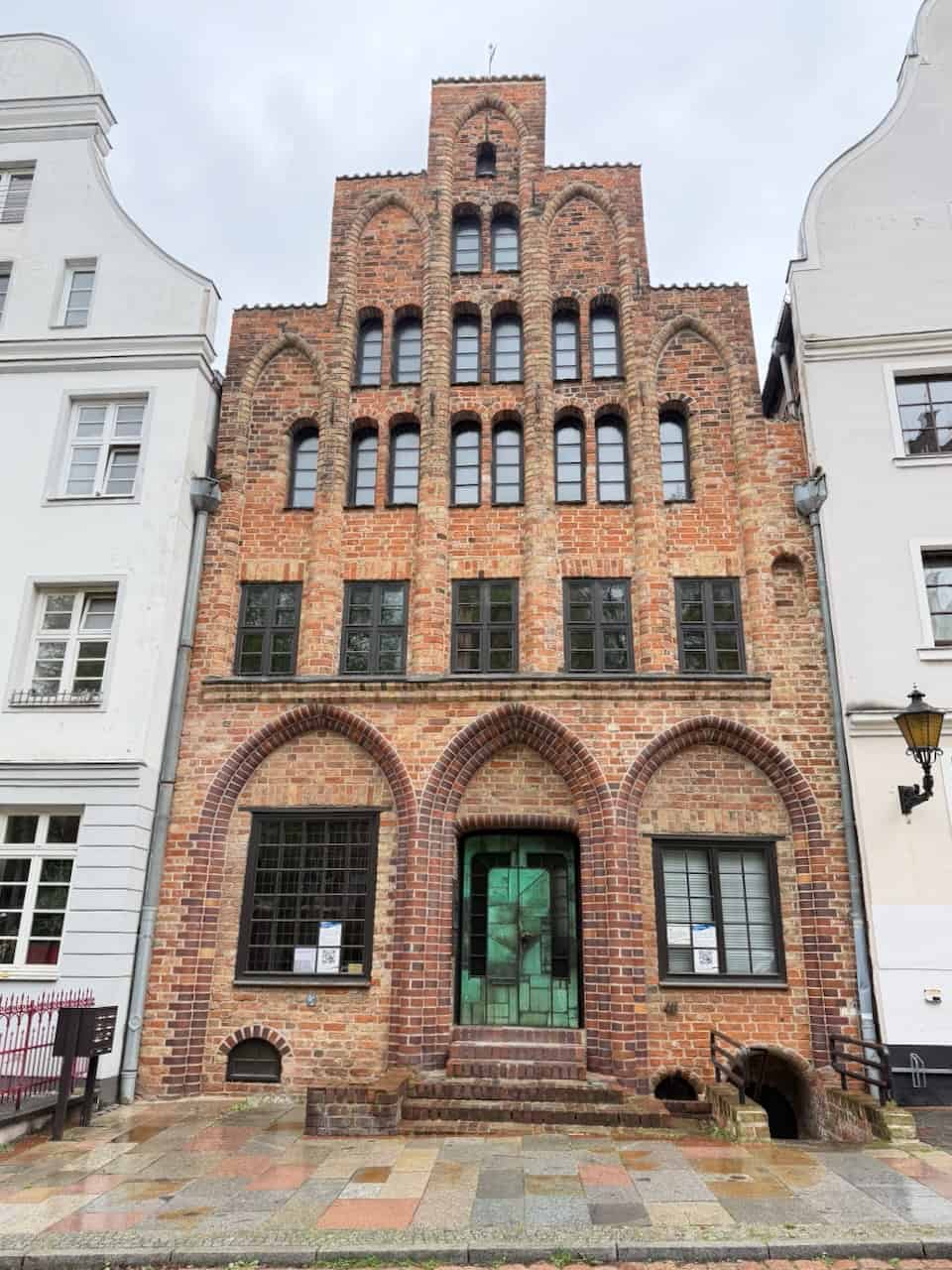
Its unusual name translates literally as “House Tree House”, and the reason becomes clear once you step inside. Hidden beneath the floors is a massive oak trunk – the Hausbaum or “house tree” – which rises from the cellar and supports the weight of the upper floors. As the timber framework branches upwards through the building, it resembles the trunk and limbs of a tree. This ingenious engineering solution allowed medieval builders to create an open trading hall on the ground floor.
St. Mary’s Church
The Marienkirche, or St. Mary’s Church, is Rostock’s greatest medieval monument. Its enormous brick structure reflects the wealth and ambition of the Hanseatic merchants who financed it.
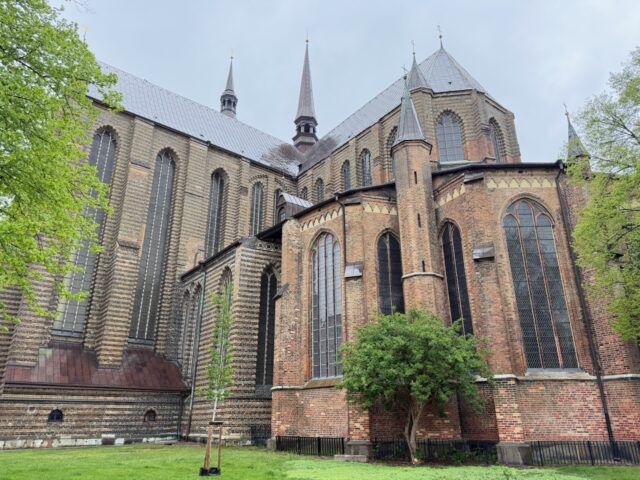
The scale is striking. Tall pillars lead the eye towards the vaulted ceiling, while light filters softly through the windows onto centuries-old furnishings. The church’s most famous treasure is its astronomical clock, constructed in the 15th century. In addition to displaying the time, the clock incorporates astronomical information and a calendar, demonstrating the close relationship between science, religion and craftsmanship in the medieval world.
Stadthafen
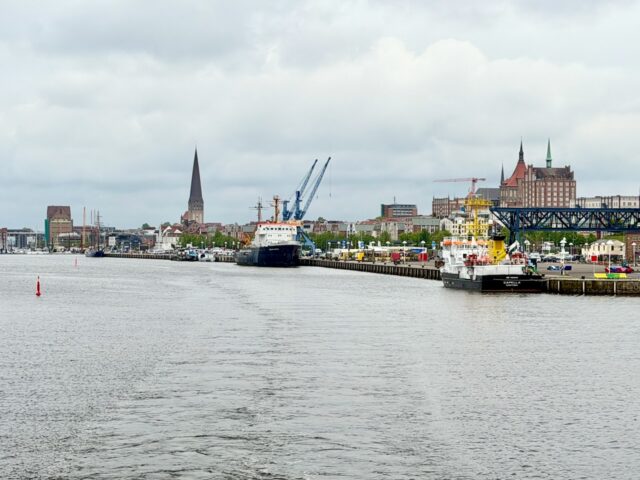
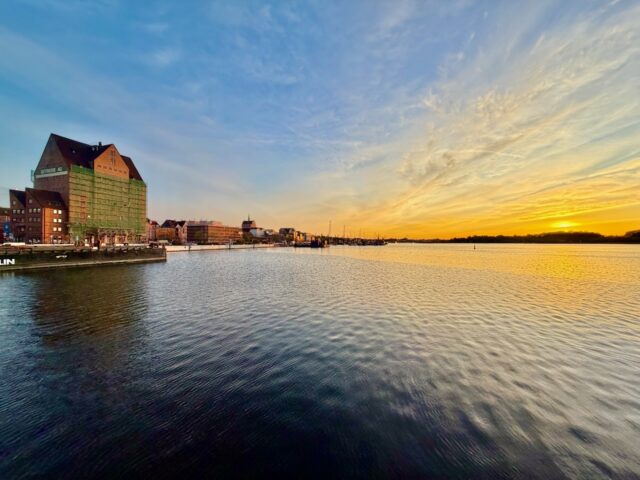
I ended my walk at the Stadthafen, or city harbour, just north of the historic centre. The waterfront no longer functions as the city’s main commercial port, but its long quays, warehouses and harbour cranes retain a distinctly industrial atmosphere. Today, despite new redevelopment projects, the promenade, especially the Hafentreppen (harbour steps), is a popular place for walking, cycling or sitting beside the river. Restaurants and bars occupy parts of the former port area, while boats travel along the Warnow.
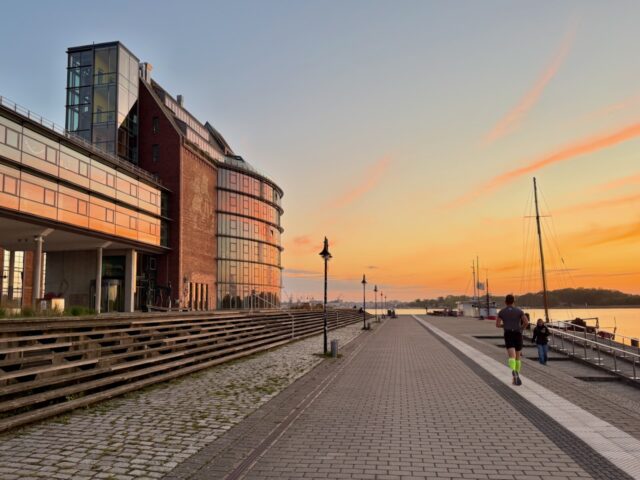
The harbour is especially pleasant around sunset. It was here that I ended my day in Rostock, watching the light fade across the water and reflecting on how seamlessly the city’s maritime past remains woven into daily life.
Rostock’s relationship with the sea is also celebrated during the annual Hanse Sail, when traditional sailing ships gather in the city’s harbour. The event transforms the Warnow into a spectacle of tall masts, billowing sails and historic vessels, reviving the international seafaring atmosphere that once defined the Hanseatic city.
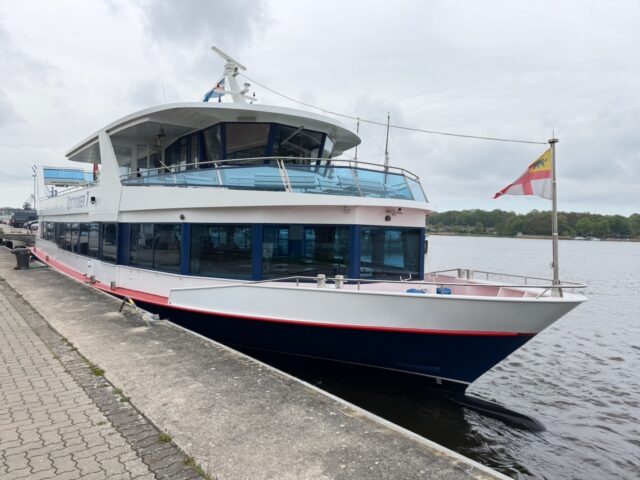
Warnemünde is easily reached from Rostock’s central station by S-Bahn (20 minutes), making it an essential part of any visit. I chose to take the 1-hour cruise from Stadthafen with the Blaue Flotte company (departure point) and return with the S-Bahn.
Once a small fishing village, Warnemünde became a popular seaside resort while retaining much of its maritime character.
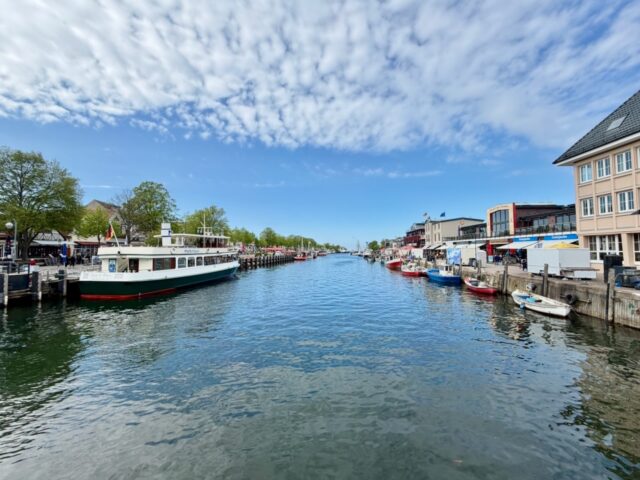
Alter Strom
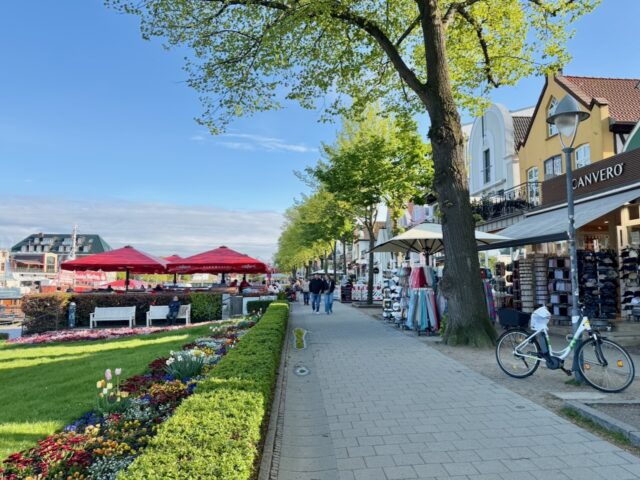
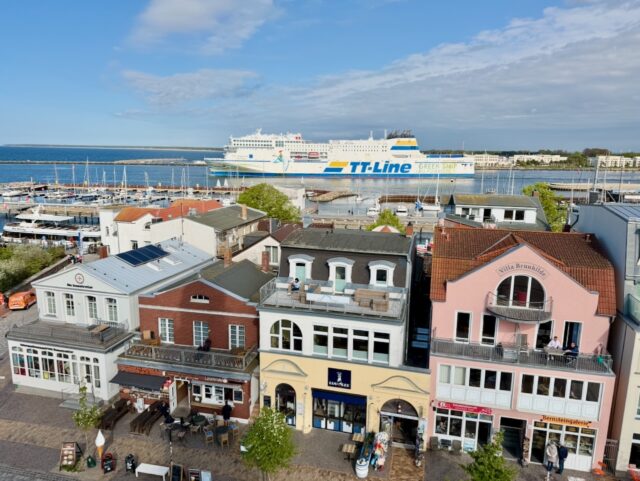
From the pier or the train station, it’s a short walk to Alter Strom, an old channel lined with fishing boats, excursion vessels and former fishermen’s houses. Cafés and seafood stalls occupy the waterfront, and the air carries a mix of salt, grilled fish and diesel from the boats.
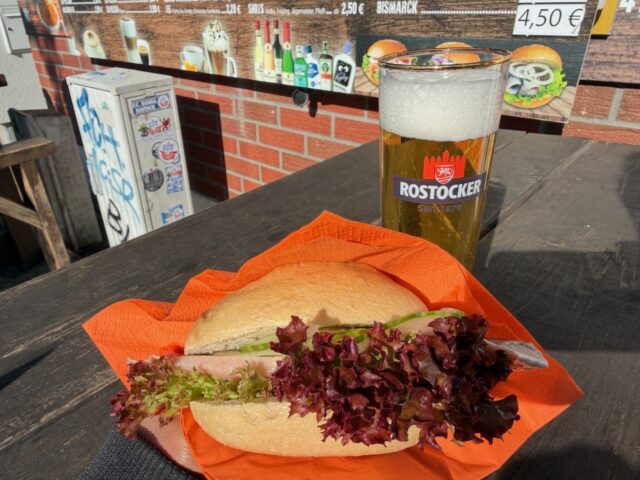
The Alter Strom is the perfect place to try a Fischbrötchen: a simple bread roll filled with herring, smoked fish or fried fish.
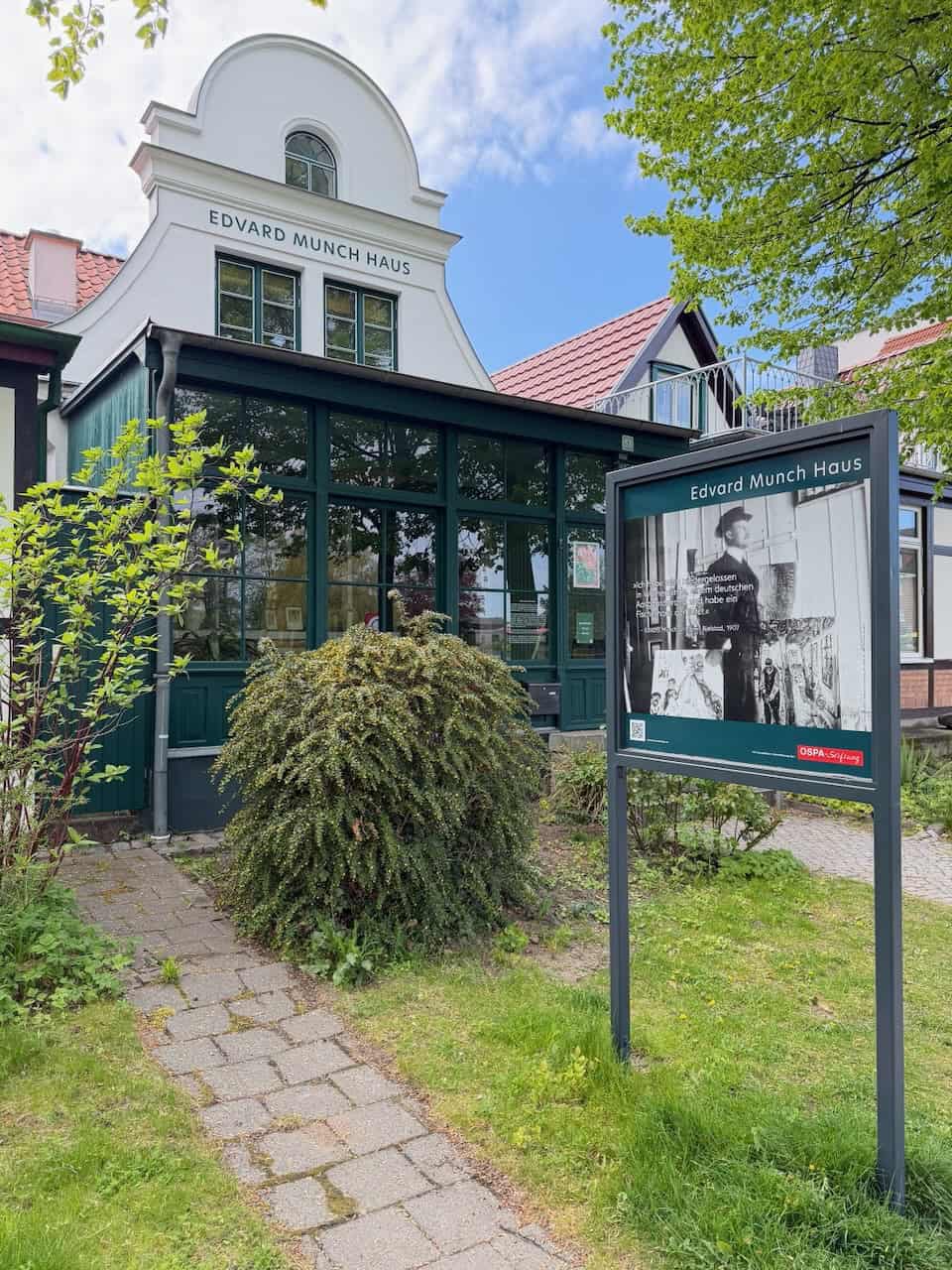
Edvard Munch house
I especially loved the old fishermen’s houses on Am Strom (street), one of which was occupied by Edvard Munch during his stay in Warnemünde. This house is now a museum dedicated to the famous artist. You’ll also find numerous charming accommodations along Am Strom.
Alexandrinenstrasse
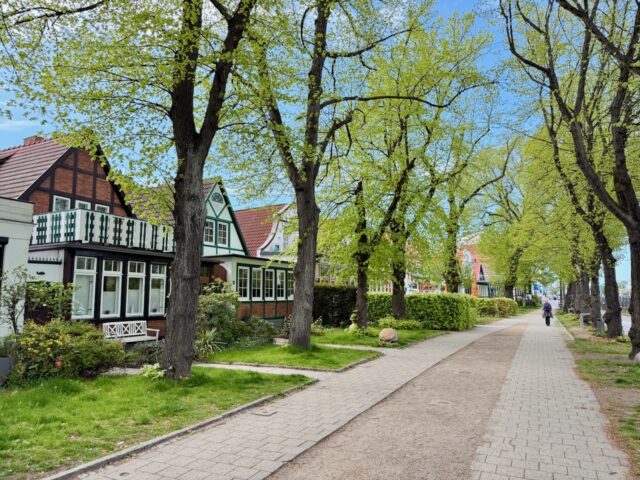
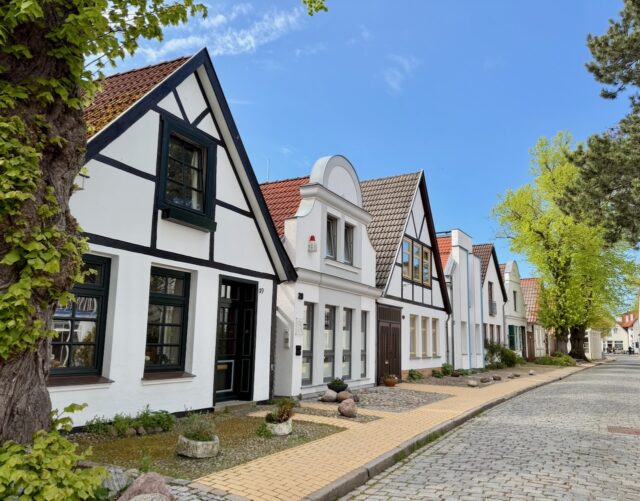
From Am Strom, I continued along Alexandrinenstrasse, perhaps the most charming street in Warnemünde. It’s a shady street filled with absolutely gorgeous houses. You’ll also find many references to the village’s fishing and maritime past.
Warnemünde lighthouse
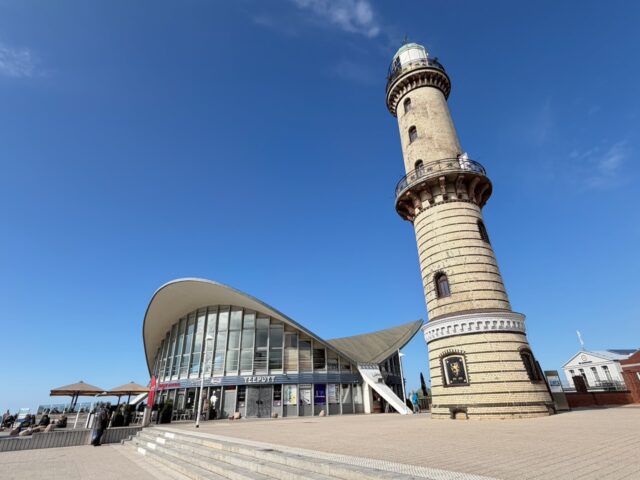
The lighthouse is Warnemünde’s best-known landmark. Built from white glazed bricks and standing just over 30m high, it has watched over the beach and harbour entrance since the late 19th century. Its viewing galleries, reached via a spiral staircase, offer sweeping panoramas of the town, beach, harbour and Baltic Sea.
If you attempt the climb, watch your head in the top section of the staircase, and at the door that opens to the viewing gallery – I learned that lesson the hard way.
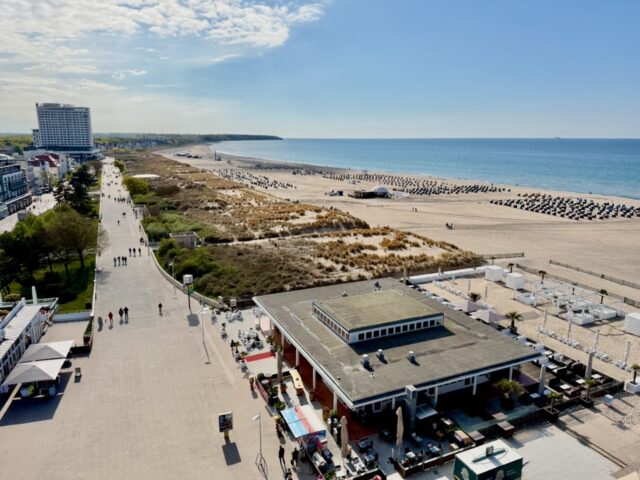
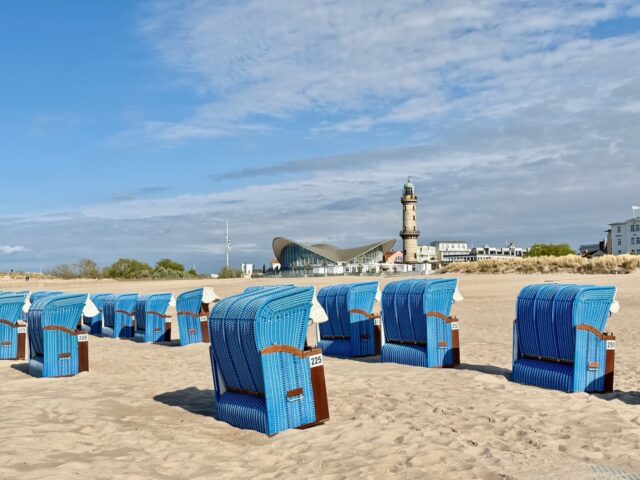
Adjacent to the lighthouse stands the Teepott, an unmistakable modern building topped by a sweeping curved roof. The contrast between the historic lighthouse and the futuristic structure has become one of Warnemünde’s defining views.
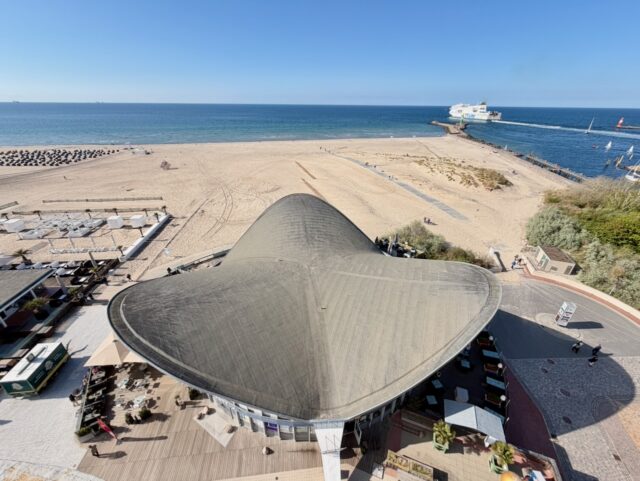
I recommend walking through the sand dunes and onto Westmole, the breakwater extending into the Baltic. The farther you walk, the more the town recedes behind you and the more exposed you become to the wind and sea spray. It is an exhilarating place to watch ferries, yachts and cruise ships entering or leaving the harbour.
Warnemünde beach
Warnemünde’s broad beach is among the finest on Germany’s Baltic coast. Soft sand stretches westward from the harbour, backed by a promenade, dunes and rows of Strandkörbe, the distinctive hooded beach chairs found along Germany’s northern coast. The Strandkorb was reportedly invented in Warnemünde in the 1880s by basket maker Wilhelm Bartelmann after a customer requested a seat that would shelter her from wind and sun. The practical design spread rapidly and became an icon of German seaside culture.
I settled at a waterfront terrace for a drink and watched the boats pass along the Alter Strom. As evening approached, I treated myself to a delicious fish dinner at Restaurant Seekiste zur Krim (Am Strom 47).
Where to stay in Rostock
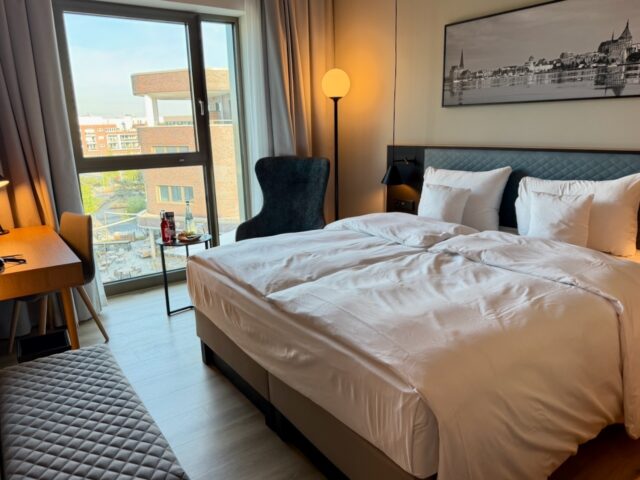
There’s a good variety of accommodations in Rostock. I stayed at the ScanHotels Stadthafen for two nights, which allowed me to explore the city and visit Warnemünde at a leisurely pace. The hotel, located at the harbourfront in the northeastern quarter of the city centre, is absolutely wonderful.
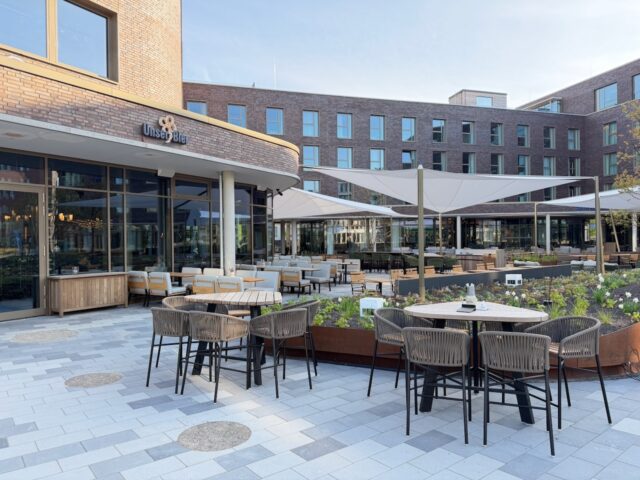
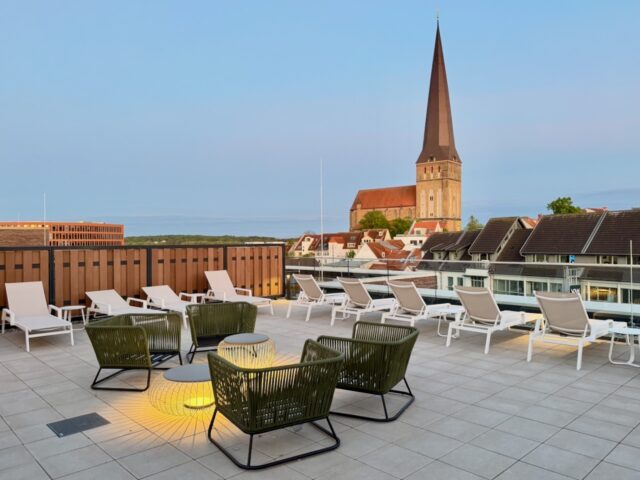
The modern rooms are spacious and very comfortable. I especially loved the modern design, the expansive terrace and the terrific breakfast each morning.
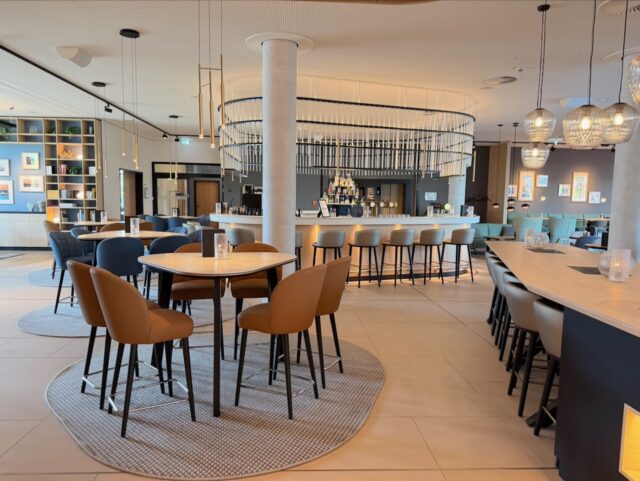
There’s also a beautiful lounge and bar on the ground floor. Adjacent to the hotel, the Gasthaus Unser Bier restaurant serves delicious local specialties and beer!
Another highlight is the rooftop spa! There are various saunas, including an outdoor Finnish sauna, and resting areas with gorgeous views of Rostock.
How to get to Rostock
Rostock is served by frequent trains from Berlin. If you’re travelling by car, I recommend including Rostock as part of a northern Germany road trip. ScanHotels Stadthafen has its own parking garage; ideal if you’re driving.