Henry Moore’s instantly recognisable sculptures are beautifully displayed in the natural landscapes of Kew Gardens London, in the 2026 exhibition of Henry Moore: Monumental Nature. Surrounded by trees or set off by glasshouses and temples, you can walk around 30 monumental sculptures, which span Moore’s 70 year long career.
An additional 90 of Moore’s smaller works, including sculpture, drawings, models and sketchbooks are on show in the Shirley Sherwood Gallery, giving an insight into his creative process.


Moore is known for his organic shapes in bronze and marble, often abstractions of the human form. His work was inspired by the shapes of bone and stone flints that he found near his home and he was drawn toward female figures, often representing mother and child.
Our photos below from the exhibition of Henry Moore in London, are grouped by the themes that inspired his work. Descriptions are drawn from the excellent Bloomberg Connects Guide that accompanies the exhibition and can be accessed via QR codes on the leaflets and information boards at Kew Gardens.
You can book your tickets for Kew Gardens in advance here.
Reclining figures
Large Reclining Figure 1984: A lovely photo stop in front of the pagoda, this large fibreglass sculpture was completed a couple of years before Moore’s death, from a smaller figure created in 1938. This larger version was part of a collaboration with Chinese-American architect I. M. Pei, known for iconic landmarks like the glass pyramid at the Louvre in Paris.

Two piece reclining figure No 2 1960: The human body looks like a natural landscape, with rough surfaces reminiscent of jagged rocks or seaside cliffs. The view and shape of the sculpture changes as you move around it to view from different angles.

Reclining woman elbow 1981: Created three years before Moore’s death, the culmination of many reclining figures, this one has an elegant, smooth and sinuous aspect.

Draped figures
Draped reclining figure 1952: One of Moore’s first sculptures to explore draped fabric in the early part of his career. Following a visit to Greece, Moore became interested in the drapery of classical statues, with echoes of drawings he’d made earlier of draped fabrics on people sheltering in the underground during the war.
The figure is beautifully positioned in front of the classical temple at Kew, as if the figure is relaxing momentarily on the grass to admire it.
Read about the Treetop Walkway you can also visit at Kew Gardens

Three piece reclining figure draped 1975: In this sculpture, the figure is separated into three abstract parts, combining Moore’s interest in surrealism, the body mimicking the landscape and the use of draped fabrics.

Mother and child
Reclining mother and child 1975: Moore explored the relationship of mother and child, drawing on his own close relationship with his own mother and the birth of his daughter Mary. The abstract reclining figures echo an undulating natural landscape of gently rolling hills and valleys.

Family Group 1948: Created in the aftermath of the Second World War and the birth of Moore’s daughter Mary, the child forms the centre of the knot of intertwining arms, symbolising unity and hope.

Warrior series
Goslar Warrior 1973: Commissioned for the German town of Goslar, this is the last in a series of large scale warriors made by Moore. The warrior fallen in combat depicts the cost and pain of war, influenced by Moore’s personal experiences as a soldier in WW1 and as a war artist in WW2. The round shield is a reference to Ancient Greek sculptures, influenced by a visit Moore made to Greece in 1951

Two piece figures
Two piece reclining figure: Points 1969 – Moore’s two piece figures celebrate the connection between human and landscape, since we can look through the space between to let nature into the view. This piece shows Moore’s interest in Aztec and Mayan Chac Mool sculptures, with more abstract pieces that turn up towards the sky rather than reclining on their side.

Two piece reclining figure: Cut 1979 – The two parts of the sculpture are separated by a more dramatic cut in this piece, echoed by the arms raised, as if the figure is taken by surprise. As we walked around the sculpture it seemed more human or more abstract, depending which side we viewed it from.

Reclining figure Arch legs 1969: The sculpture is located in a beautiful setting in front of the lake and Palm House. The exaggerated leg arch continues Moore’s later work in separating figures into two or more parts, creating a dialogue with surrounding space. Like others we observed, this piece can appear more abstract or human depending on your viewpoint.

You can book your tickets for Kew Gardens in advance here.
Working models to finished pieces
We enjoyed seeing a couple of smaller ‘working models’ on display in the Temperate House, and then comparing them to the larger finished versions on display around the gardens. Moore used these models to develop and refine the design before creating the larger finished sculpure.
Working model for spindle piece 1968: This abstract is inspired by natural forms, but open to interpretation by the viewer. Moore is known to have drawn inspiration from bones and flints, but this piece with its points also evokes the thorns of a spiny plant.

Large Spindle Piece 1968: The larger spindle piece is located in a prime spot in front of the orangery, making it easy to view the points and abstract curves from all angles. The sculpture was based on a flint that Moore found in a field near his home, making a plaster cast which he then developed into this form.

Working model for locking piece 1962: The piece was inspired by a fragment of bone with socket and joint that Moore found in his garden in Hertfordshire, translating the interlocking forms into bronze.

Locking Piece 1962: The full scale version of the piece, inspired by the interlocking joint socket of a bone he found in his garden.

Shirley Sherwood Gallery
The Shirley Sherwood Gallery within Kew Gardens offers an indoor exhibition of a further 90 of Moore’s smaller scale works, including sculpture, drawings, models and sketchbooks.
While at Kew Gardens also visit the Marianne North Gallery to view her beautiful botanical paintings.

The gallery also showcases an exhibition of Monumental Botanical Art, with botanical paintings from the Shirley Sherwood collection that complement themes explored in Moore’s work.
Enjoy more sculpture from Eduardo Chillida in San Sebastian, Spain

Interior Forms
Large Interior Form 1953: Moore worked on a series of internal / external forms in which an interior element is protected by the larger external shape, reminiscent of a seed pod or a child being sheltered in the womb. This sculpture is a development of that theme, in which the interior form has broken free from its outer shell, creating a sinuous and fluid shape that stands alone.

Inspired by nature
Sheep Piece 1971: Moore made drawings of the sheep he could see from the window of his studio and created this piece to sit in a neighbouring farmer’s field with sheep grazing around it. The figures of a ewe and her lamb draw on the themes of mother and child, and the scale is designed as a contrast with the shapes of the living sheep that could rub up against the sculpture.
There’s a pleasing playfulness and childlike quality in the abstract form of the sculpture, that made us smile.

Large Totem Head 1968: The name refers to the interest that Moore developed in the monuments created by indigenous people of the Pacific north-east, when he visited collections at the British Museum in London. But the sculpture reminded us more of a giant seed pod that has split open to reveal the fruit inside.

Three piece sculpture Vertebrae 1968: This piece has a prime position in front of the lake and the Palm House in the Kew exhibition. Moore was inspired directly by the vertebrae of a giant backbone, which fit together like a puzzle, although without touching. The sculpture was created in several different sizes, the largest which is twice the size of this version, to display in front of the new city hall in Dallas Texas.

Upright motive 1955: Three Upright Motive sculptures are displayed here as a group, made by pressing found objects into a vertical clay mould. Moore was asked to make a sculpture for a new building in Milan and noticed the tall poplars that were a counterfoil for the horizontal aspect of the building.
From this inspiration the Upright Motive series developed, although they also seem to draw on the standing stones and wood carvings of the indigenous people of the Pacific Northwest.

Abstract forms
Oval with points 1968: One of a series of works with points that almost touch, creating a sense of tension and contained energy. The form may have also been inspired by an elephant skull gifted to Moore by his naturalist friends Sir Julian and Juliette Huxley. Versions of this piece are on display in settings around the world including Hong Kong, America and Saudi Arabia.

Double Oval 1966: The double ovals frame different views in the surrounding landscape, from the nearby trees to the distant Palm House. We had fun taking photos of the sculptures from all angles to find different perspectives.

Knife edge two piece 1962: This abstract two part sculpture was inspired by flat bone fragments or rock formations. From some angles the two parts seem to merge into one, but as you move around they separate again revealing the space and views between them.

Learn more about the Henry Moore 2026 Exhibition at Kew
There’s plenty of information provided to enhance your knowledge and experience of the exhibition. All the information is on the Kew Gardens website.
- A Family trail with map can also be picked up at the entrance. The trail focuses on 10 pieces within a manageable walking area near the Palmhouse with activity suggestions.
- A free guided walking tour of some of the sculptures starts at the Victoria Plaza daily at 12.30pm and 2pm.
- There are a number of special ticketed events and tours such as a photography walking tour and wine walk.
- Look out for QR codes on information boards at some of the sculptures, giving you access to additional audio recordings about the works.
- Scan a QR code on maps and welcome panels to find three suggested routes around the exhibition – 45 minutes, 90 minutes and half day route on Bloomburg Connects. You can also use the interactive map to access commentary about each sculpture.

2008 Henry Moore Exhibition at Kew Gardens
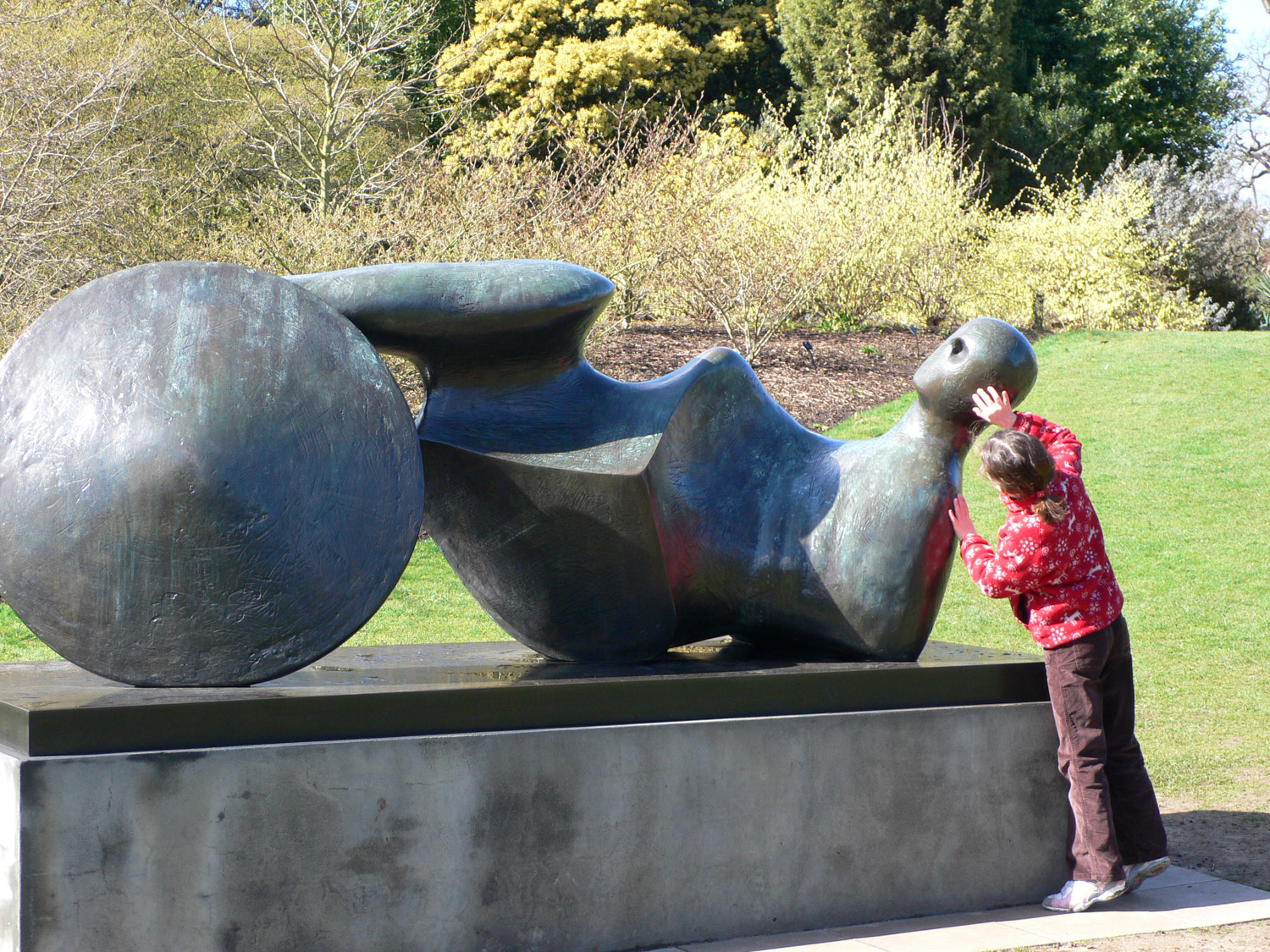
Henry Moore sculptures were previously exhibited at Kew Gardens in 2008, when I also visited the exhibition. It was a beautiful spring day, with carpets of bulbs and we got there early so had the place to ourselves.
Here are some of the photos from the 2008 exhibition, and as you’ll see many of the 28 pieces on display are the same as the 2026 exhibition, albeit in different settings.
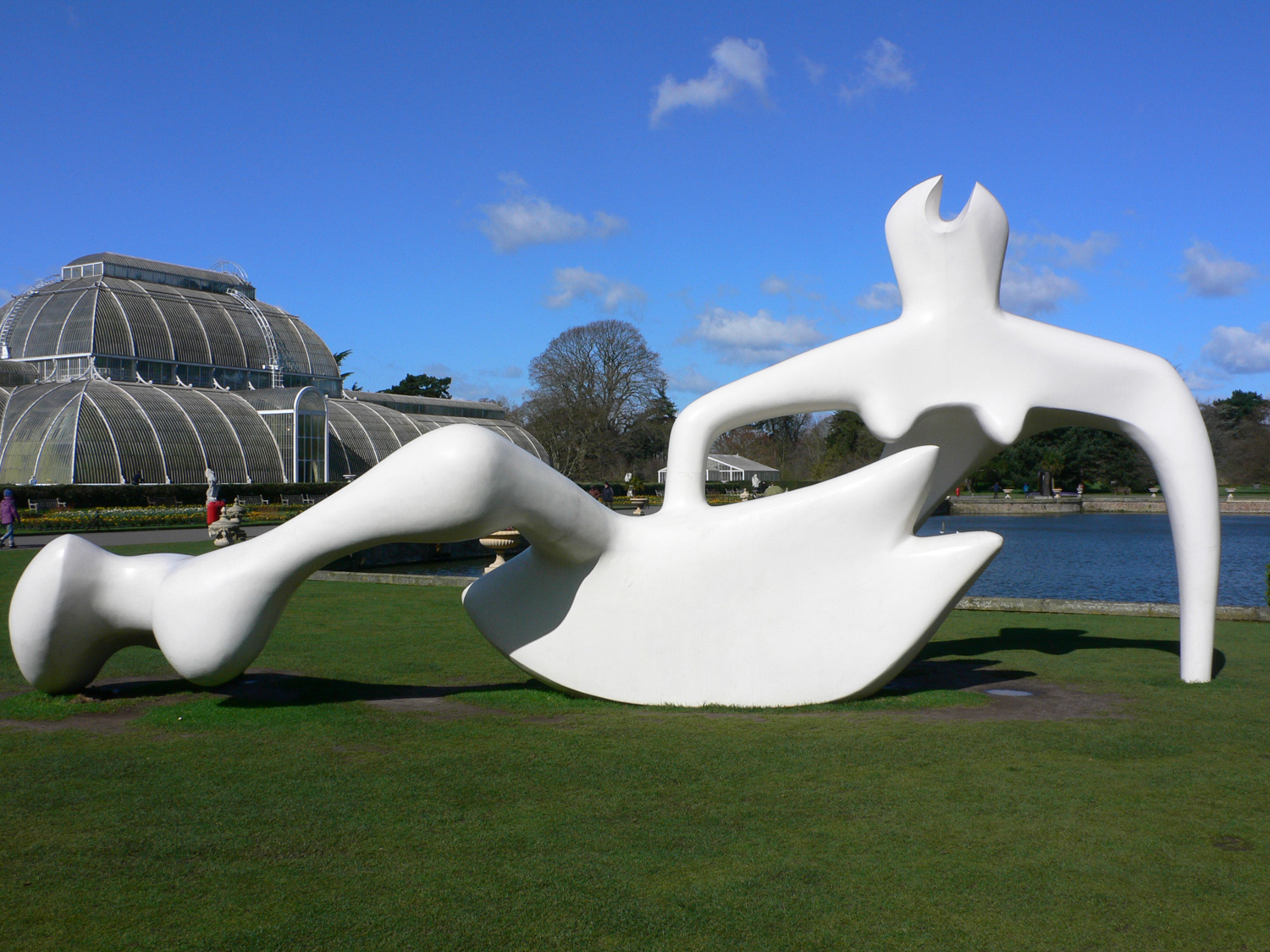
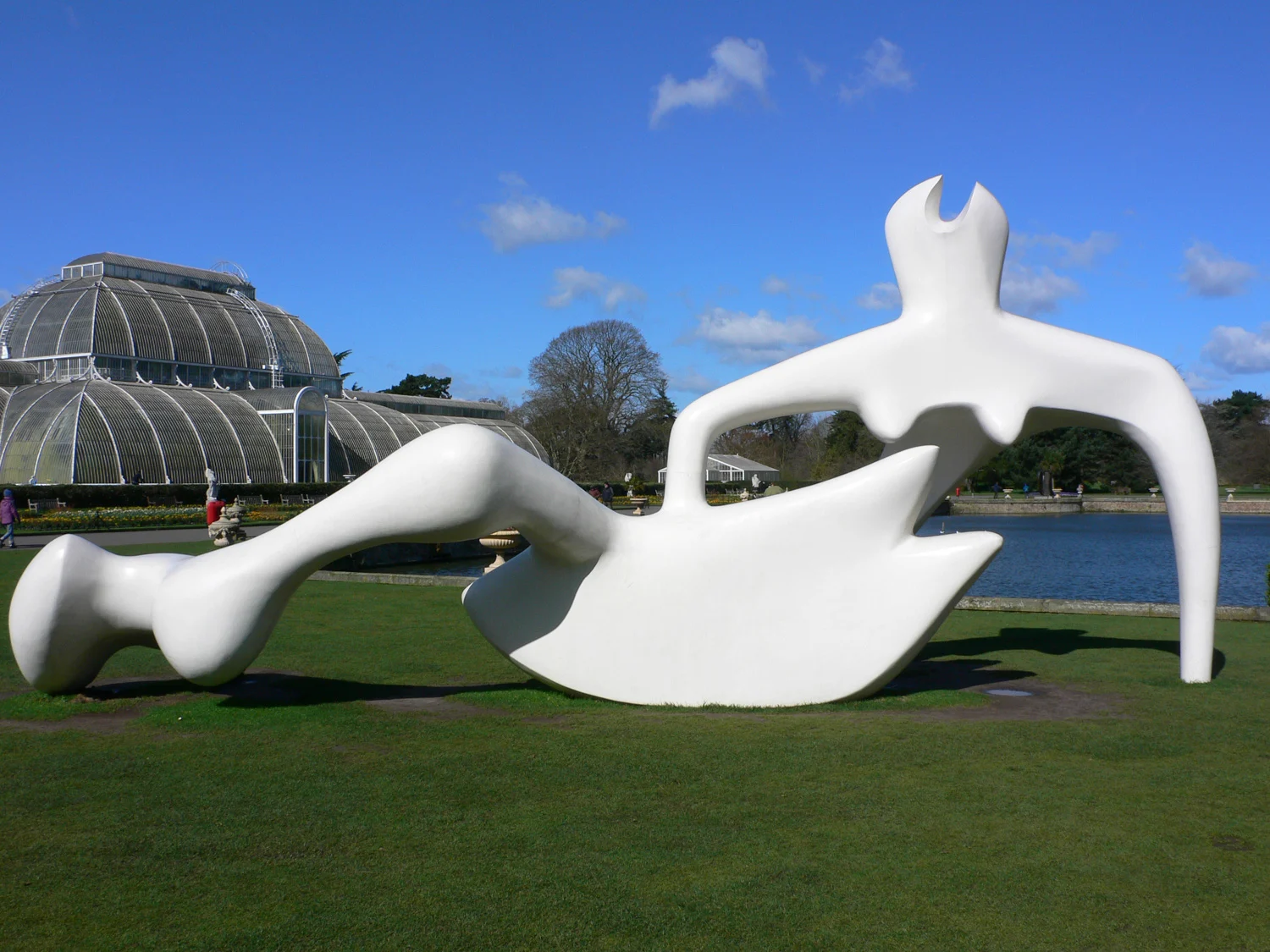
There were two things that I particularly loved about the exhibition.
One is that each piece had been so thoughtfully positioned within the gardens to enhance both sculpture and landscape so that I could barely imagine what it would be like with the sculpture not there.
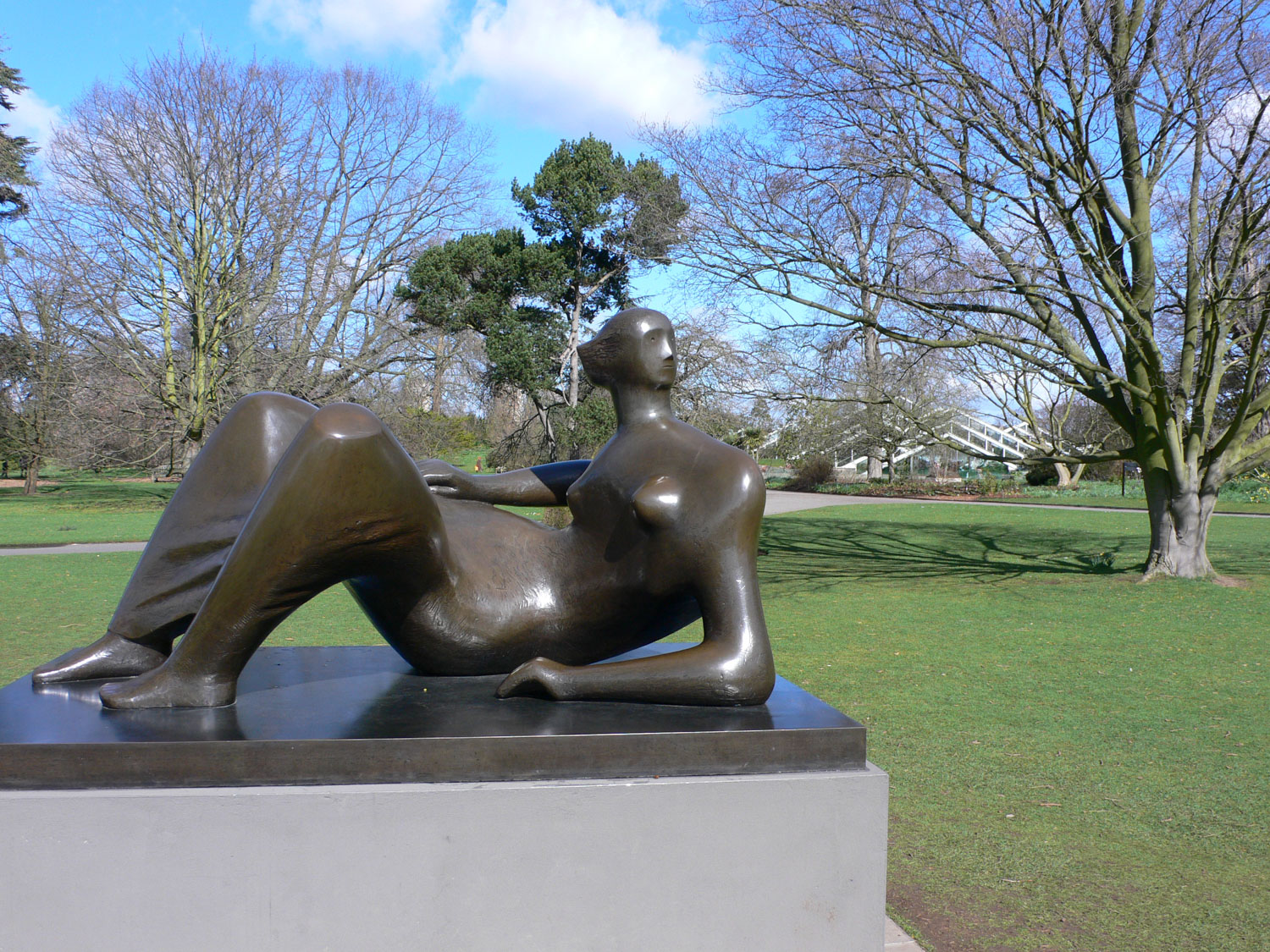
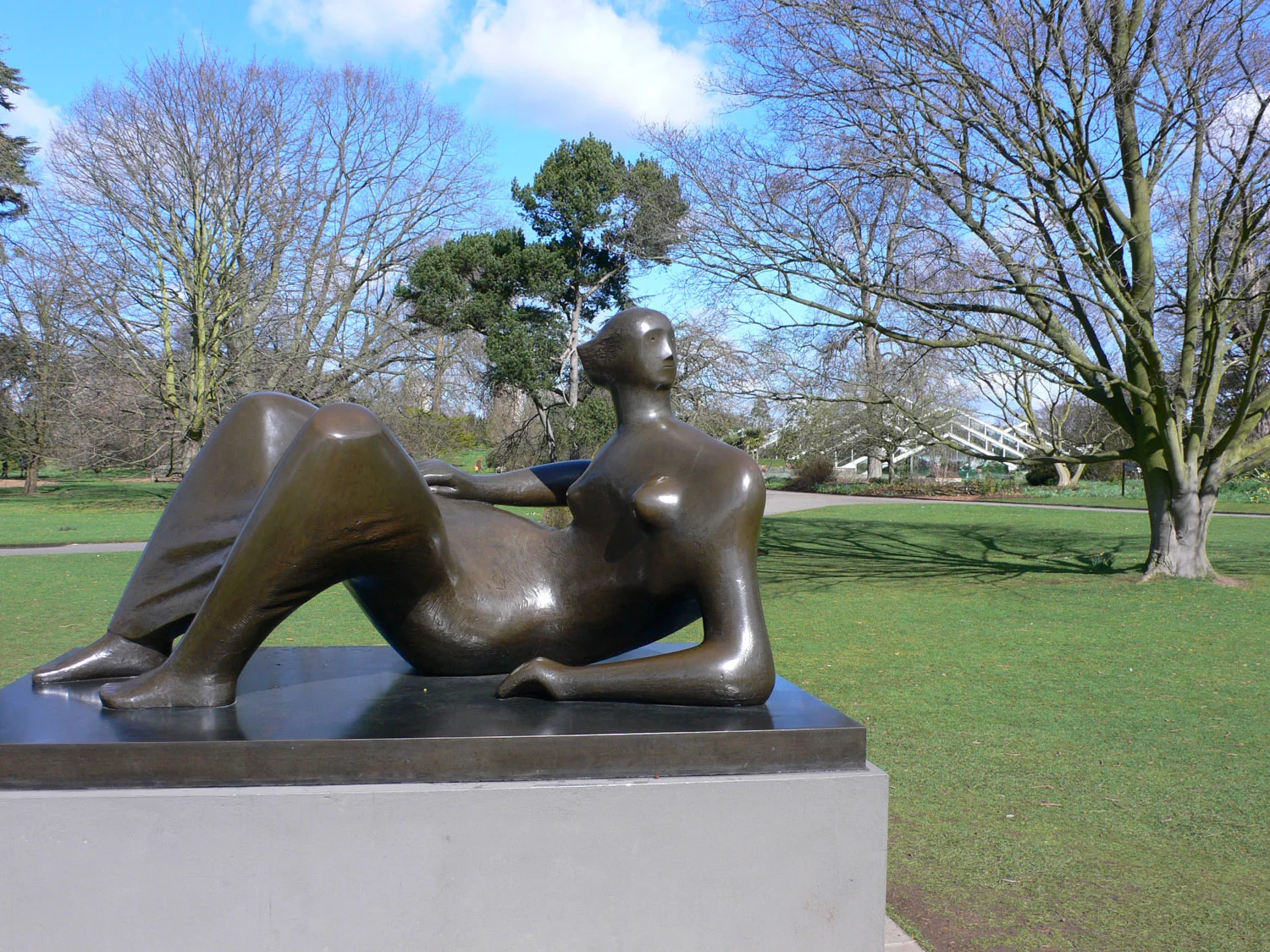
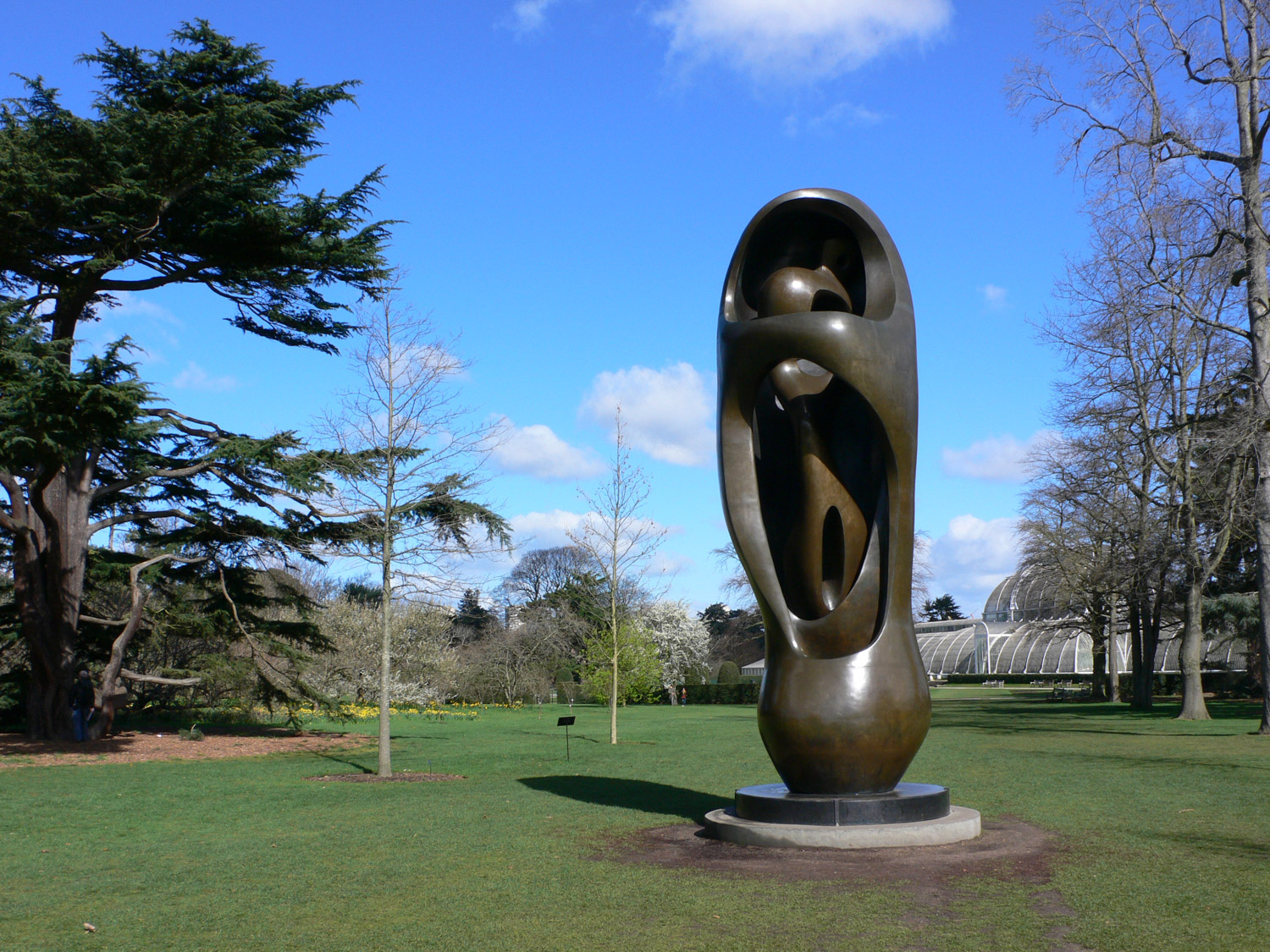
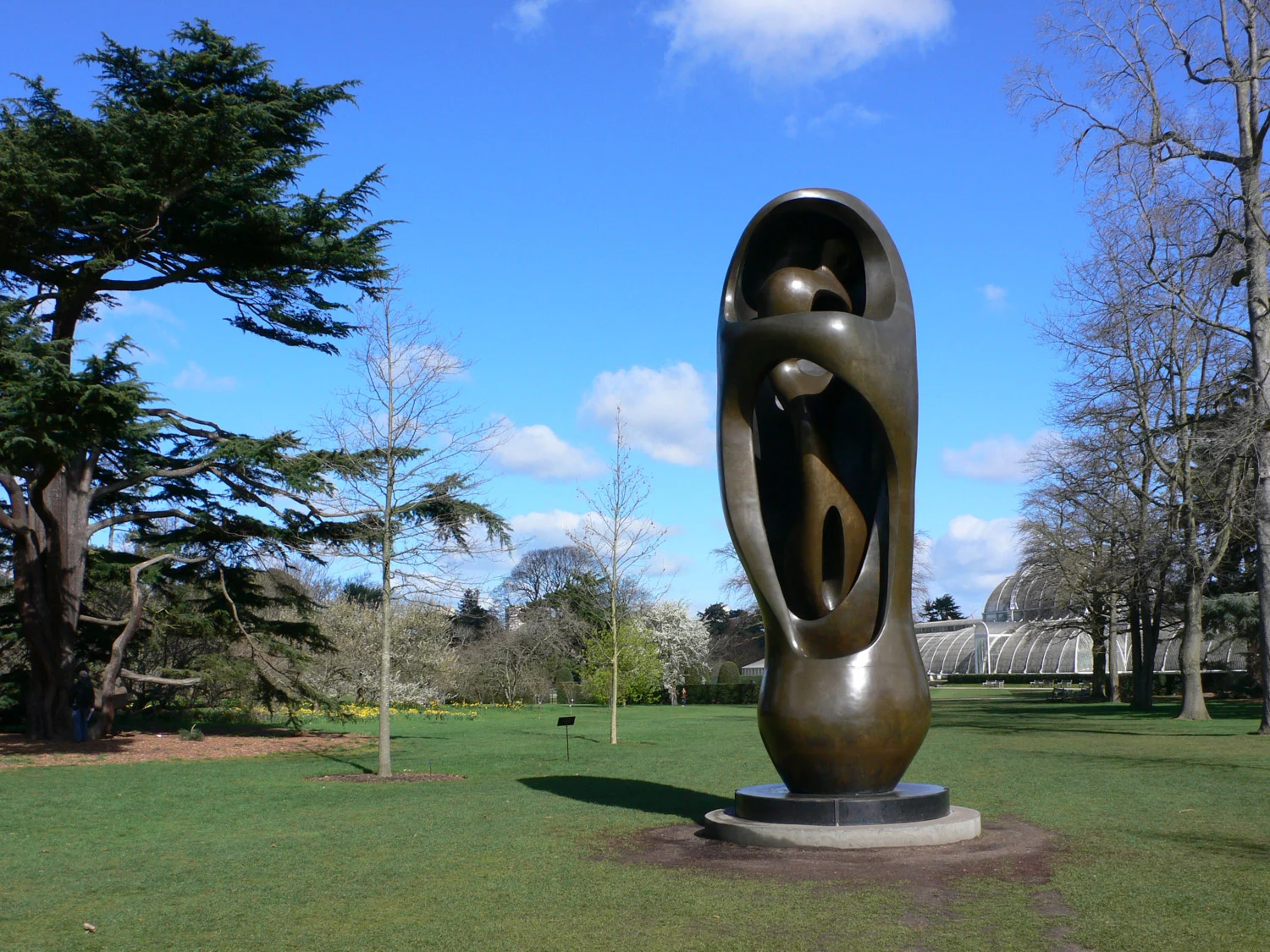
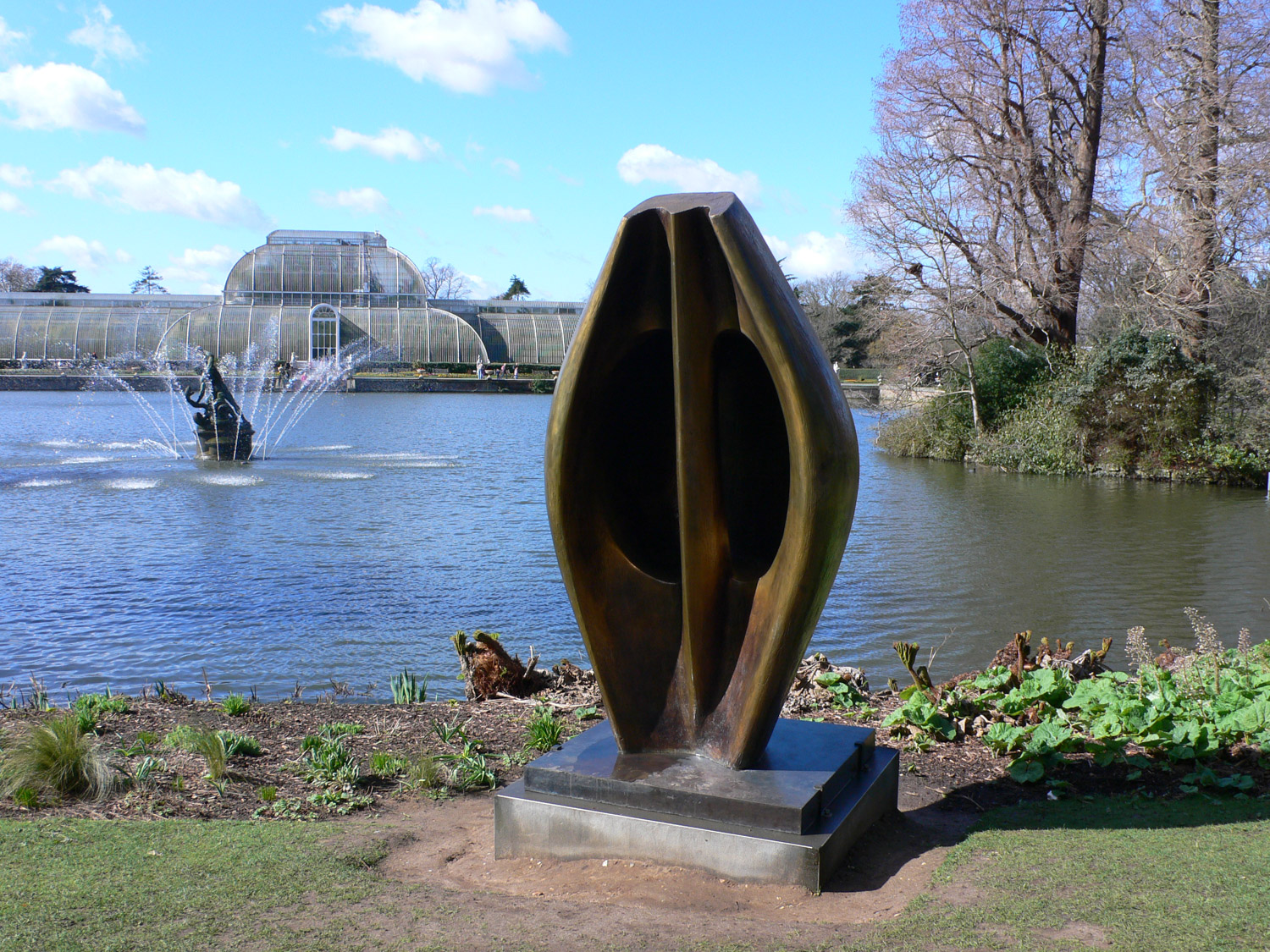
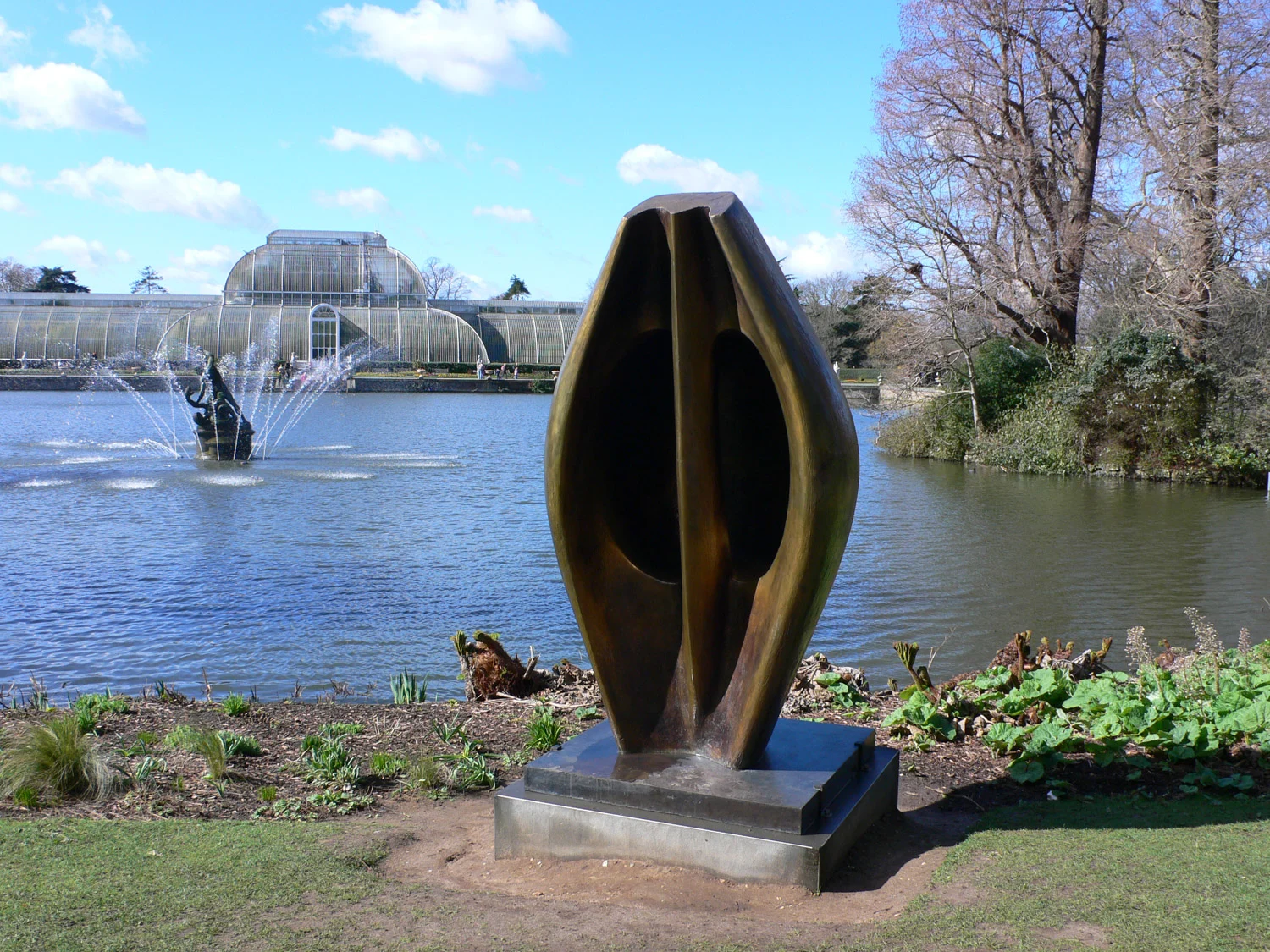
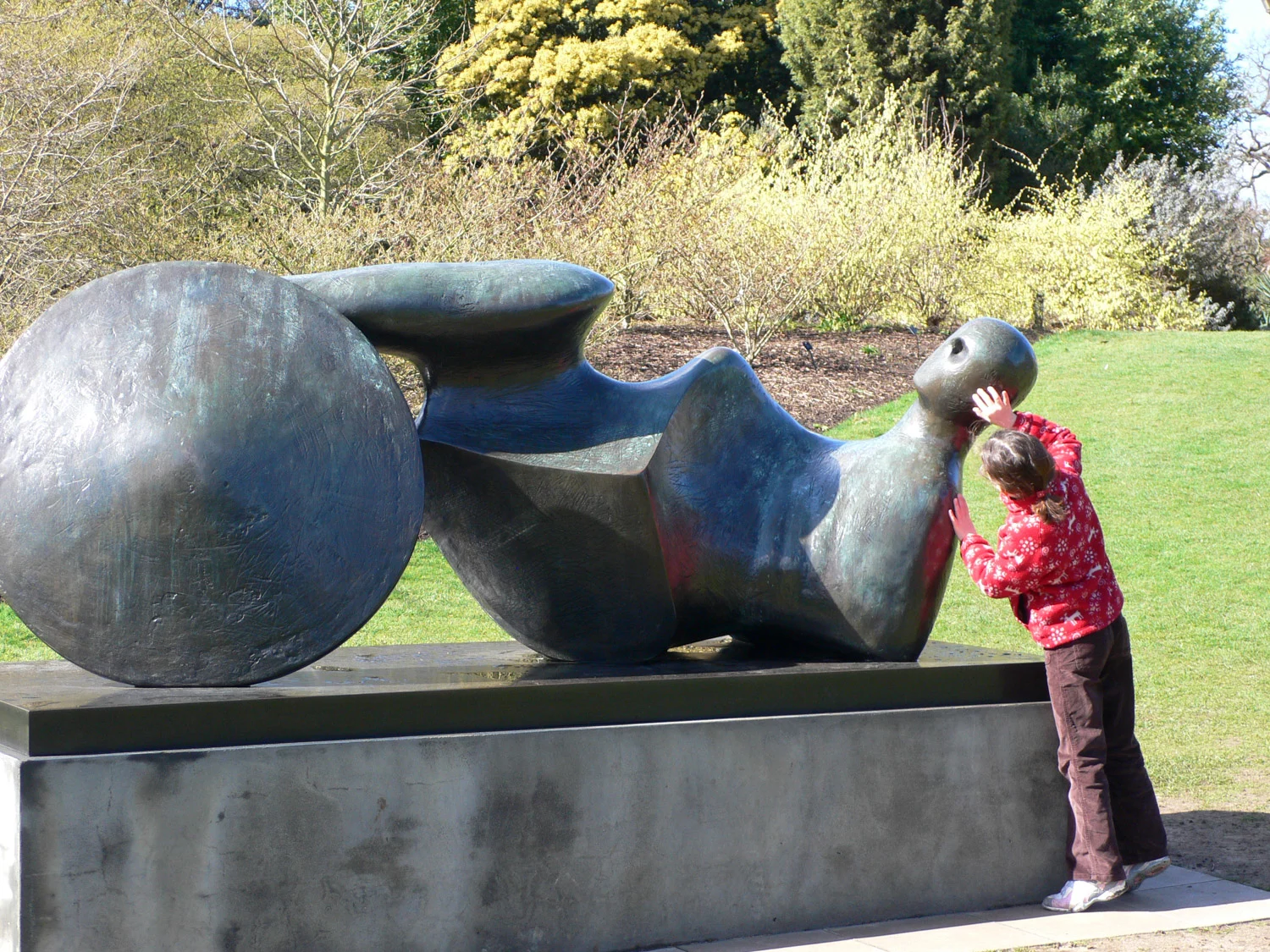
The second was how incredibly tactile the sculptures were – one could not resist running a hand over the sinuous forms and many had a smooth, bark like texture that was very satisfying.
Read Next
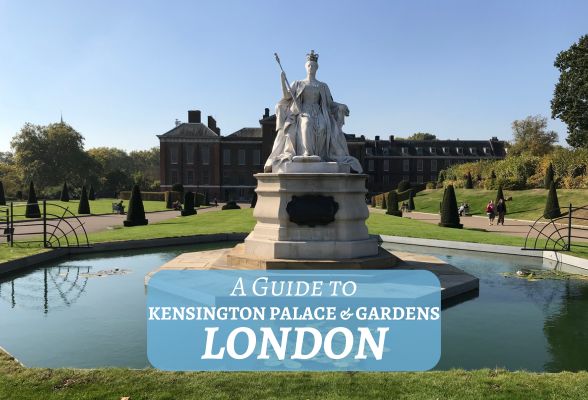
Looking for more gardens to visit in London? Read my Complete guide to Kensington Gardens and Palace in London

This article is originally published at Heatheronhertravels.com