Northern Germany is one of my favourite regions of the country to explore. While Hamburg and Bremen tend to steal the spotlight, there is so much more waiting to be discovered; from picturesque medieval towns and charming fishing villages to lush nature parks and long stretches of sandy coastline. Years ago, I made the journey from Hamburg to Berlin by car, but this time, I chose to experience northern Germany by rail. Over the course of the trip, I visited four cities, each revealing a distinctly different facet of the country: the brick Gothic splendour of Lübeck, the maritime soul of Rostock, the medieval elegance of Erfurt and the regal grandeur of Potsdam. With my train tickets in hand and no need to worry about traffic or parking, I settled into a journey through centuries of history, tracing a path from Hanseatic merchants to Prussian kings.
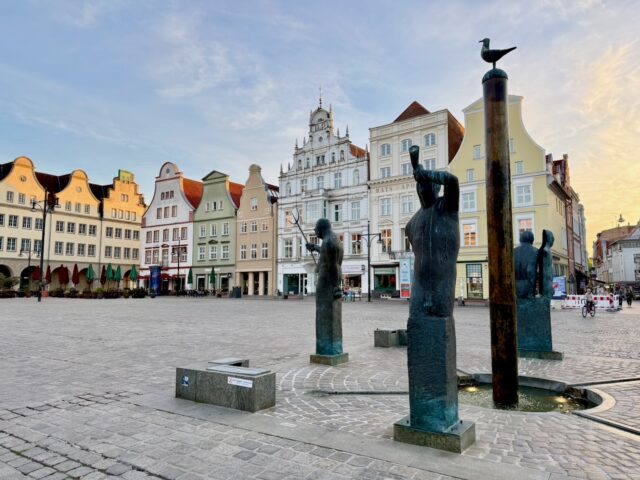

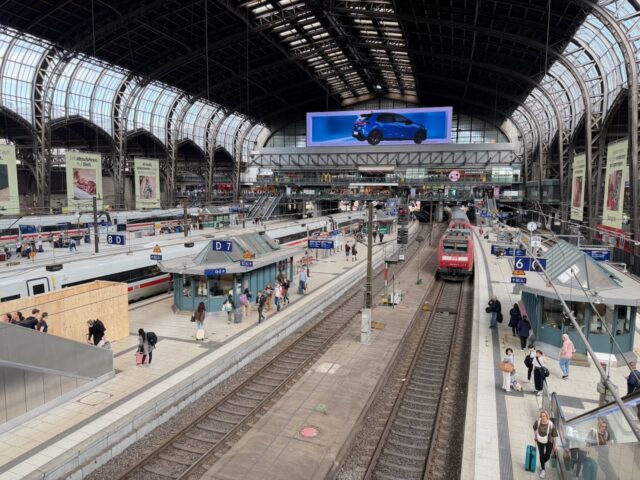
I kicked off this rail trip in Hamburg, where I hopped onto a train to Lübeck (less than an hour away). Located on an island in the Trave River, Lübeck is a stunning medieval town with a rich Hanseatic history. From Lübeck, I made my way to Rostock, Germany’s most important Baltic port. My next stop was Erfurt, another medieval gem which I travelled to via Berlin. Not exactly situated in northern Germany, I added Erfurt to my itinerary as it’s been on my wish-list for a long time! From there, I made my way back to Berlin and continued to Potsdam, a city of palaces and lakes located southwest of Berlin.
Northern Germany rail trip: 8-day itinerary
- Day 1: Lübeck (1 night)
- Day 2: Train to Rostock in the late-afternoon
- Day 2-4: Rostock and Wärnemunde (2 nights)
- Day 4: Train to Erfurt in the morning, via Berlin
- Day 4-6: Erfurt (2 nights)
- Day 6: Train to Potsdam in the morning, via Berlin
- Day 6-8: Potsdam (2 nights)
This rail journey across northern Germany, created in partnership with Historic Highlights of Germany, brought together a delightful mix of history, culture and nature. The cities I visited have so much to offer and are best enjoyed at a slower pace. These four cities, Lübeck, Rostock, Erfurt and Potsdam, are part of the 17 heritage cities known as Historic Highlights of Germany. The 17 cities are typically university towns with a rich historical legacy and vibrant cultural and culinary scenes. These cities have another important point in common: they are all easy to explore on foot. Here are my impressions of each city:
Lübeck
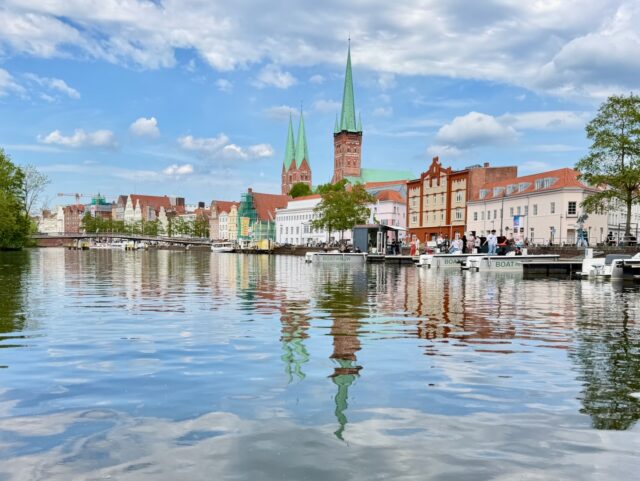
My first glimpse of Lübeck (map) was unforgettable: the city’s famous church spires rise above a skyline of regal gabled houses and terracotta roofs, hinting at its power and prosperity during the Middle Ages when it was one of Europe’s most influential trading centres. Often referred to as the ‘Queen of the Hanseatic League’, Lübeck’s UNESCO World Heritage-listed old town, located on an island in the Trave River, is a joy to explore!
Highlights of Lübeck
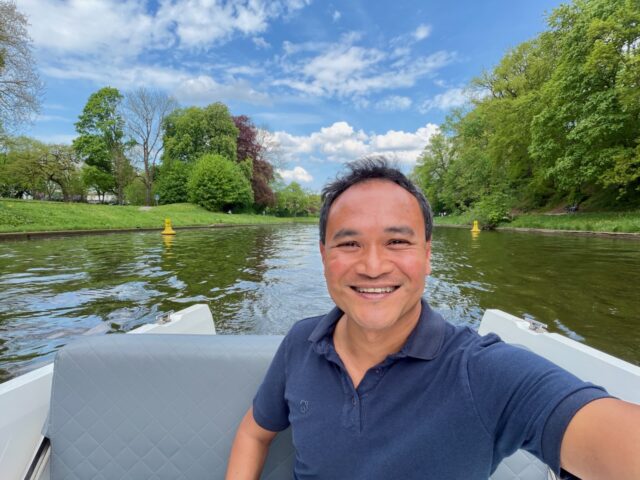
The first thing I did was an hour-long cruise around the old town, in an e-boat that was easy to pilot myself. The views of the town and its lush parks were absolutely gorgeous! You can hire an e-boat at BoatNow or join one of the Trave River cruises.
I spent the rest of my time wandering through the old town’s maze of atmospheric alleys, discovering hidden courtyards and exploring its historic buildings. Although much of the city was devastated during WWII, the old town has been painstakingly restored, recapturing much of its medieval splendour. These are the highlights of Lübeck:
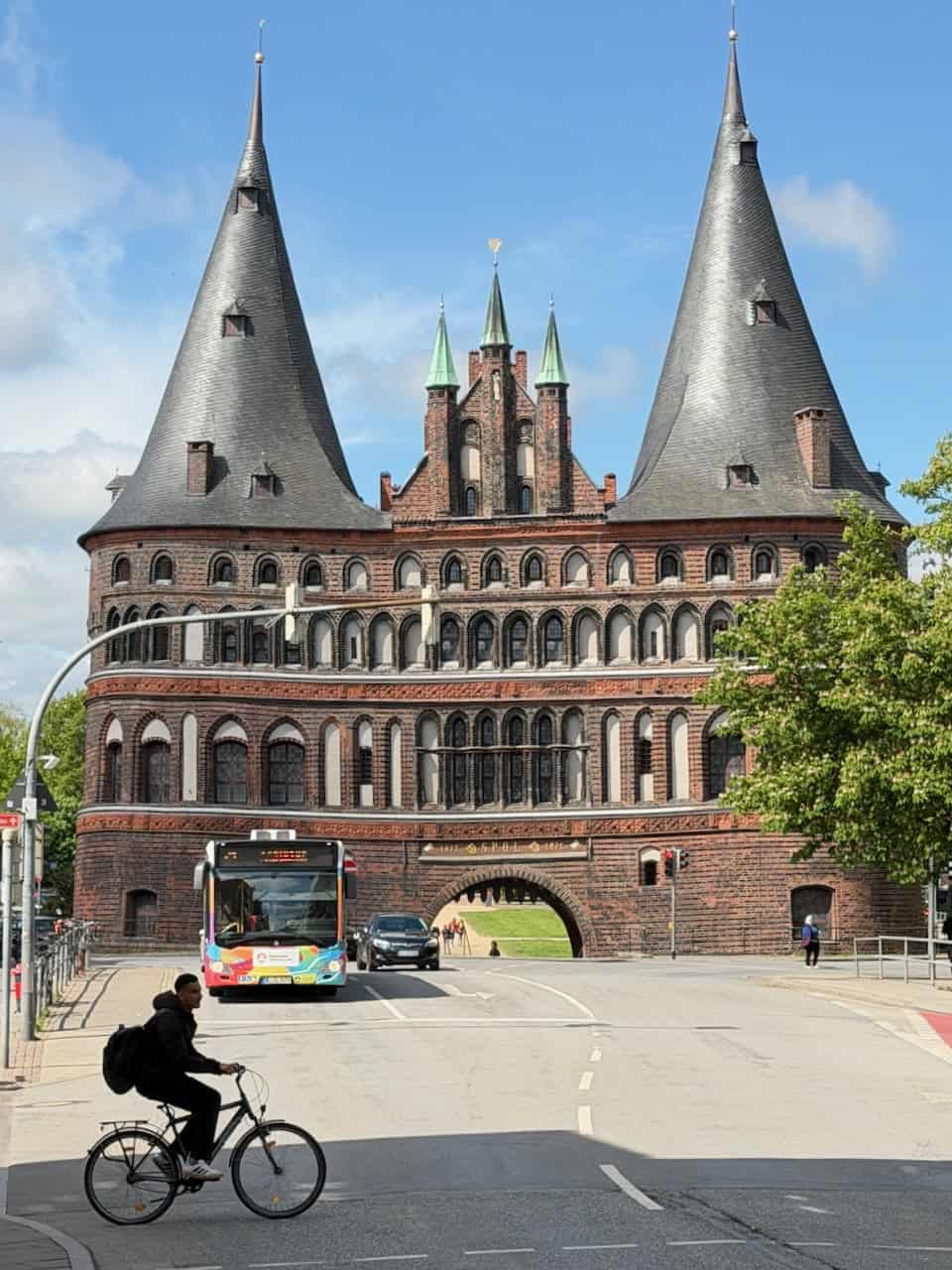
Holstentor
The most iconic landmark is undoubtedly Holstentor, the monumental twin-towered city gate that has become synonymous with Lübeck itself. Built in the 15th century, its imposing brick façade once defended one of Europe’s wealthiest ports.
Salzspeicher
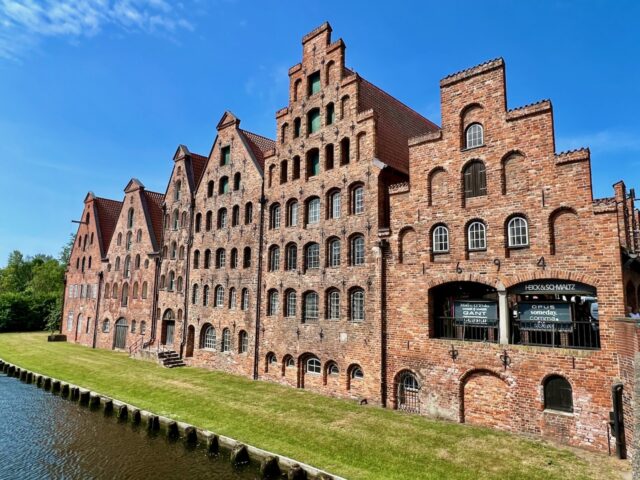
A stone’s throw from Holstenstor, you’ll find Salzspeicher, a row of six historic warehouses on the banks of the Trave River. The oldest of these is from 1579 and the newest dates to 1745. These warehouses were used to store salt brought from Lüneberg, before being transported to other parts of Europe.
Lübeck old town
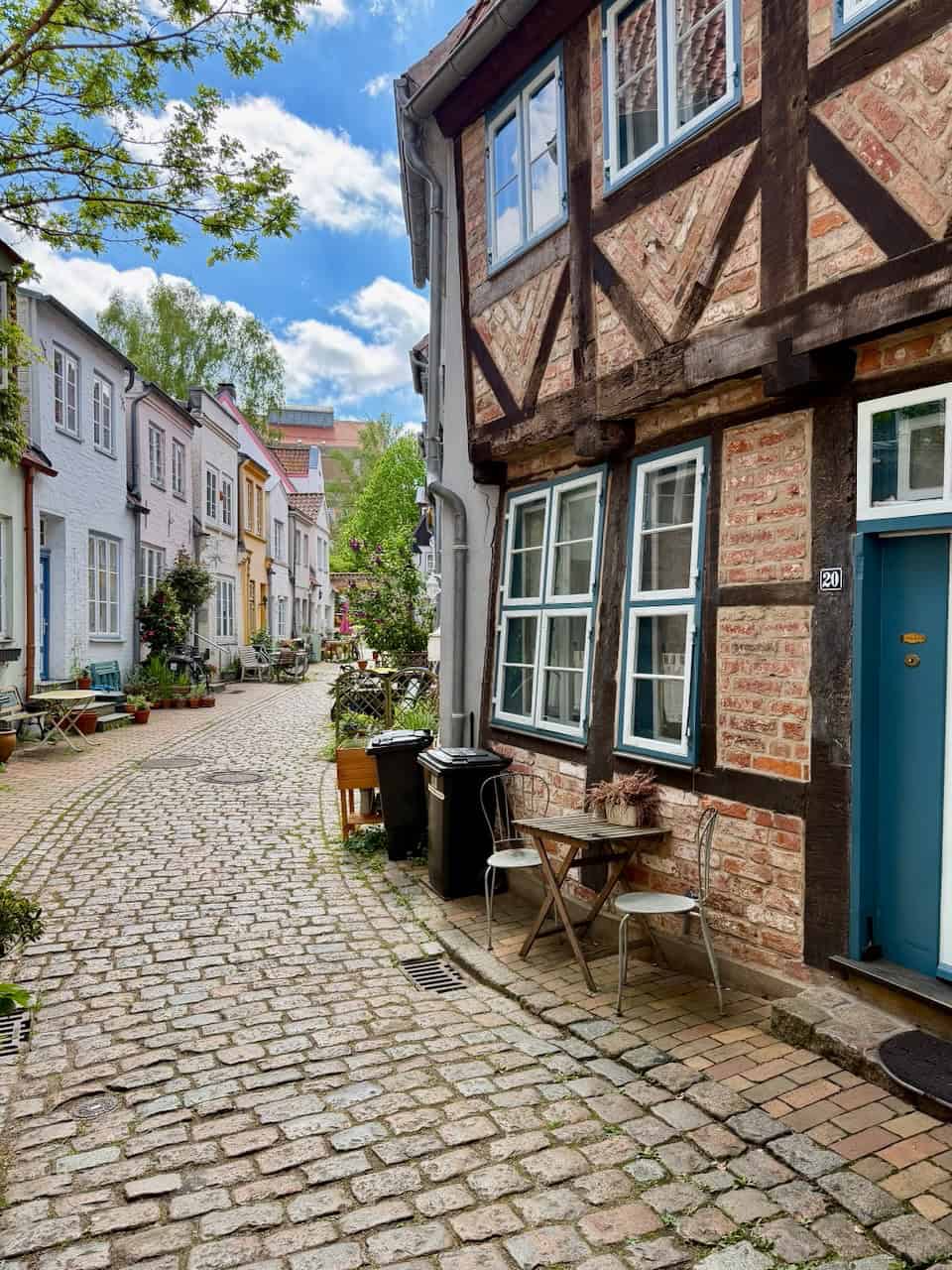
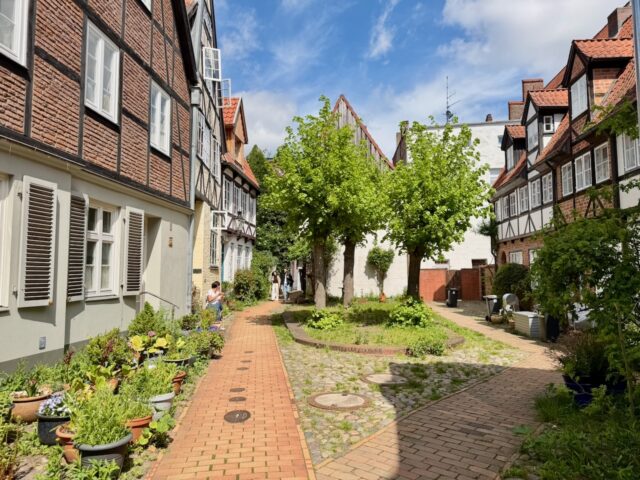
From Salzspeicher, I crossed the bridge into the old town and quickly discovered that Lübeck’s old town rewards slow exploration. Narrow alleyways known as Gänge and hidden courtyards branch unexpectedly from wider streets, revealing tiny houses, flower-filled passages and pockets of tranquillity. Around almost every corner stands another magnificent example of Brick Gothic architecture, the style that defines much of northern Germany.
The old town is also where you can find the fascinating Hansemuseum. This museum is dedicated to the history of the Hanseatic League, an association of rich merchant cities in northern Europe that dominated trade in medieval times.
Gänge – the alleyways and hidden courtyards of Lübeck
I spent an entire afternoon on a quest to find and see many of the gänge in the old town. They can be found throughout the old town, connecting busy streets and functioning as passageways into hidden neighbourhoods. Some of the most charming gänge include the Bäcker Gang, Hellgrüner Gang, Durchgang and Höveln Gang.
St. Peter’s Church
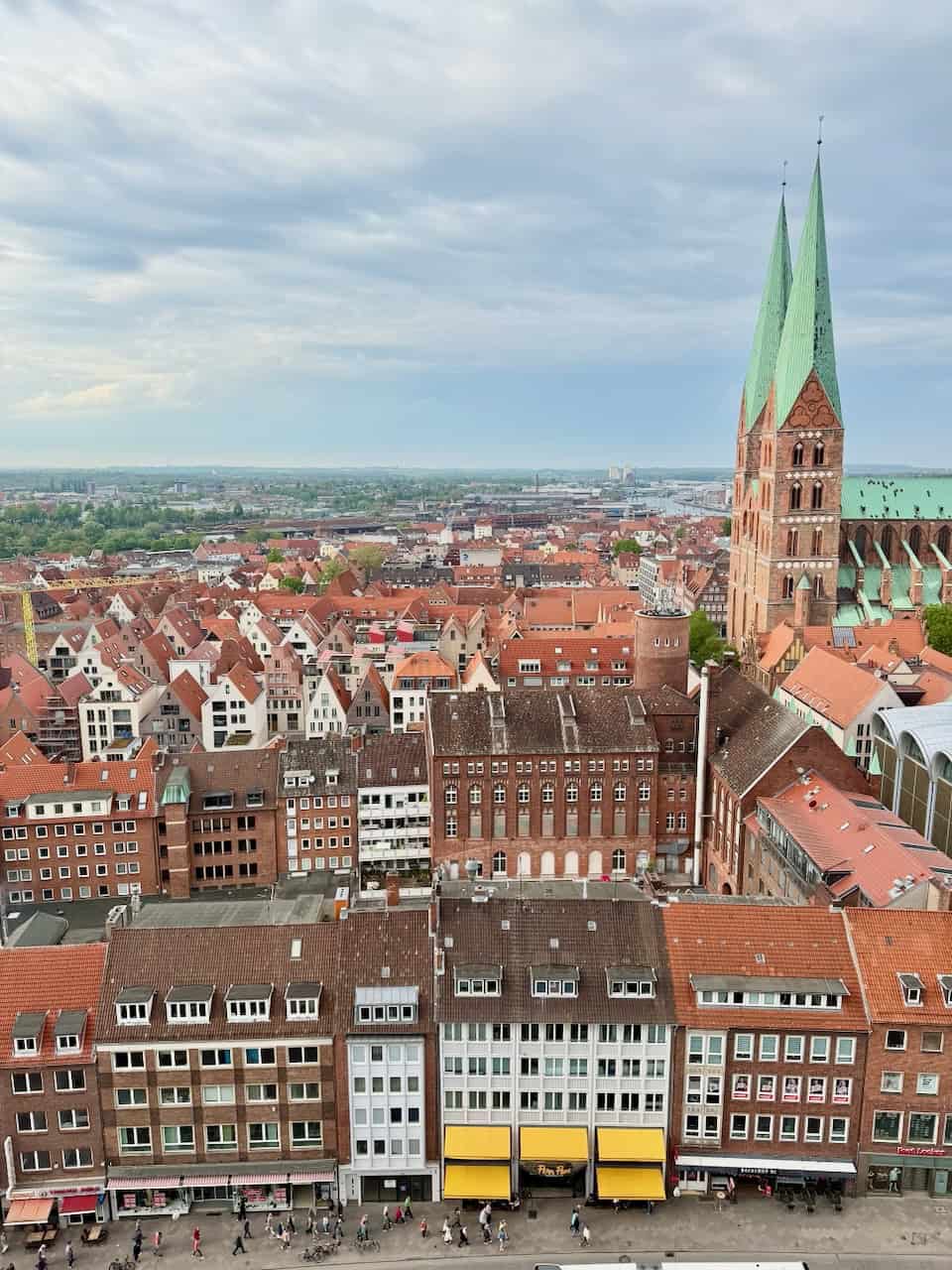
Another thing I did was climb up the tower of St. Peter’s Church, which offers one of the best views in the city. From above, Lübeck appears as a sea of terracotta roofs punctuated by church spires and waterways.
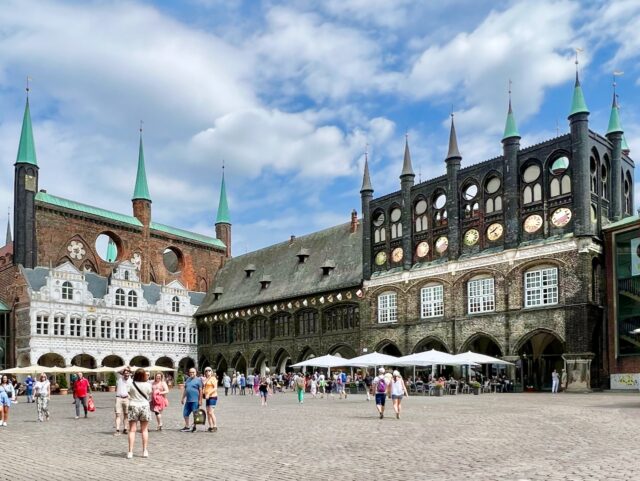
Historic City Hall
The Lübeck City Hall (Stadtverwaltung) is an architectural masterpiece dating back to the 13th century. With its elegant arches and towering spires, it’s an absolutely majestic sight.
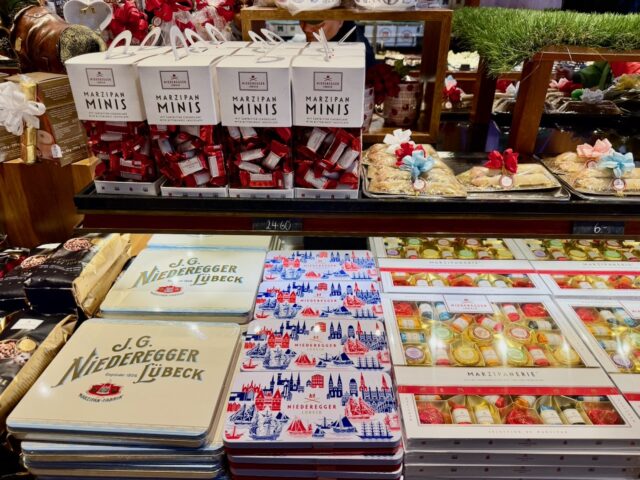
Niederegger Marzipan
The city is famous for marzipan, and a stop at the historic Niederegger (across the road from the City Hall) is practically obligatory. Their marzipan creations range from traditional loaves to elaborate confectionery sculptures. Above the shop is a lovely café where I indulged in a coffee and a delicious slice of cake.
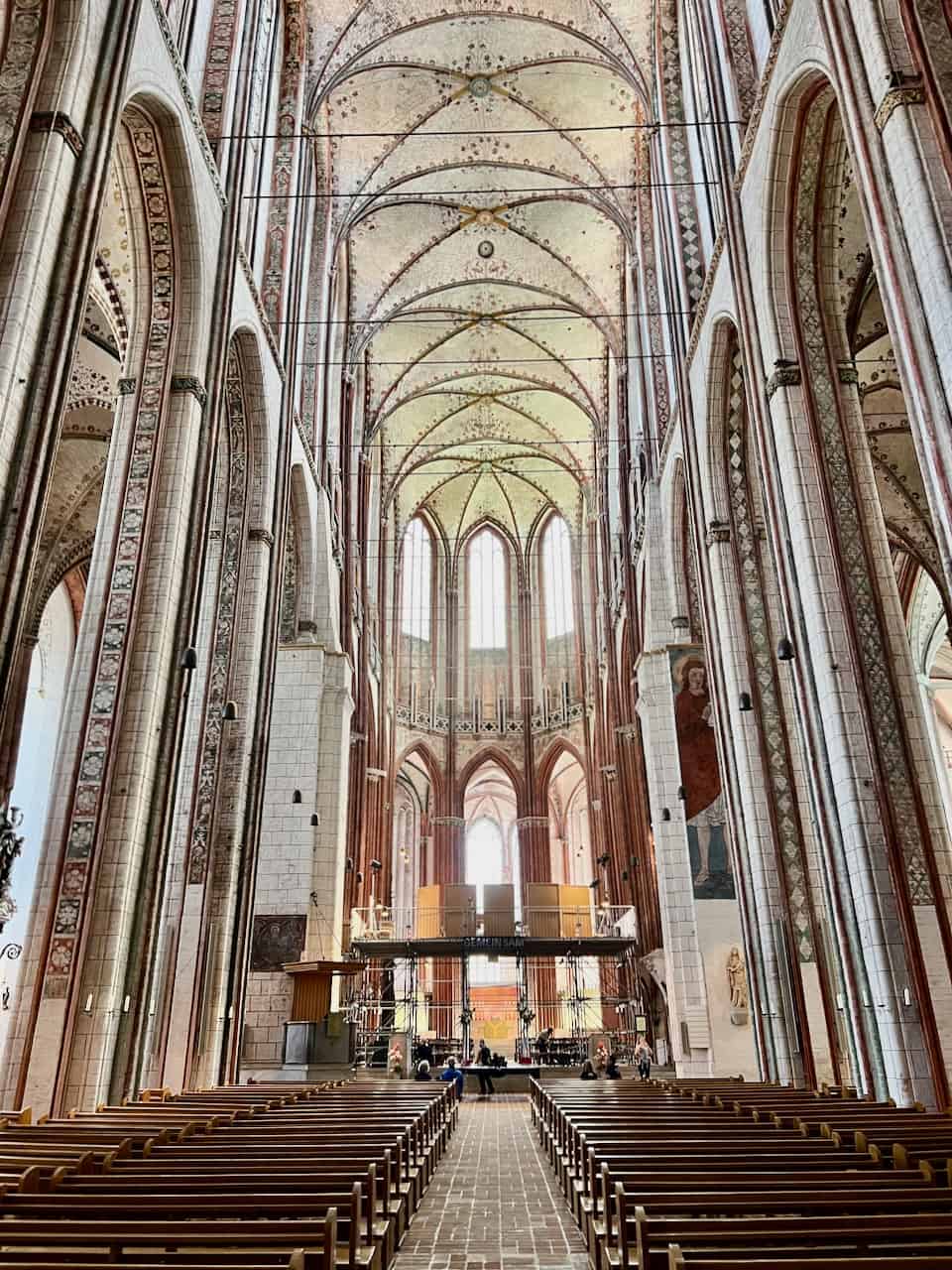
St. Mary’s Church
No visit to Lübeck would be complete without stepping inside the 14th century St. Mary’s Church, one of the masterpieces of Gothic architecture in Europe. Its soaring nave inspired church builders across the Baltic region, and the atmosphere inside is both grand and deeply contemplative.
An der Obertrave
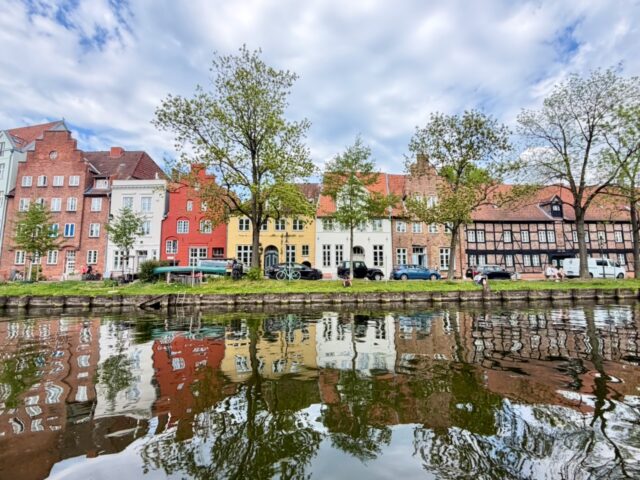
A lovely promenade along the River Trave, An der Obertrave is lined with gorgeous medieval and Renaissance houses, and packed with lively cafés during the warmer months. It’s a delight to see on a stroll along the promenade and from a river cruise.
Schiffergesellschaft
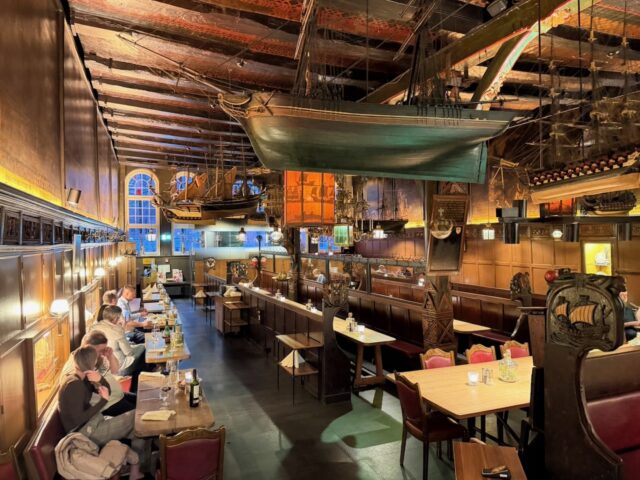
For dinner, Lübeck’s maritime heritage shines through menus featuring fresh fish, creamy seafood soups and northern German classics. Just across from Jakobikirche, I found one of Lübeck’s oldest and most iconic restaurants: Schiffergesellschaft. This atmospheric restaurant is famous for its local (seafood) specialties and its historic interior.
Where to stay in Lübeck
On this trip, I stayed at the lovely Hotel LIHO, a family-owned hotel roughly between the train station and the old town. The rooms are comfortable (the minibar is included in the price), breakfast is abundant and I loved the quiet coffee/snack corner.
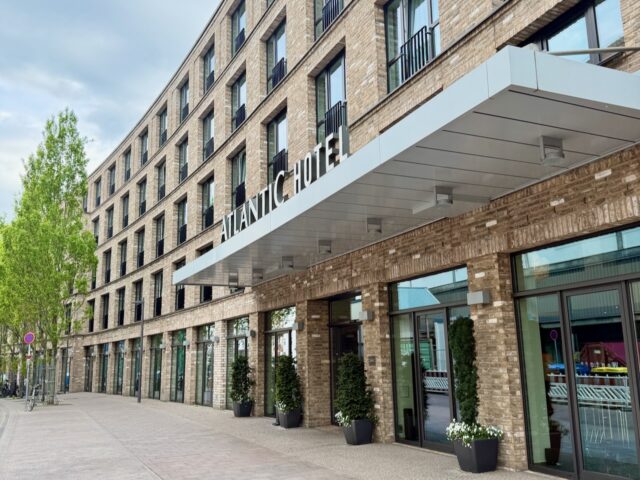
I can also recommend Atlantic Hotel Lübeck, a modern, luxurious hotel in the old town near St. Peter’s Church.
Rostock
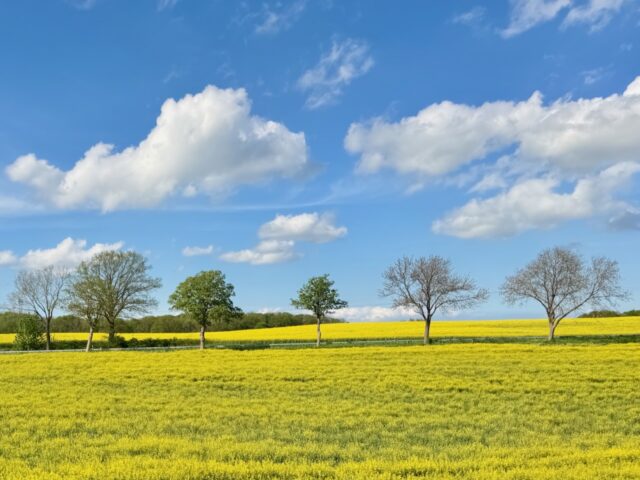
From Lübeck, the railway journey eastwards to Rostock traverses landscapes of forests, fields and scattered villages before eventually arriving in one of Germany’s most important Baltic ports.
Rostock (map) carries its maritime identity proudly – reminders of centuries of seafaring tradition appear everywhere. I had a wonderful time getting to know Rostock. The first thing that struck me was its broad palette of architectural styles, which clearly reflects the city’s past: from a powerful medieval maritime city to being the largest and most important port during the socialist GDR (East Germany) period. Read more about things to see and do in Rostock.
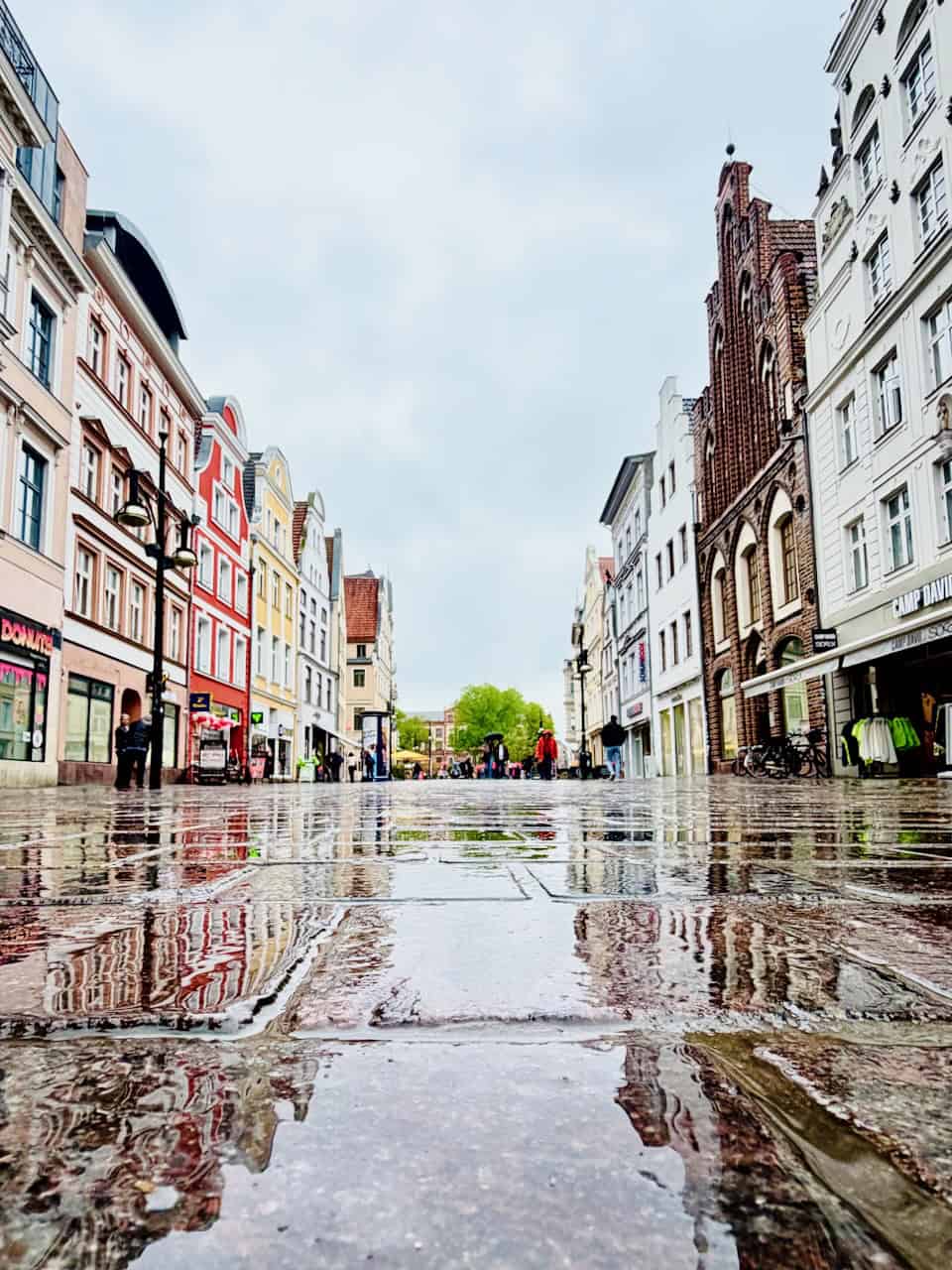
Highlights of Rostock
Rostock is easy to explore on foot. I started my walk at St. Peter’s Church, then continued along the old city wall before crossing the centre of the old town in the direction of the harbour. The highlights, listed below, can comfortably be covered in half a day.
St. Peter’s Church
The 13th century St. Peter’s Church, the city’s oldest, is especially striking as its 117m high tower – restored in 1994 with contributions from the public – can be seen from miles away.
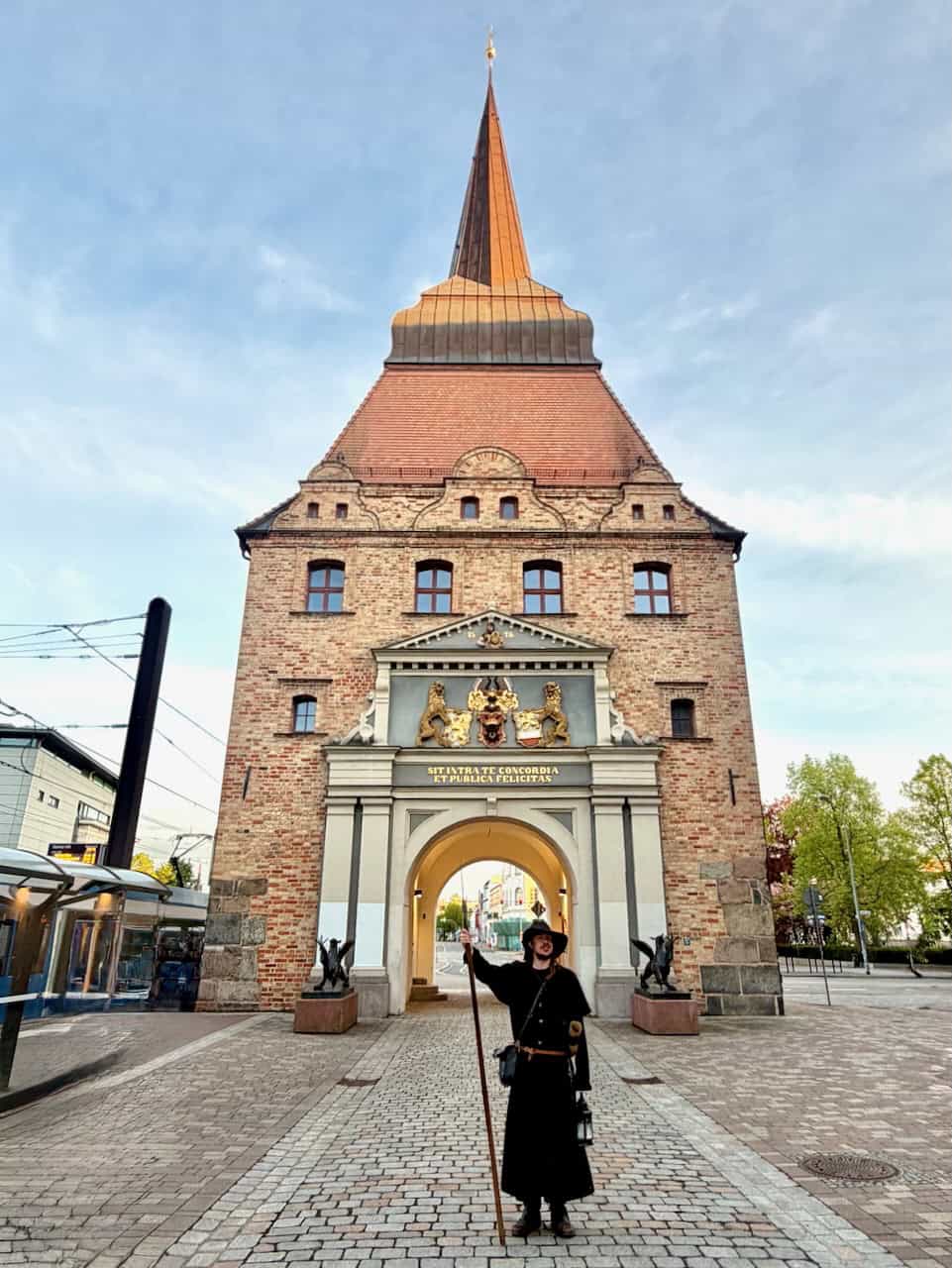
Steintor
The 16th century Steintor (Stone Gate) was built in a Dutch Renaissance style on the site of the former medieval fortifications. It’s an elegant tower guarded by griffin sculptures.
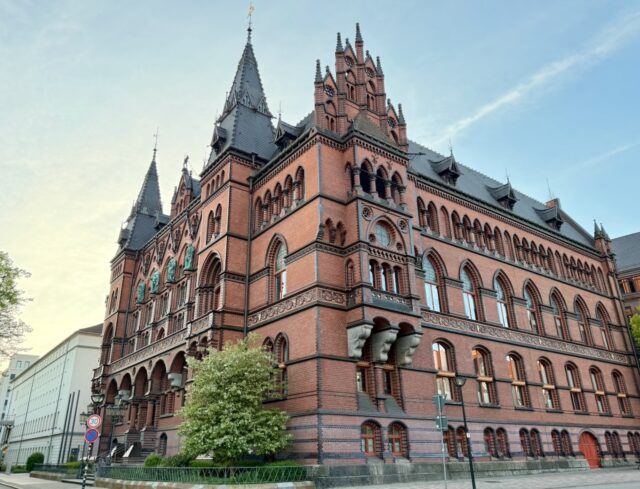
Across the road stands the stunning Neo-Gothic Ständehaus, that houses the Rostock regional court.
Neuer Markt
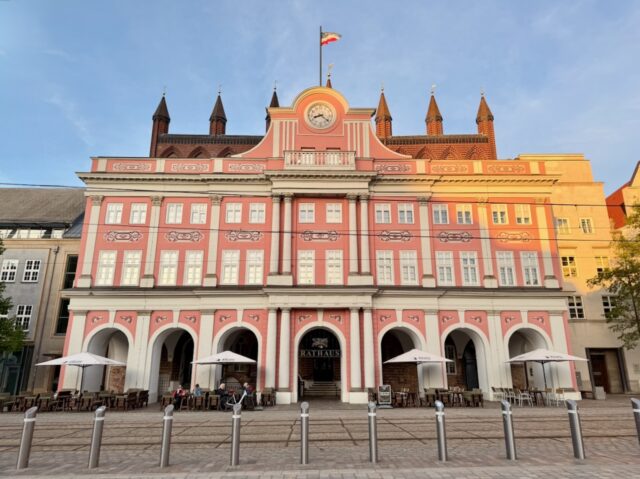
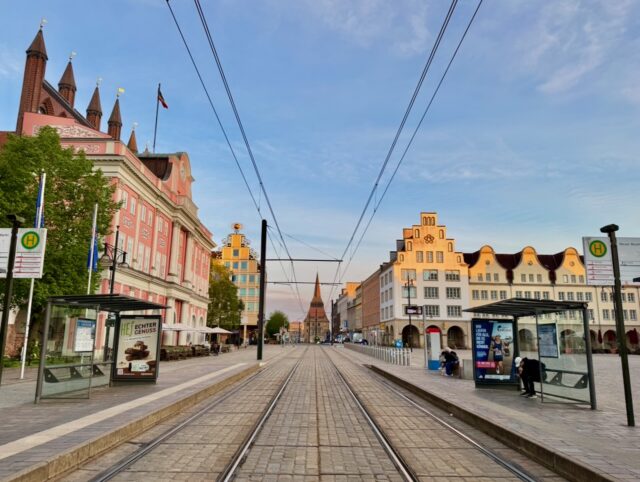
The city’s historic heart centres on the Neuer Markt, a handsome square lined with colourful gabled buildings and dominated by the elegant Town Hall.
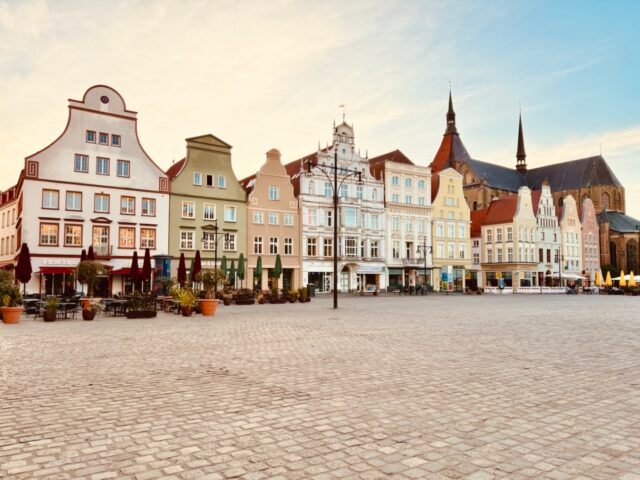
Heavily rebuilt after WWII, Rostock still retains an appealing sense of historical texture. These layers of texture are embodied in the Town Hall – originally a 13th century Brick Gothic building in the typical northern German Hanseatic style, a pink Baroque façade was added in the 18th century.
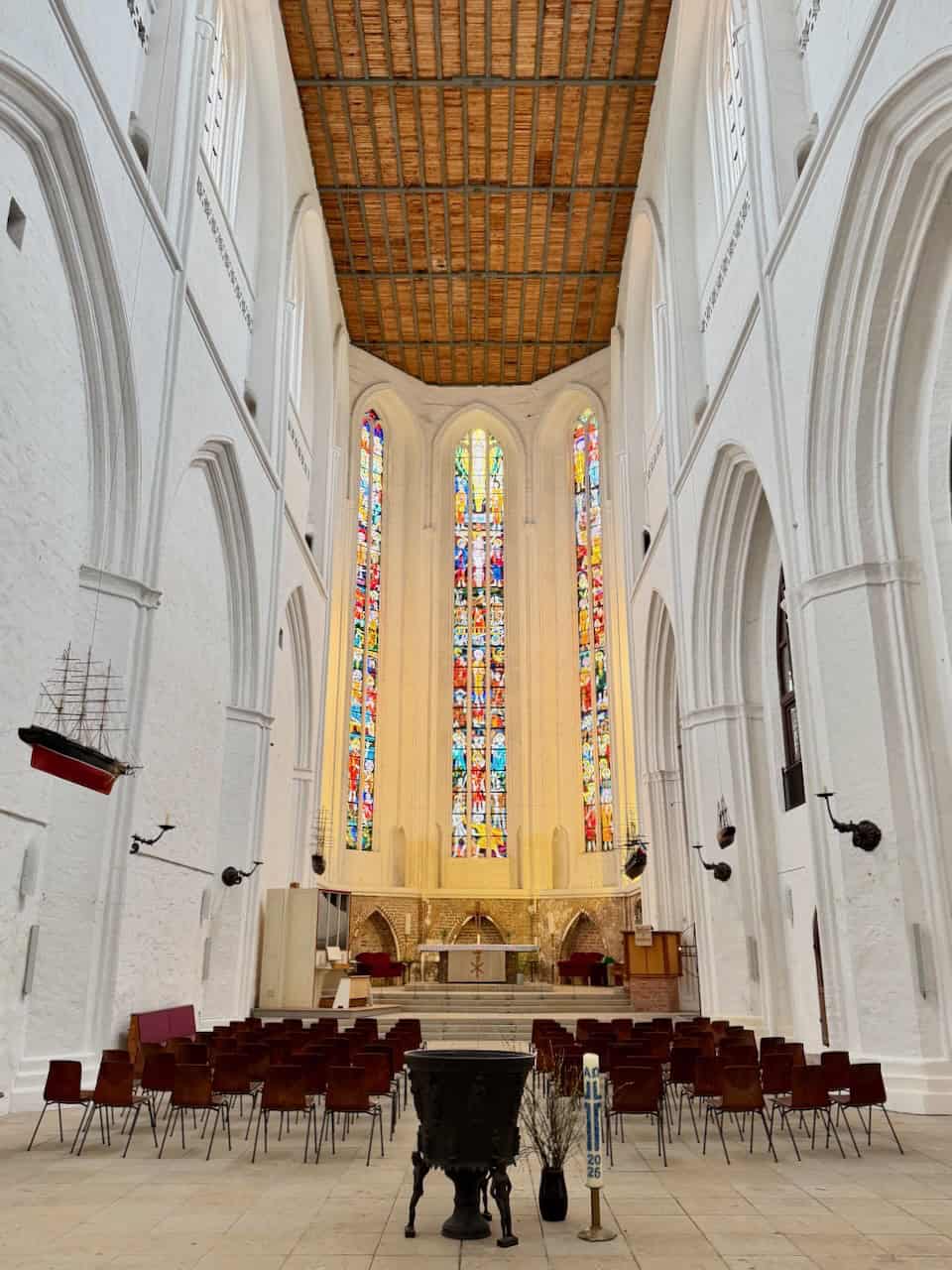
St.Mary’s Church
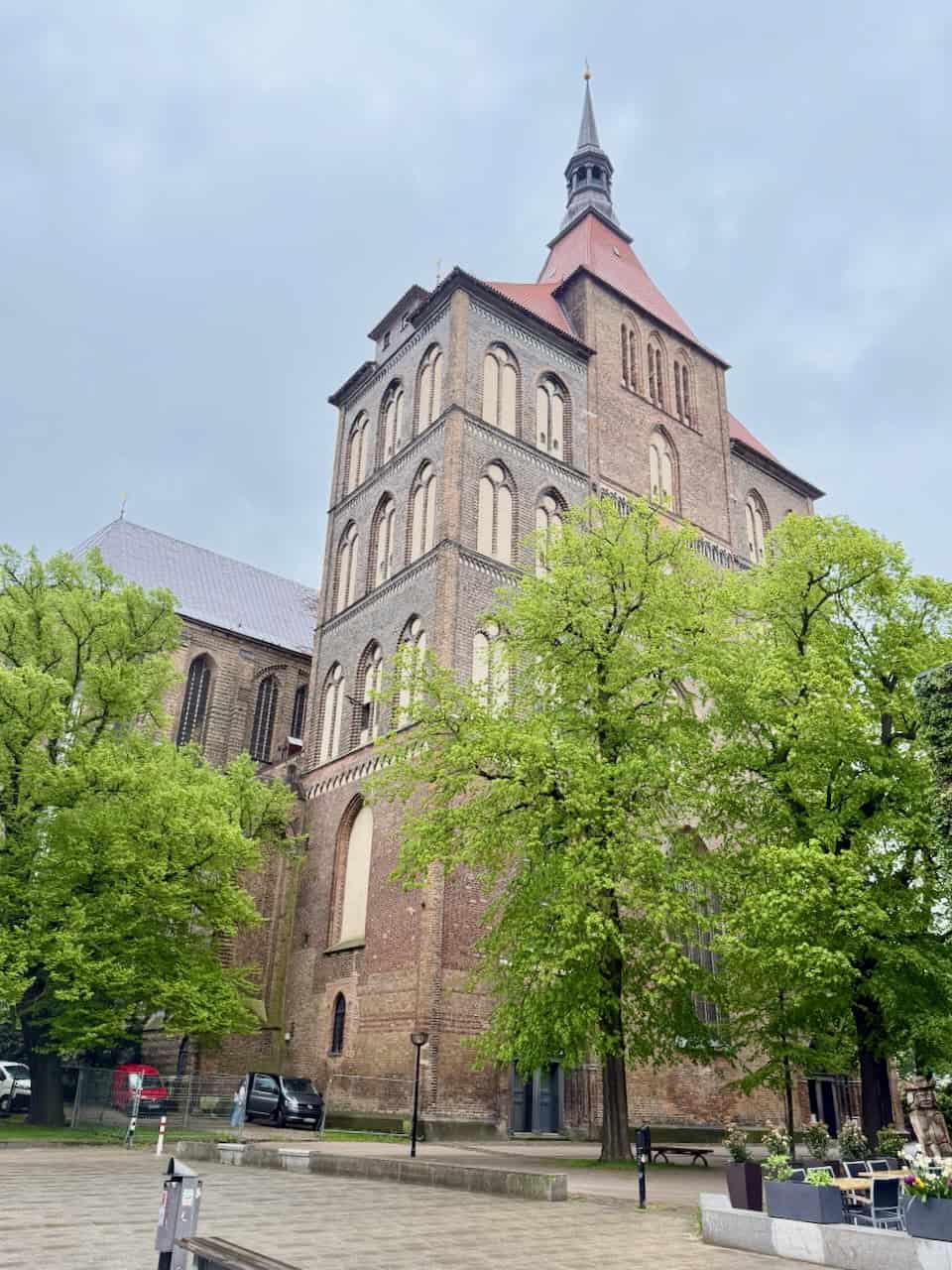
Adjacent to the square is the imposing Brick Gothic St. Mary’s Church, the biggest of the town’s three medieval churches. The church houses one of northern Europe’s oldest astronomical clocks, still functioning after more than five centuries. It’s also home to one of the largest single stained glass windows in Europe.
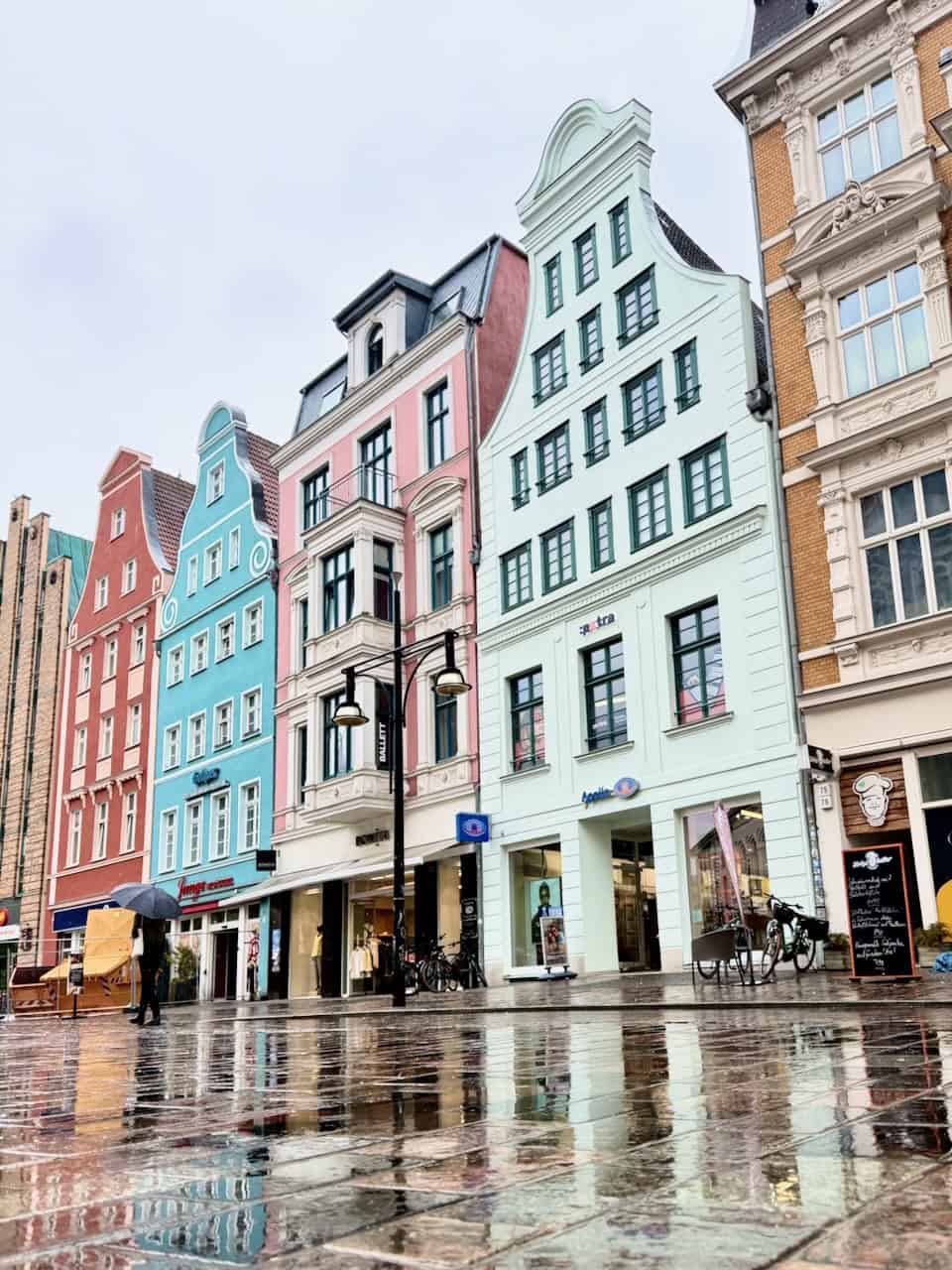
Kröpelinerstrasse
From Neuermarkt, I walked the length of the Kröpelinerstrasse, the city’s lively pedestrian thoroughfare. Lined with boutiques, cafés and fragments of medieval and Renaissance architecture, the street’s true character emerges when one looks upward.
Universitätsplatz
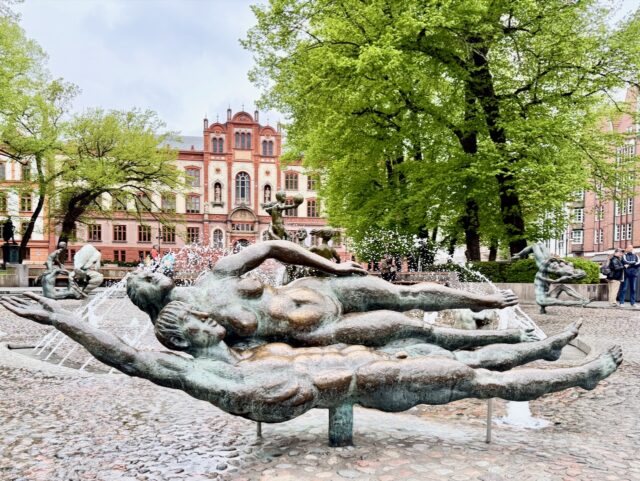
The street leads up to Universitätsplatz (University Square), with its lively ‘Zest for Life’ fountain. The University of Rostock, founded in 1419, is one of the oldest in Germany.
A stone’s throw from the square is the Cultural History Museum of Rostock, a beautiful museum housed in a 13th century monastery.
Langestrasse
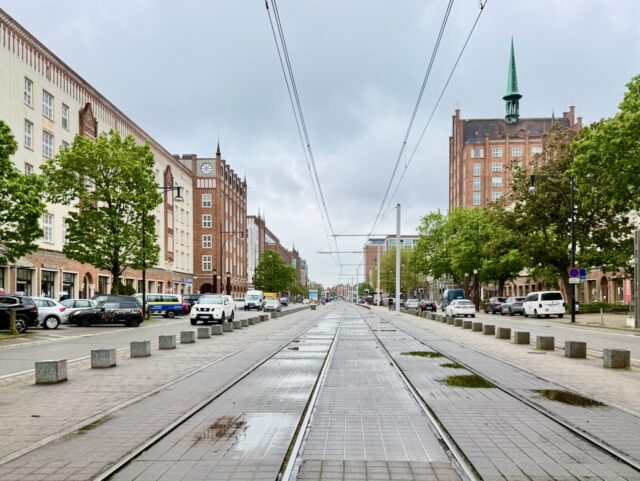
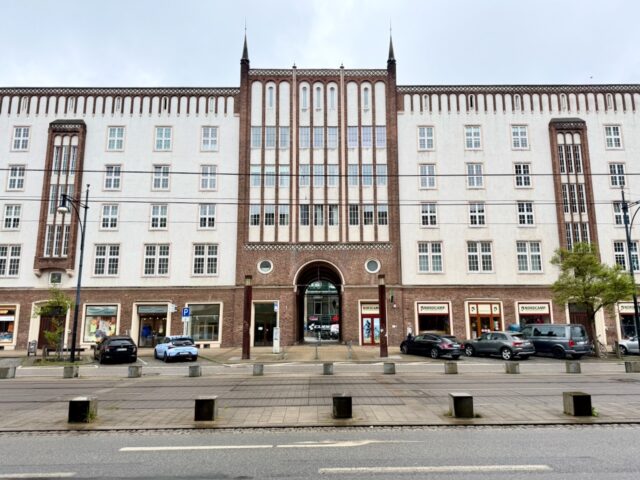
The Langestrasse is perhaps one of the most interesting streets in Rostock. This broad boulevard was built during the socialist GDR period as a location for Soviet-style parades. Meant to showcase the socialist classicism style, the street is a fascinating blend of monolithic façades – typical of Soviet-style architecture of the 1950’s – with Brick Gothic architecture, a reference to the city’s Hanseatic past.
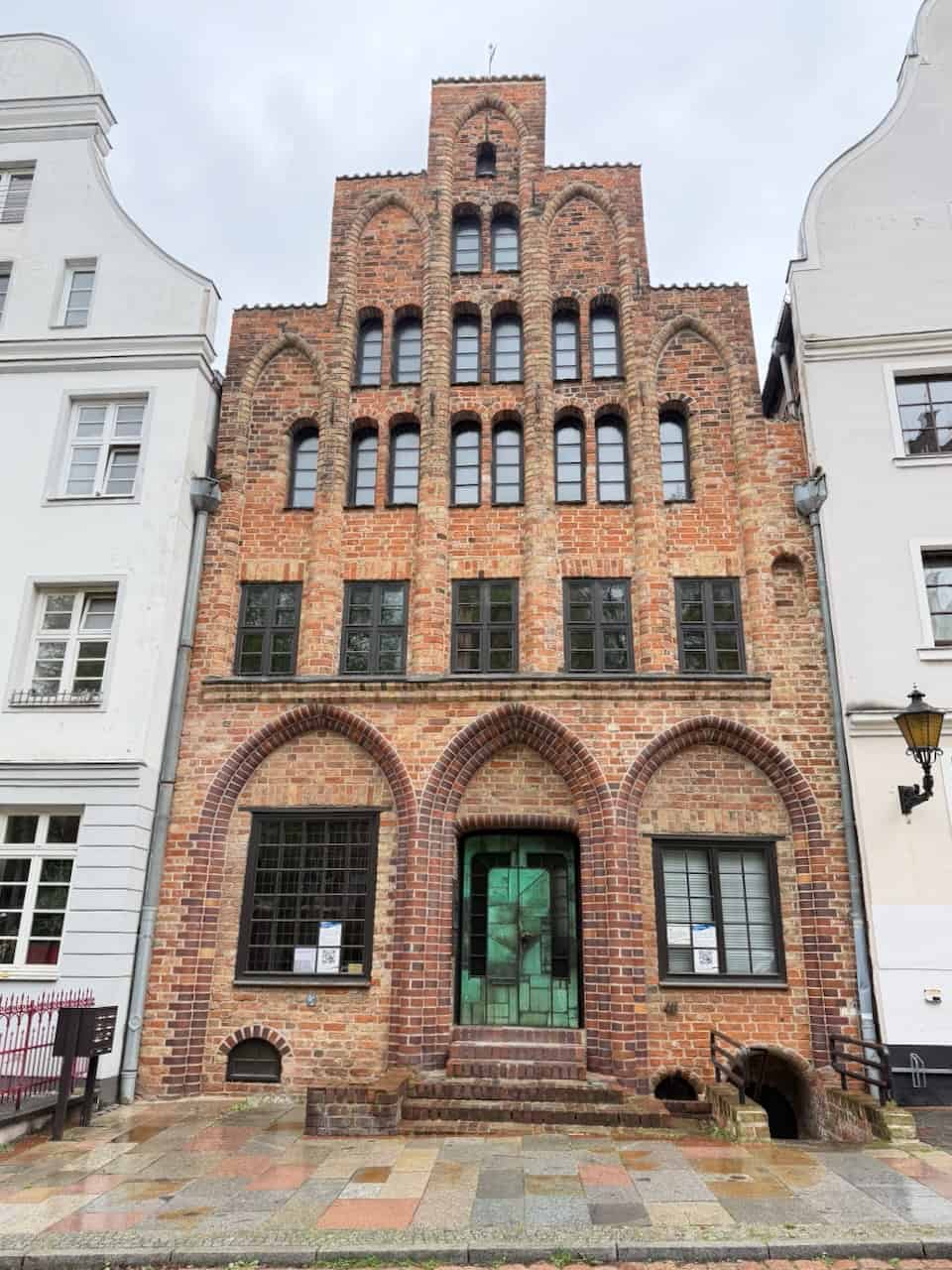
Behind the Langestrasse, in the Wokrenterstrasse, stands the Hausbaumhaus, one of the oldest and best preserved merchant houses from the Hanseatic era.
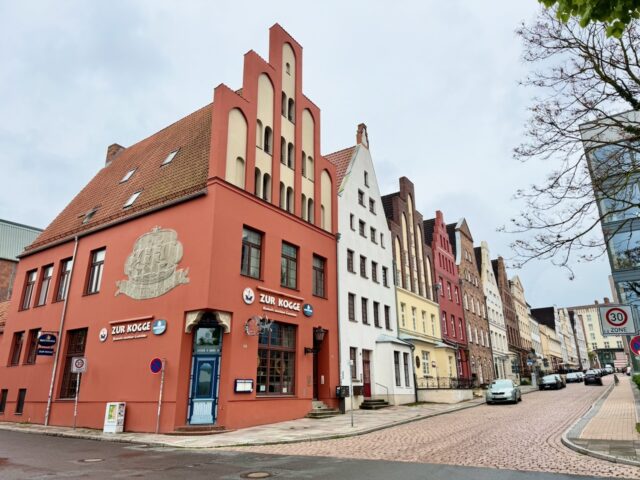
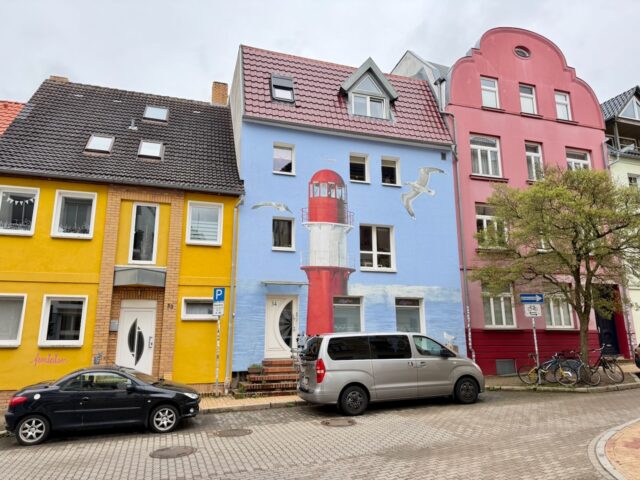
I strolled around the neighbourhood and spotted other references to Rostock’s maritime history, before making my way down to the harbour.
Warnemünde
I ended my walking tour of Rostock at the harbour, where I was just in time for the 2:30pm cruise to Warnemünde on board the Rostocker 7.
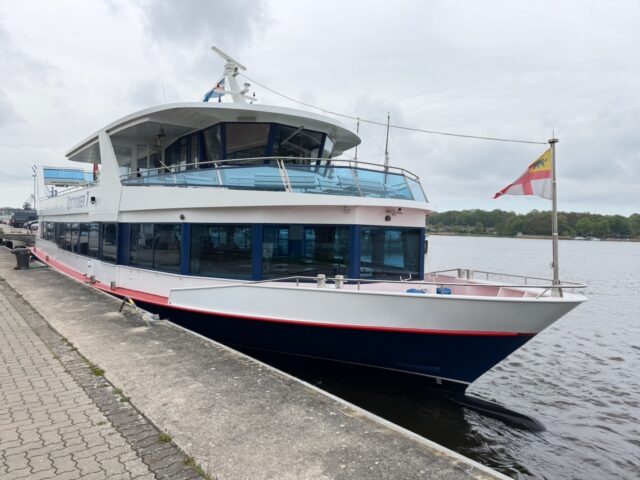
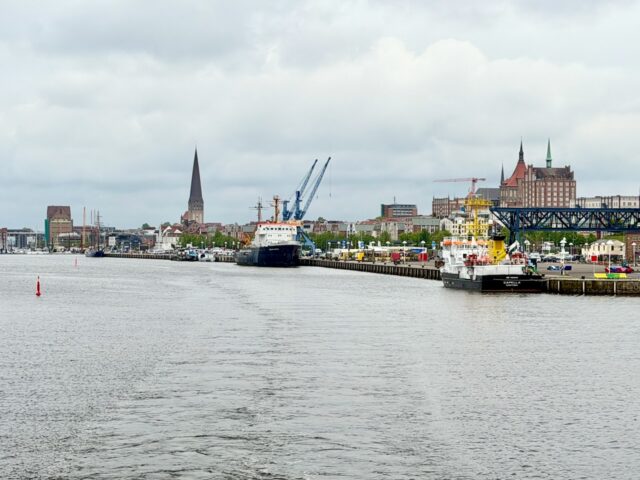
The seaside district of Warnemünde (map) transformed the experience entirely. Whereas it was cloudy and rainy in Rostock, the clouds made way for bright, blue skies as we approached the Baltic coast. I stepped off the boat and within minutes, I was wandering along a boat-filled inner harbour and charming streets lined by picturesque fishermen’s houses.
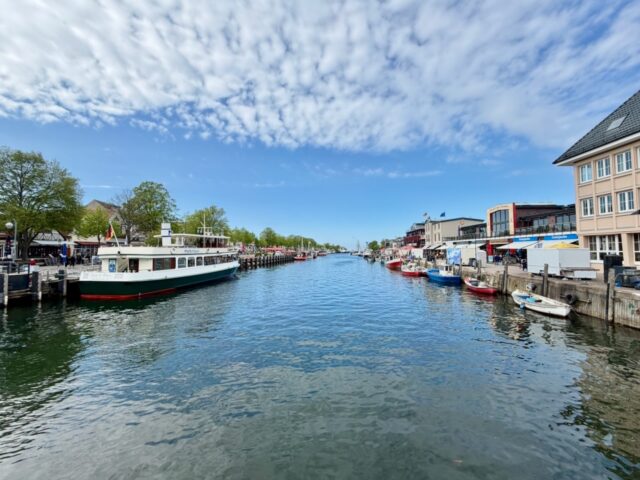
Highlights of Warnemünde
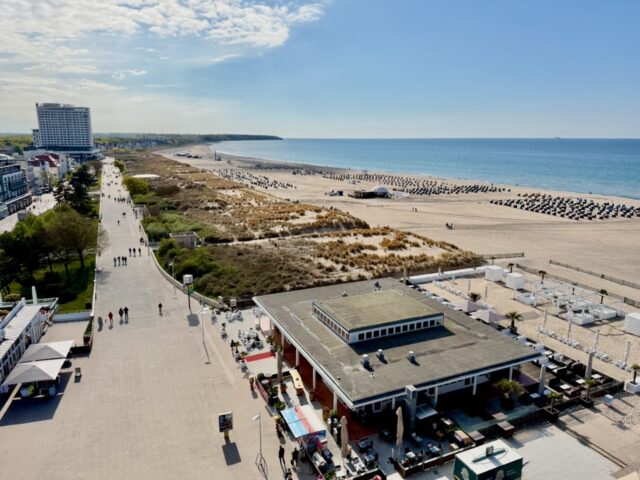
Warnemünde possesses an easygoing coastal charm. Fishing vessels bob in the harbour, cafés spill onto promenades and locals stroll along the waterfront eating freshly smoked fish sandwiches. The beach itself is broad, sandy and surprisingly expansive.
Alter Strom
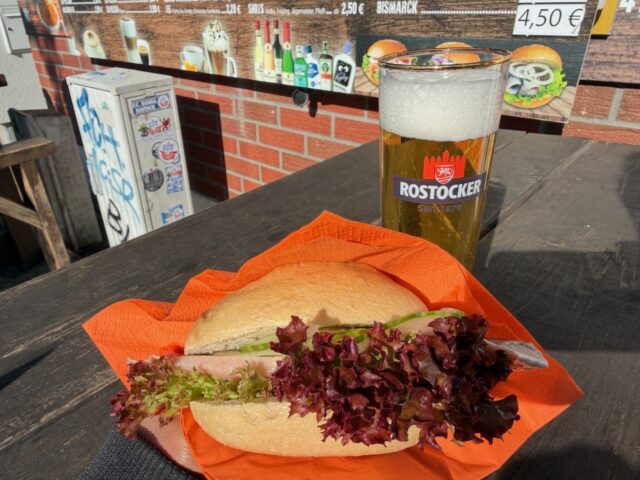
The Alter Strom (Old Stream) is an inner harbour that’s lined on both sides by cafés, restaurants, shops and fishermen’s boats (where fish sandwiches are sold). Don’t forget to stop at one of the fish counters to order a delicious fischbrötchen (fish sandwich).
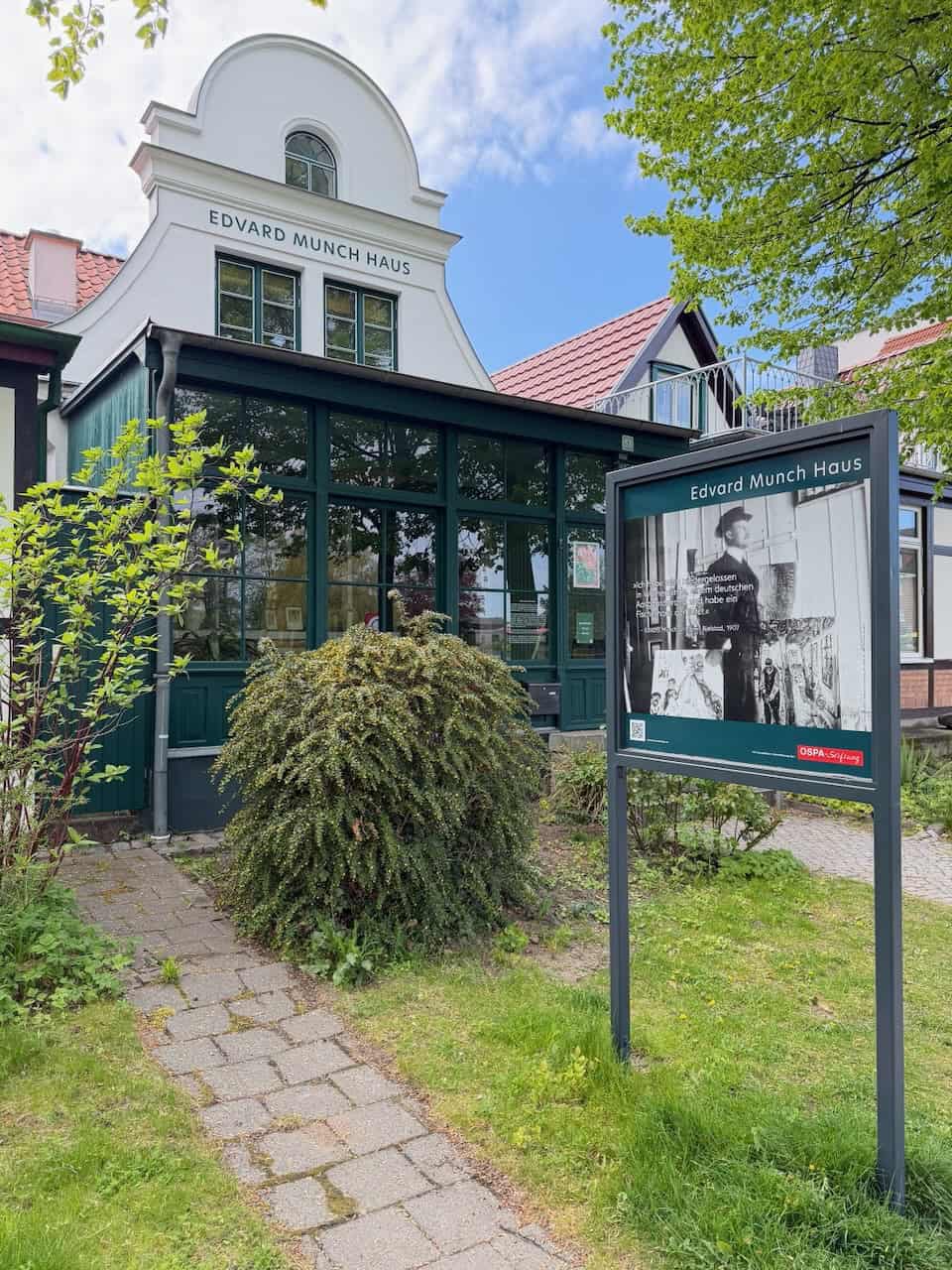
Edvard Munch house
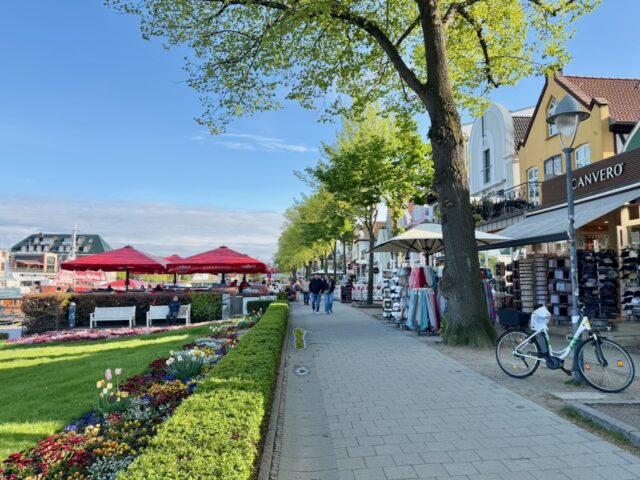
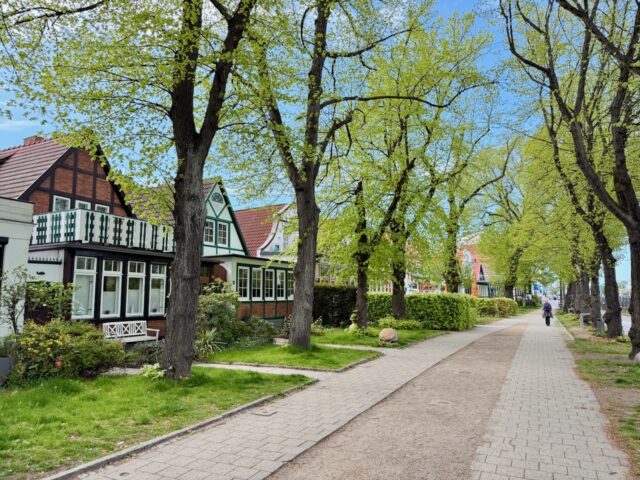
I especially loved the old fishermen’s houses on Am Strom (street), one of which was occupied by Edvard Munch during his stay in Warnemünde. This house is now a museum dedicated to the famous artist.
Alexandrinenstrasse
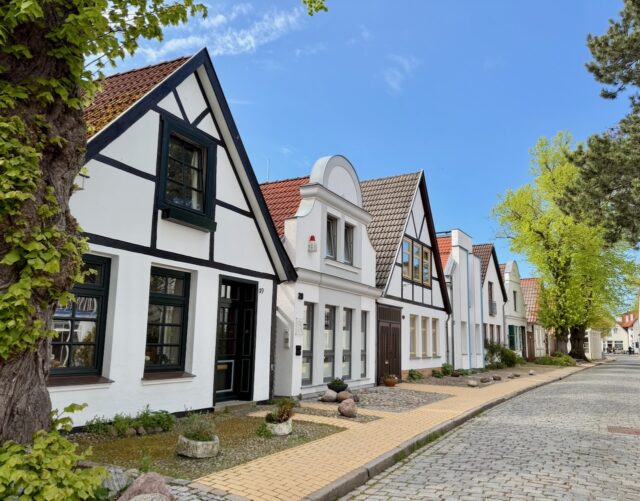
Parallel to Am Strom is the Alexandrinenstrasse, perhaps the most charming street in Warnemünde. It’s a shady street filled with absolutely gorgeous houses.
Lighthouse
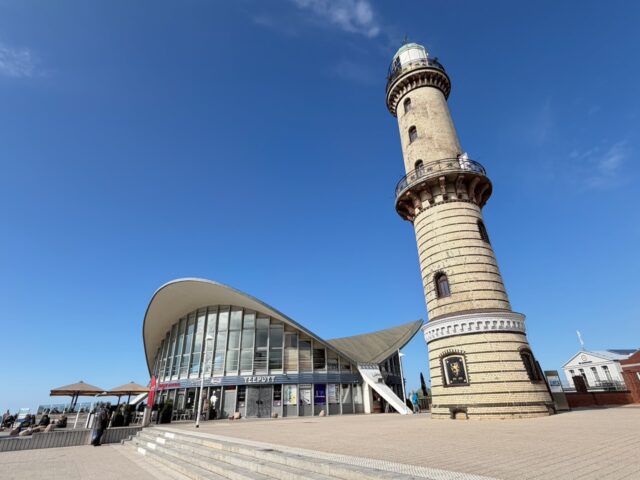
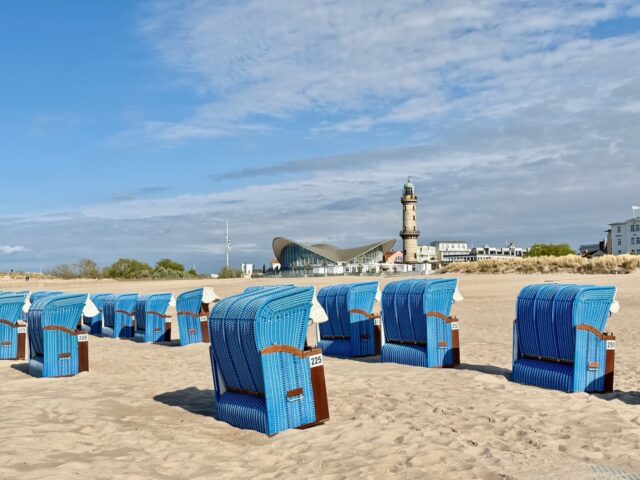
The Warnemünde Lighthouse and adjacent tea pot-shaped building have become beloved local symbols. Climbing the lighthouse rewards visitors with sweeping views across the harbour entrance, beaches and the Baltic Sea. If you attempt the climb, watch your head in the top section of the spiral staircase, and at the door that leads to the viewing platform – I learned that lesson the hard way.
Warnemünde beach
The Warnemünde beach is one of the widest stretches of sand on the Baltic coast. A nudist beach during the GDR era, it’s now a mixed beach with a separate nudist section. One of the most unique features of Warnemünde beach are the Strandkorb beach chairs. Invented in Rostock but first introduced in Warnemünde, the Strandkorb are synonymous with Warnemünde, and can nowadays be found across the German Baltic coast.
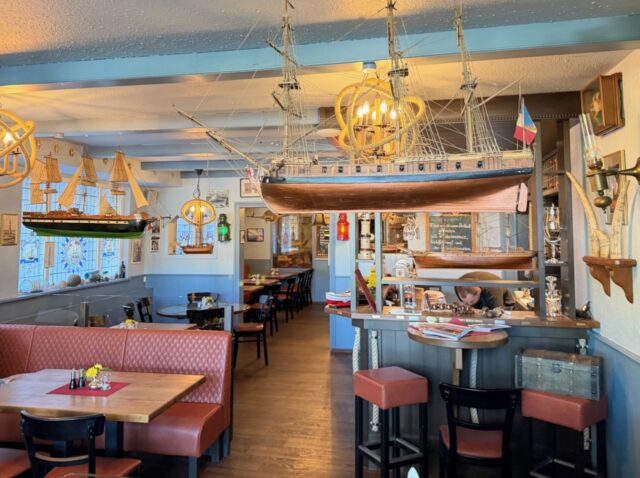
Before returning to Rostock, I tucked into a delicious fish dinner at Restaurant Seekiste zur Krim (Am Strom 47).
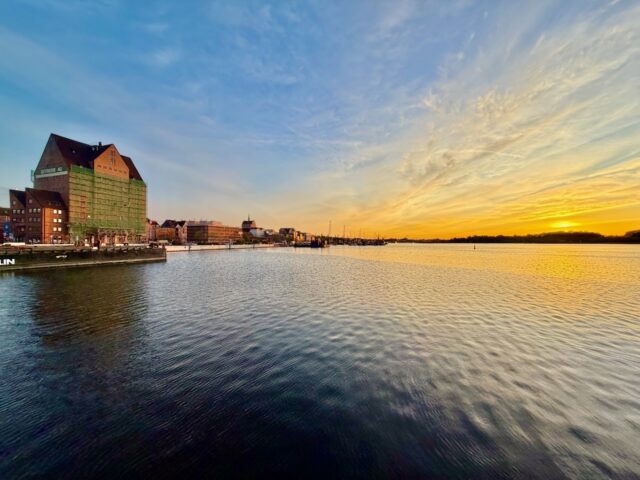
Back in Rostock proper, the evening atmosphere is lively but relaxed, shaped partly by the city’s university population. I ended the day at the harbour, arriving just in time to watch the sun sink below the horizon, and reflect on my time in Rostock. This is a city that strikes a wonderful balance, where history, maritime culture and seaside charm are seamlessly woven into a rewarding destination.
Where to stay in Rostock
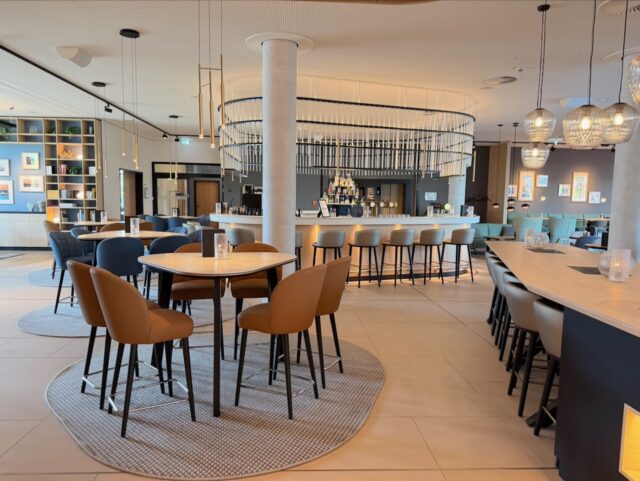
I stayed at the ScanHotels Stadthafen and loved the experience! Located at the harbour, on the fringes of the old town, this hotel boasts a beautiful, modern interior and top-notch facilities like a large gym and an expansive rooftop spa.
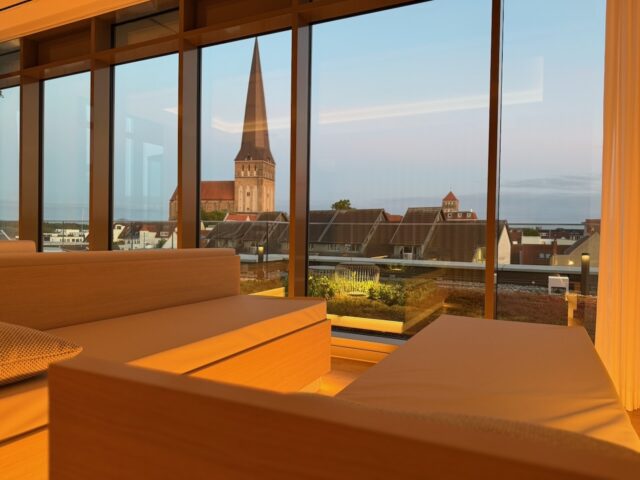
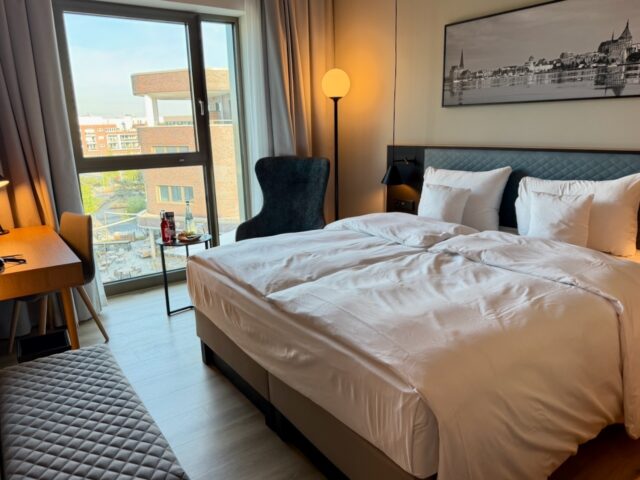
The rooms are spacious and very comfortable, with an absolutely wonderful bed and a sizeable bathroom.
The hotel serves a fantastic breakfast, and there’s also a bar/lounge and a large terrace. Next door, Gasthaus Unser Bier is a restaurant that serves excellent German food and beer.
Erfurt
Heading south by rail, the scenery shifts subtly. Flat northern landscapes gradually give way to gentler hills and broader agricultural plains until the train arrives in Erfurt, the capital of Thuringia and one of Germany’s most enchanting cities.
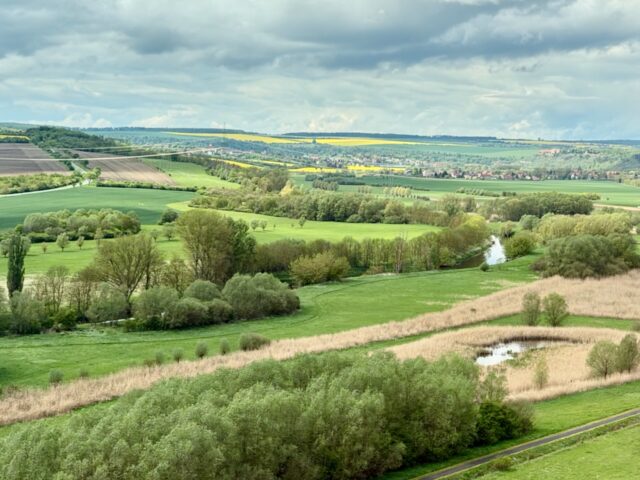
I was excited to visit Erfurt (map). Years ago, I spent a night in Erfurt during a tour of Thuringia and Saxony, but it was almost dark by the time I arrived. I fell in love with the city during my evening stroll and promised myself that I would one day return.
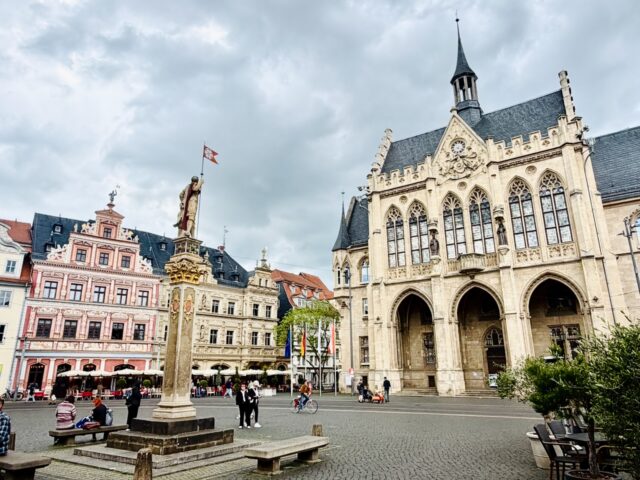
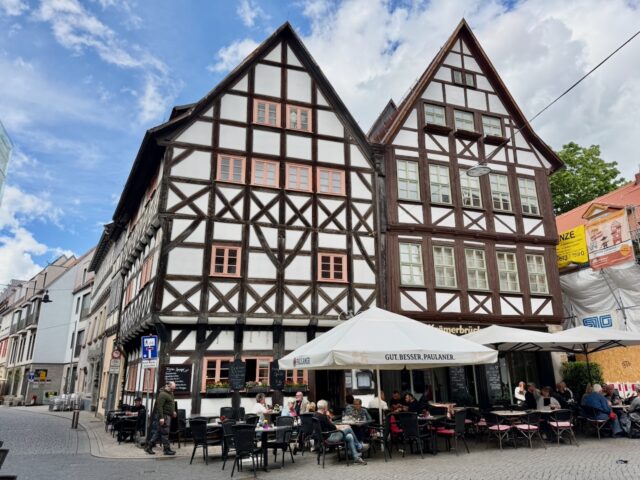
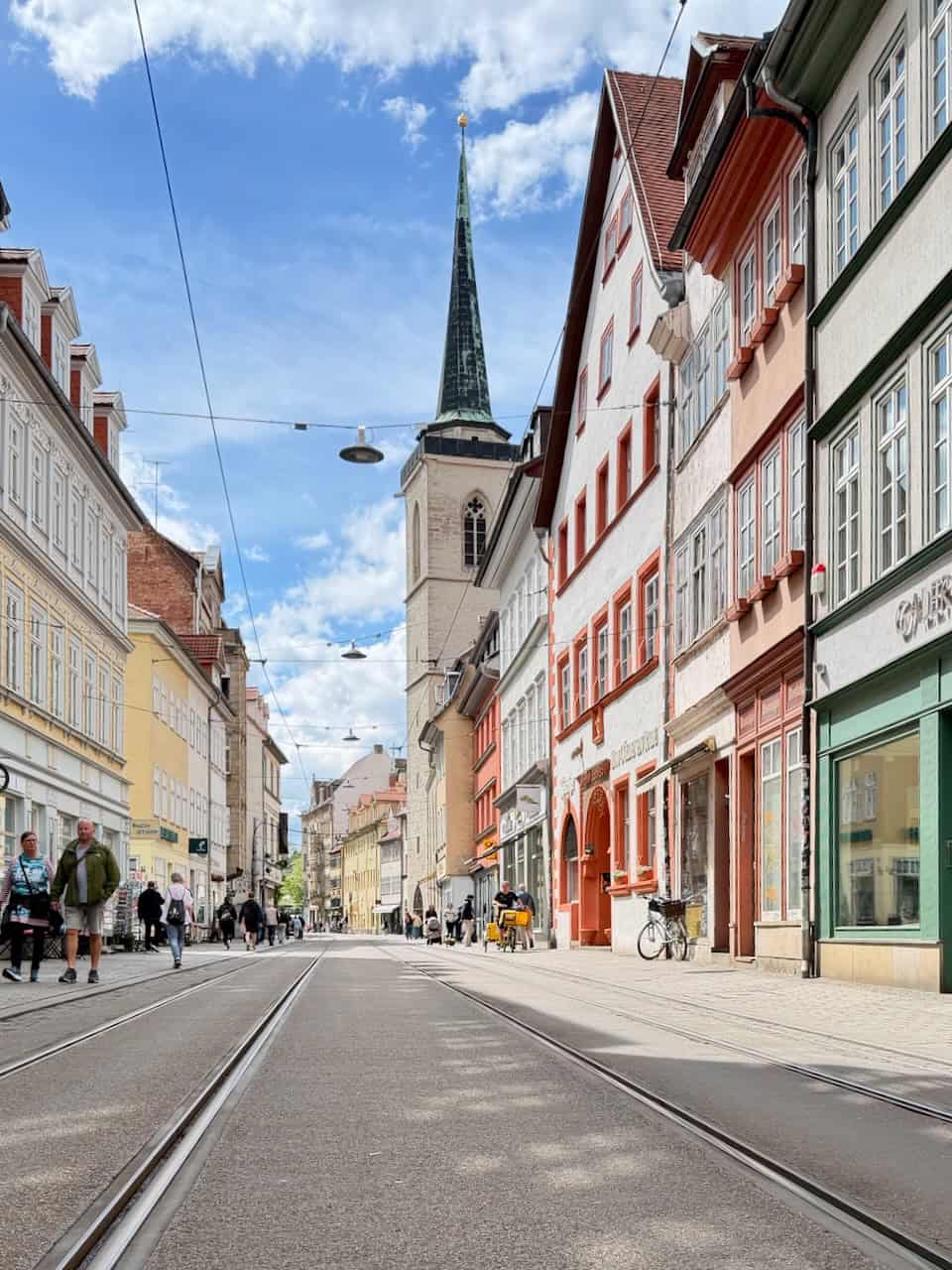
Compared to the other cities, Erfurt feels immediately different. Where Lübeck speaks of merchant wealth and Rostock of maritime life, Erfurt radiates medieval intimacy. Spared the destruction of WWII, its old town is remarkably preserved, filled with timber-framed houses, cobblestone lanes and atmospheric squares. Read more about things to see and do in Erfurt.
Highlights of Erfurt
I spent two wonderful days crisscrossing the UNESCO World Heritage-listed old town, soaking up the lively ambiance and enjoying the rustic medieval buildings and beautiful squares. These were my highlights:
Domplatz
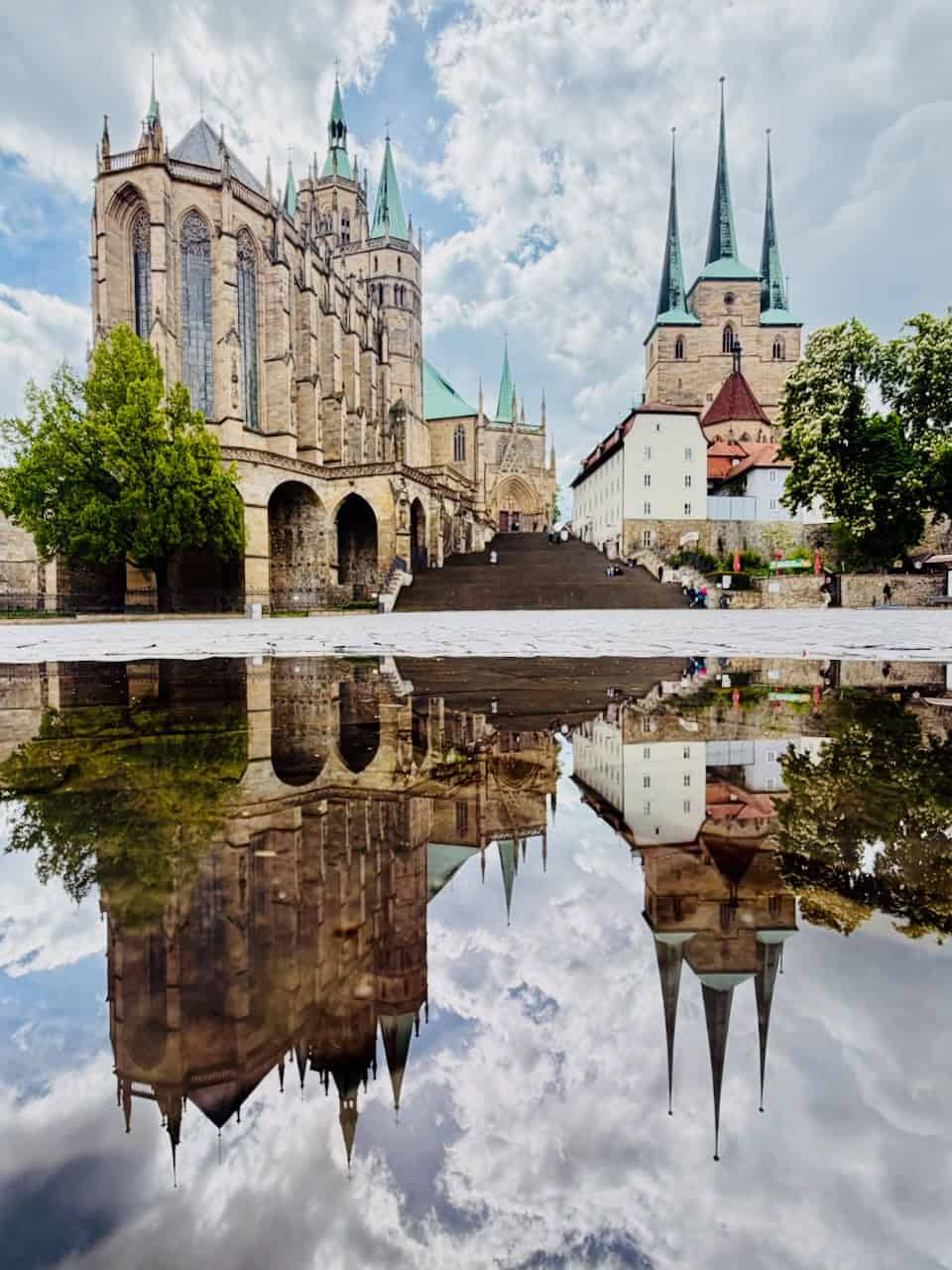
The Domplatz (Cathedral Square) is the focal point of the city. Overlooked by the magnificent 15th century Erfurt Cathedral and St. Severus Church, it’s an impressive square that literally makes you stop in your tracks. Perched atop a broad staircase, the twin landmarks dominate the skyline and create one of Germany’s most impressive urban panoramas.
Erfurt Cathedral
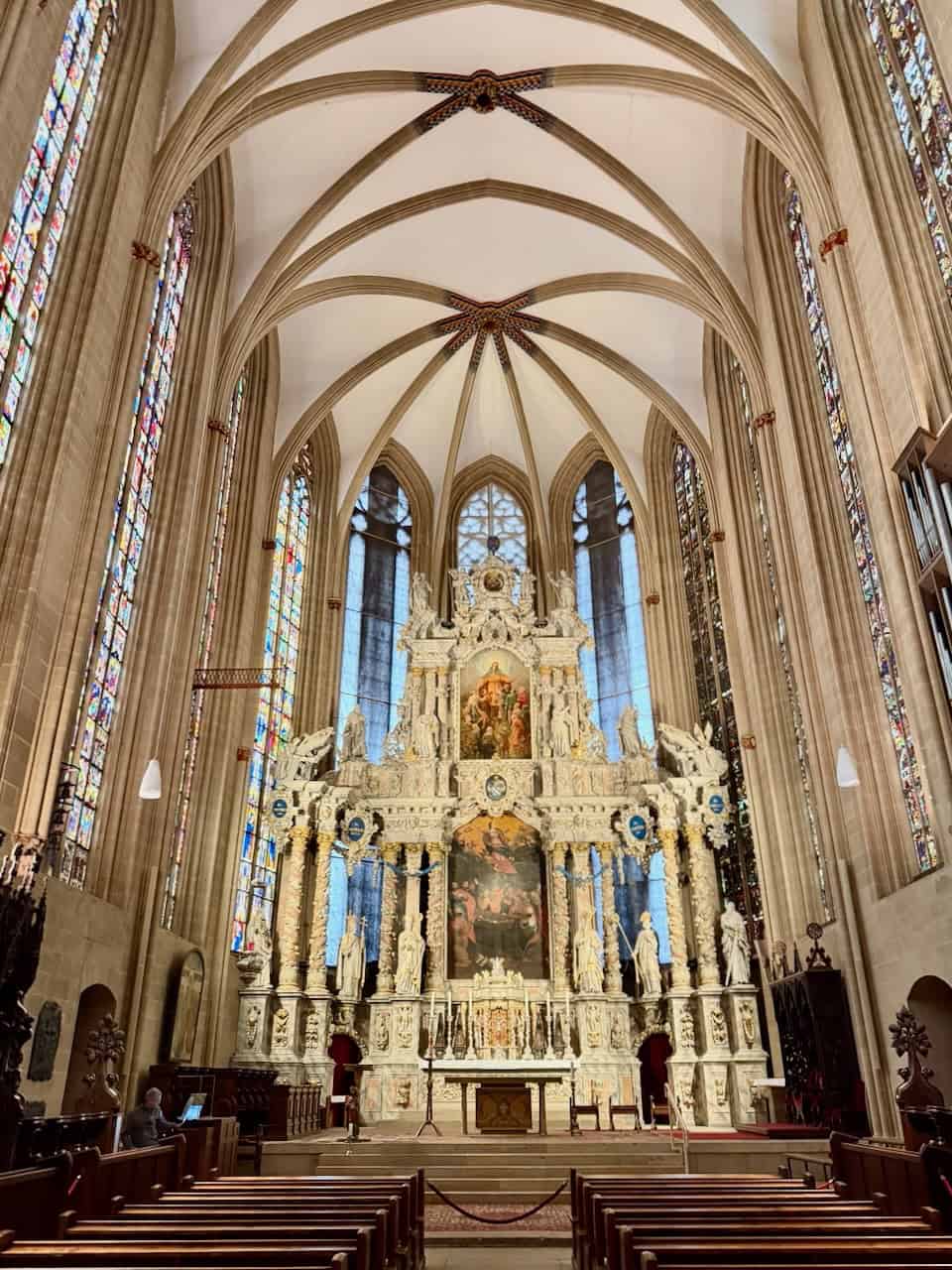
The 14th century Gothic Cathedral, with its towering nave and spires, is a sight to behold. Inside, the cathedral houses beautiful stained glass windows and the famous Gloriosa bell, considered one of the world’s largest medieval free-swinging bells. Martin Luther was ordained in the cathedral in 1507.
Krämerbrücke
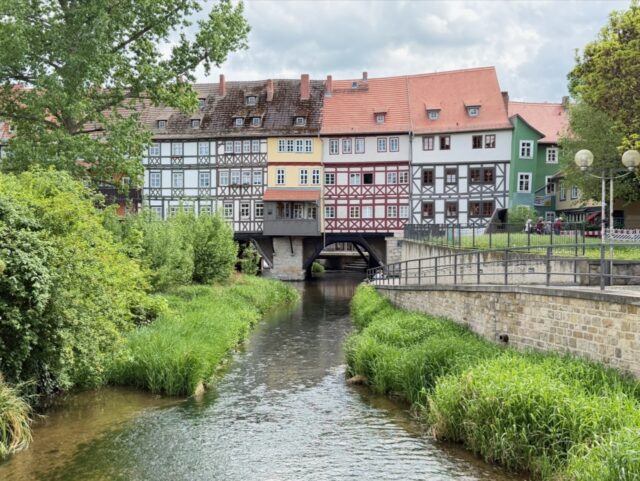
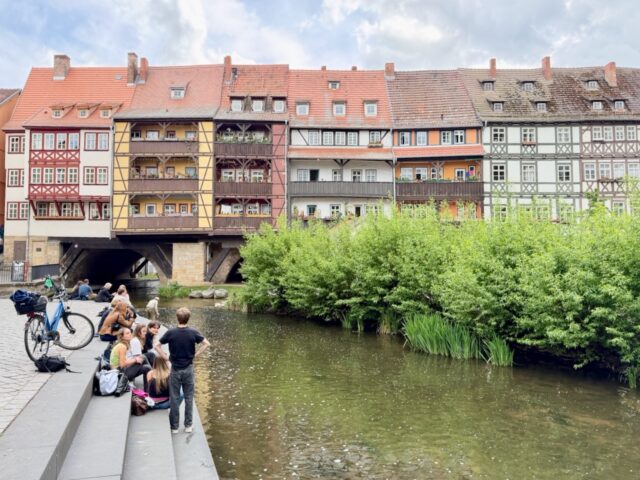
The city’s defining image is the Krämerbrücke, or Merchants’ Bridge, one of Europe’s rare inhabited bridges. Lined with charming houses, artisan workshops, galleries and cafés, it is far more than a simple crossing. Walking across the bridge is a highlight of any visit. I remember my first visit to Erfurt when I searched for the bridge only to realise that I was actually on it!
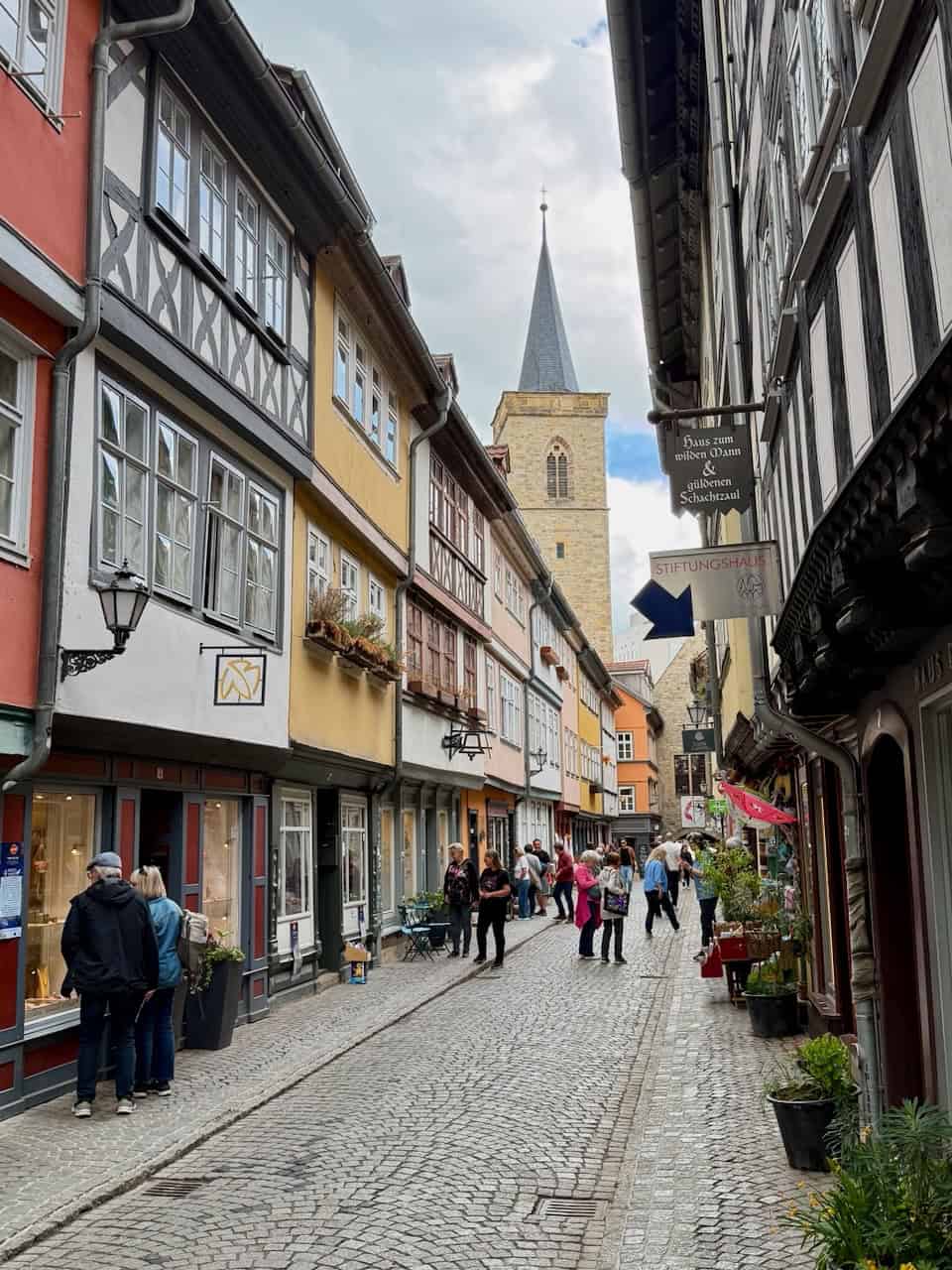
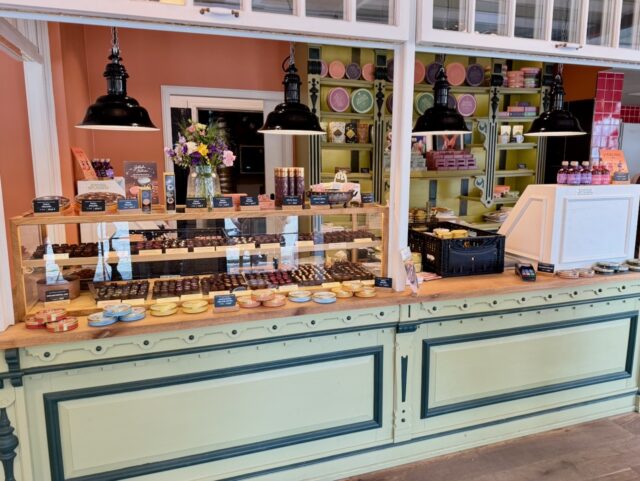
One of the shops to look out for on the bridge is Goldhelm Schokolade (chocolates). What started as a small local business has now grown into an institution. And rightfully so – their chocolates are fantastic! Grab a pack of their Krämerbrücke truffels.
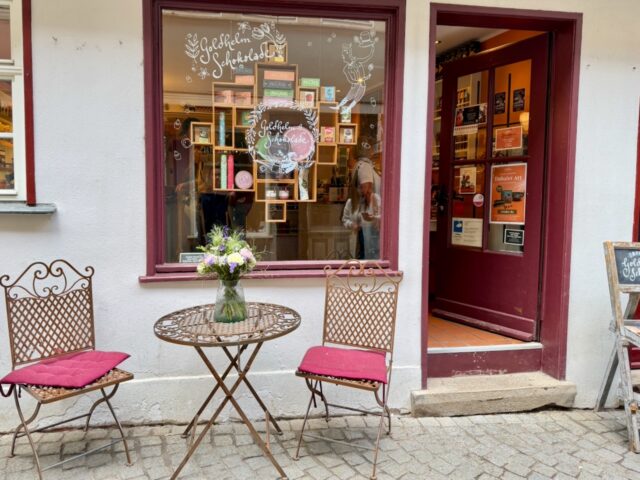
You can also visit the nearby Goldhelm Schokolade café (Kreuzgasse 5) which serves excellent coffee, hot chocolate, cakes, ice-cream and, of course, chocolates.
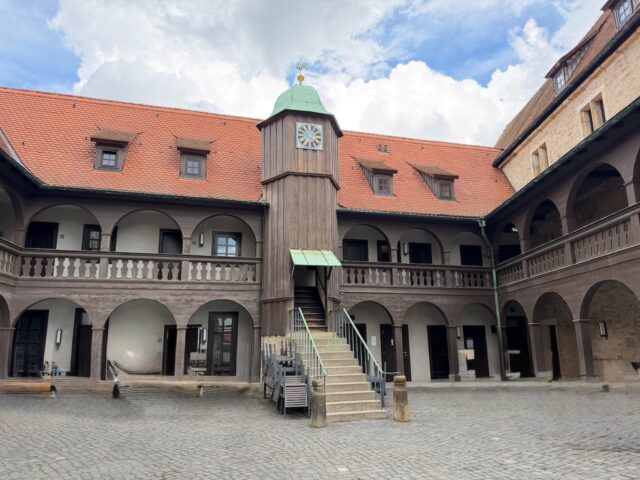
Augustinian Monastery
This is also a city deeply connected to the life of Martin Luther, who studied here as a young man before entering the Augustinian Monastery. Visiting the monastery offers valuable insight into the formative years of one of Europe’s most influential religious figures.
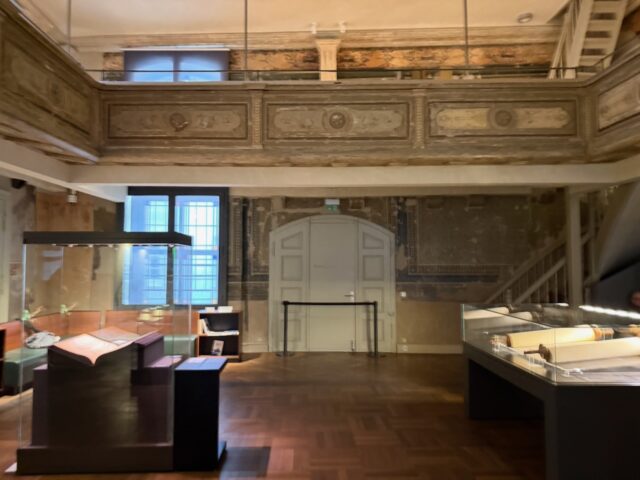
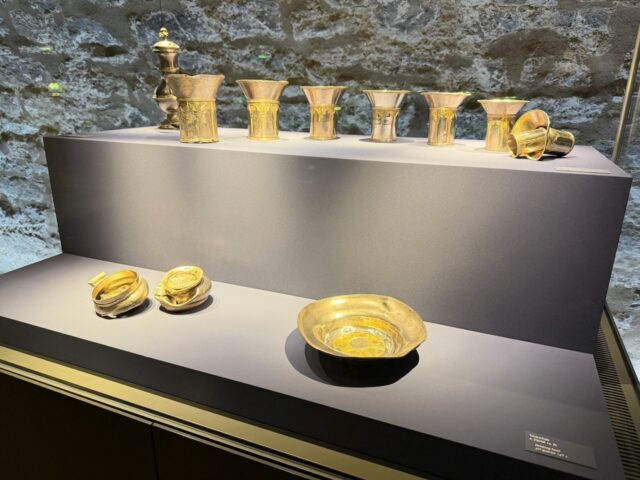
Old Synagogue
One of the oldest in Europe, this 12th century Synagogue was only uncovered in the 1990’s, and has a fascinating exhibition about the Jews in Erfurt during the Middle Ages. It also houses a beautiful collection of gold and silver coins and jewellery, most of which date from the 13th-14th centuries.
Petersberg Citadel
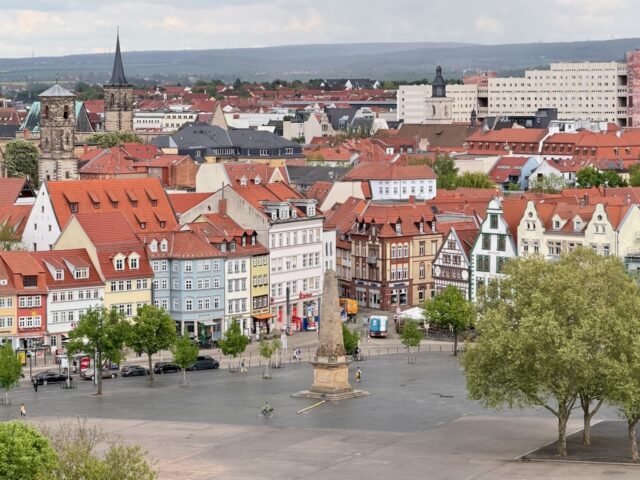
Perched atop Petersberg (hill) overlooking Domplatz, the 17th century Citadel is one of the largest and best preserved city fortresses in Europe. Built on the foundations of a medieval Benedictine monastery, the star-shaped Baroque citadel was strengthened by Napoleon in the 19th century.
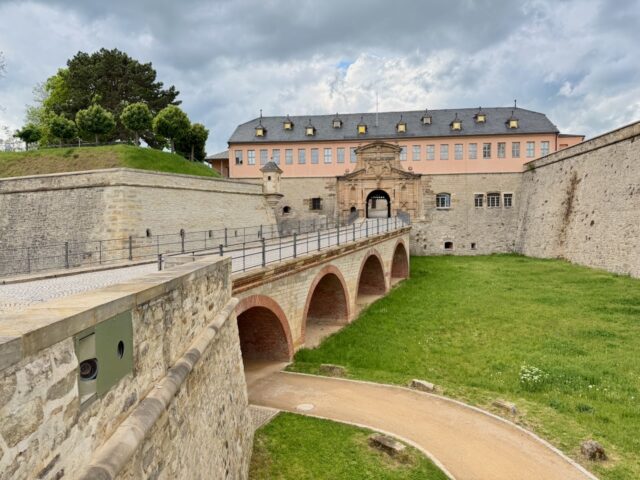
Its extensive maze of underground passageways is (partially) open to the public, and there are wonderful views of Erfurt from the citadel walls.
Stasi Prison
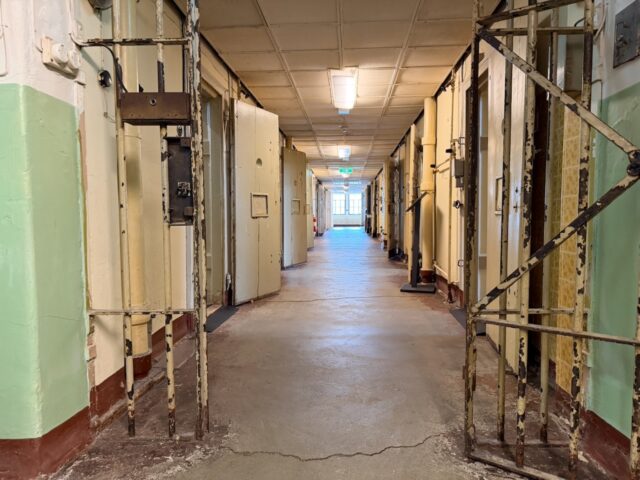
I also toured the former Stasi prison in Andreasstrasse, which was both poignant and inspiring. Stories of oppression and resistance during the GDR era are vividly brought to life in this absolutely fascinating museum.
Despite its medieval landscape, Erfurt never feels like an open-air museum. The city is vibrant, lived-in and refreshingly authentic. Markets fill public squares, university students gather at cafés and locals can be found outdoors whenever the weather permits.
Thuringian food
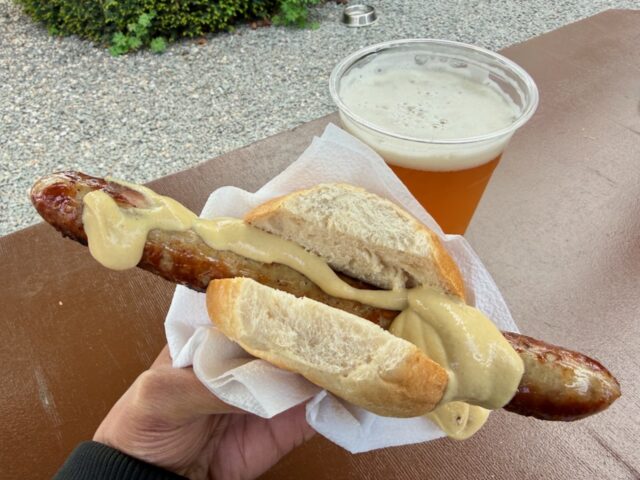
Food plays a big role in the Erfurt experience. The region is famous for Thuringian sausages, and sampling a freshly grilled Thüringer Rostbratwurst from a market stall is practically mandatory. Paired with mustard and a crusty bread roll, it is simple, hearty and delicious. One of the most popular stalls can be found at Domplatz, at the foot of the St. Severus Church.
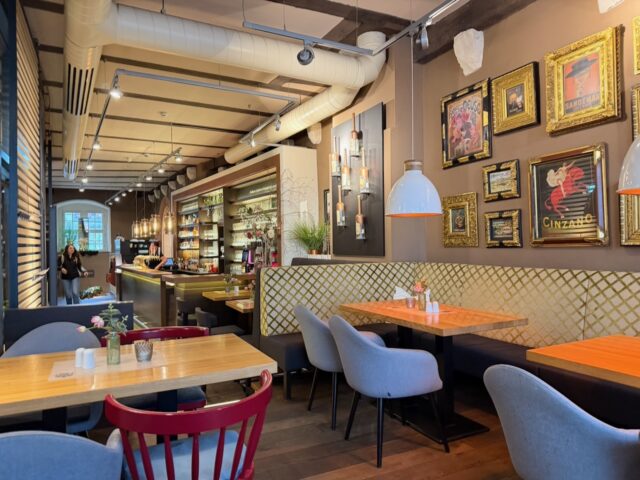
For a slower culinary experience, Erfurt’s traditional restaurants serve regional dishes alongside excellent local beers and wines. One restaurant I can recommend is Zum Güldenen Rade (Marktstrasse 50), which is well-known for its Thuringian cuisine.
Where to stay in Erfurt
There’s a good variety of hotels and B&B’s in the old town. I stayed at Dorint Hotel am Dom, a comfortable business hotel situated opposite the Erfurt Theatre. Another hotel I can recommend is the lovely, family-owned Hotel Domizil. Situated at Domplatz, this hotel has spacious rooms and apartments, and they serve a terrific breakfast.
Potsdam
The final stage of my northern Germany rail journey led northwards to Potsdam. Located just 30 minutes outside Berlin, Potsdam (map) often appears on day-trip itineraries. Yet it deserves far more than a hurried excursion.
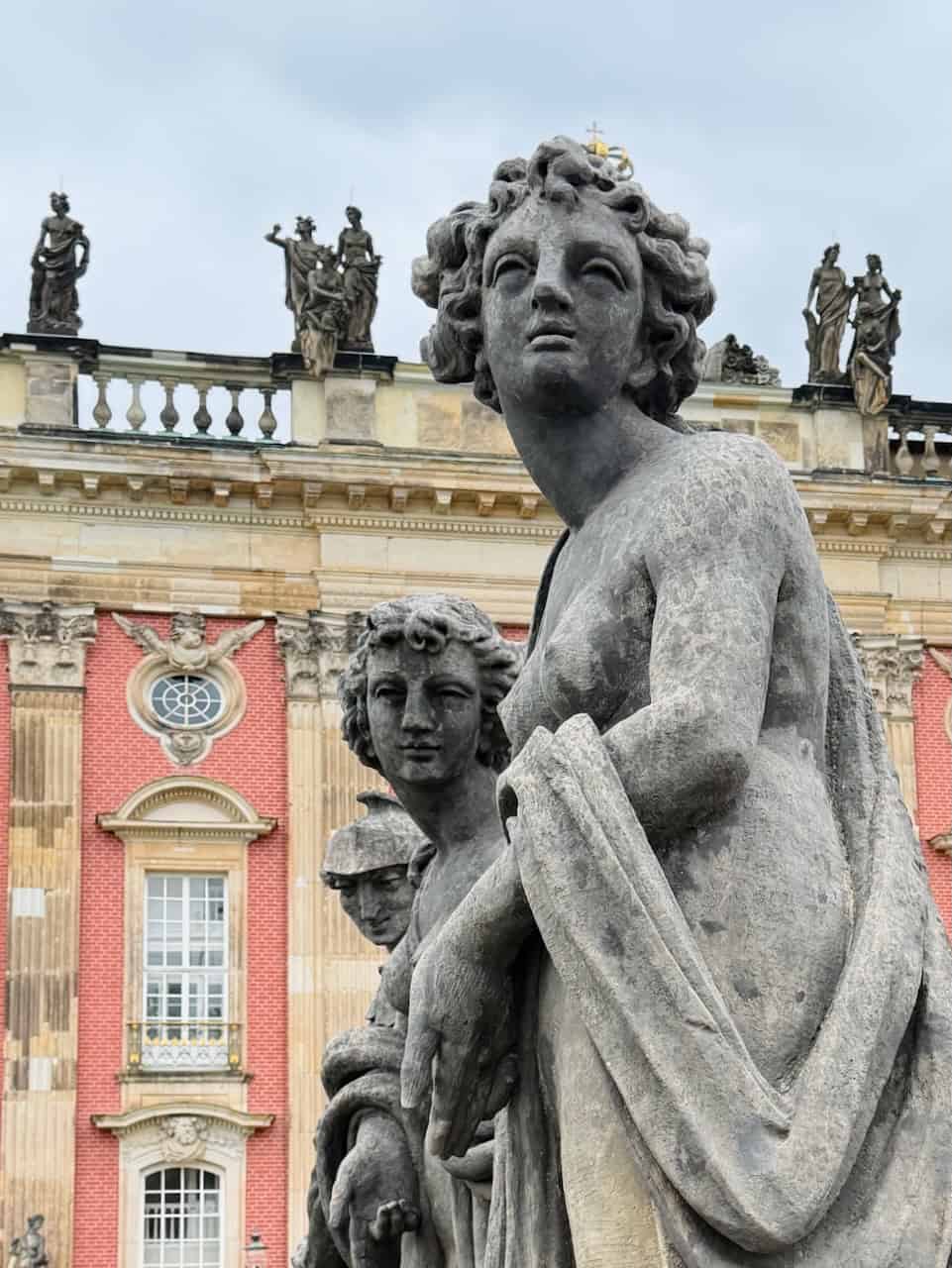
There’s something undeniably special about Potsdam. Renowned for its lavish palaces, the city is enveloped by expansive parks and about 20 lakes. Its elegant Baroque centre, laid out in an organised grid, is lined with boutiques, inviting restaurants and countless cafés that lend the city a relaxed sophistication.
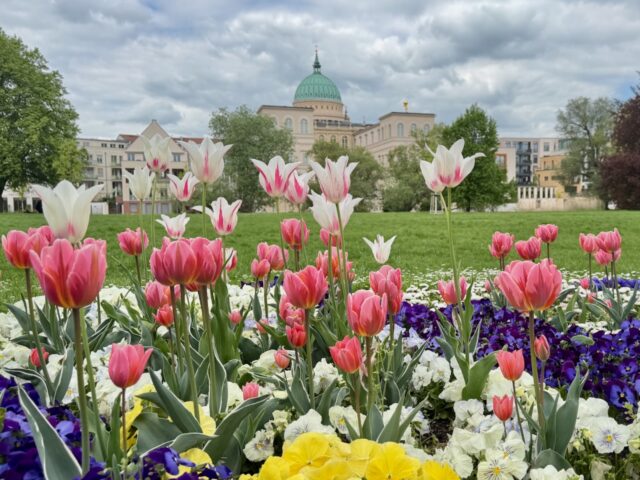
Compared with the high-octane energy of Berlin, Potsdam feels like a classy spa retreat. During my stay there, I quickly picked up on the local ‘joie de vivre’! Everywhere I went, I saw locals sipping wine at the many terraces, strolling in the parks or out on their boats. I absolutely loved it!
Highlights of Potsdam
This is a city best experienced slowly. I spent my two days in Potsdam wandering around the Baroque old town, and enjoying the palaces, parks and lush surroundings. For a relatively small city, there’s really a lot of things to see and do in Potsdam. These are the highlights:
Baroque old town
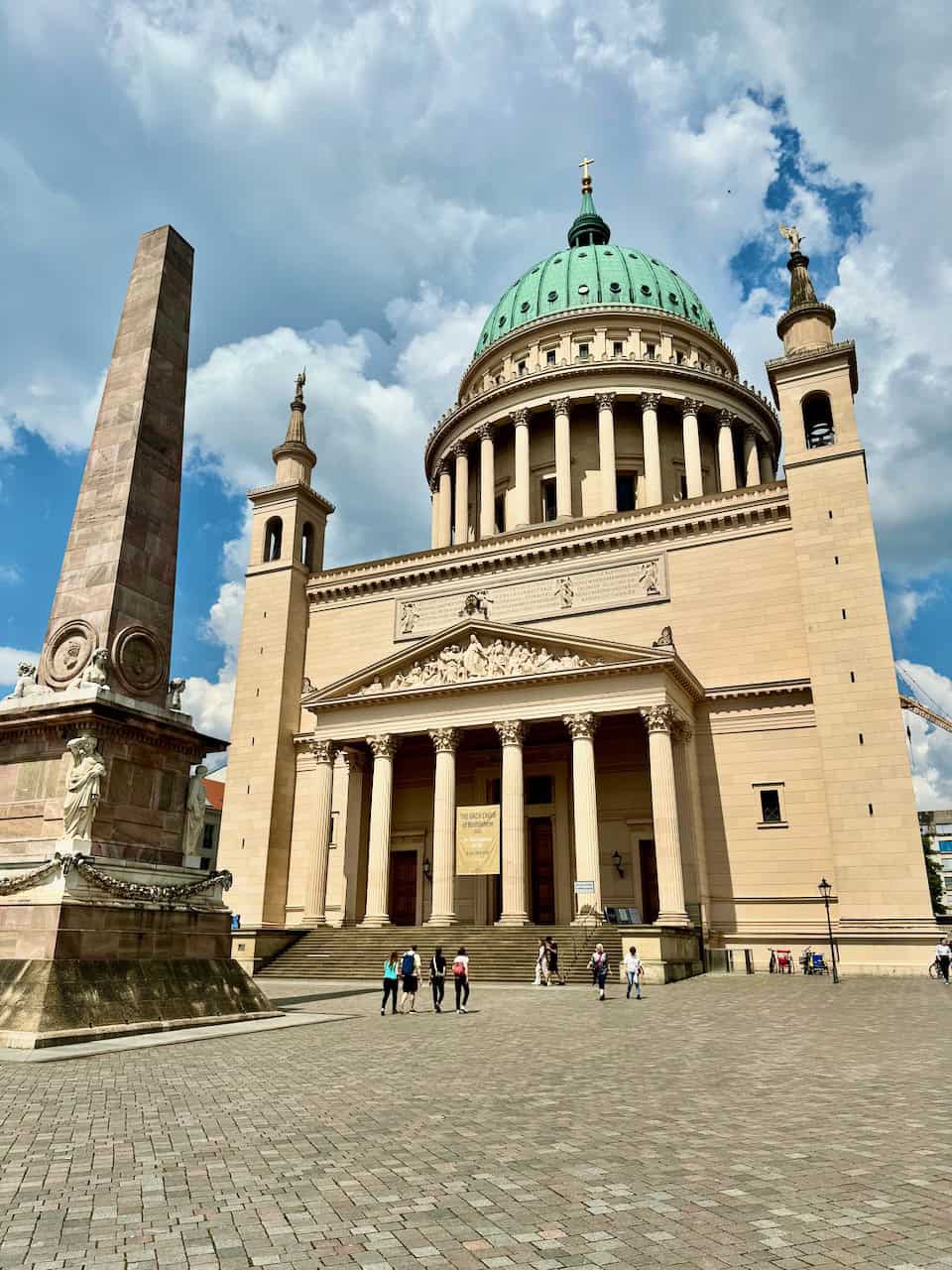
The focal point of the old town is the Alter Markt. This grand square reflects the city’s baroque heritage. Dominating the square is the Nikolaikirche (St. Nicholas’ Church), an impressive neoclassical building completed in 1850. Its massive dome and elegant proportions make it a key landmark in the city centre. You can climb the dome for panoramic views of the city. In the centre of the square stands the Obelisk, erected in 1753 to commemorate the city’s builders and architects.
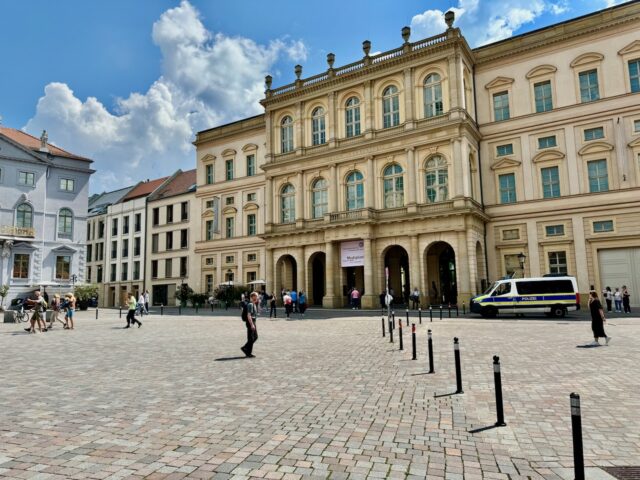
Another attraction at the square is the Museum Barberini, a world-class art museum housed in a reconstruction of the Barberini Palace. The museum hosts rotating exhibitions featuring everything from impressionist masterpieces to contemporary art.
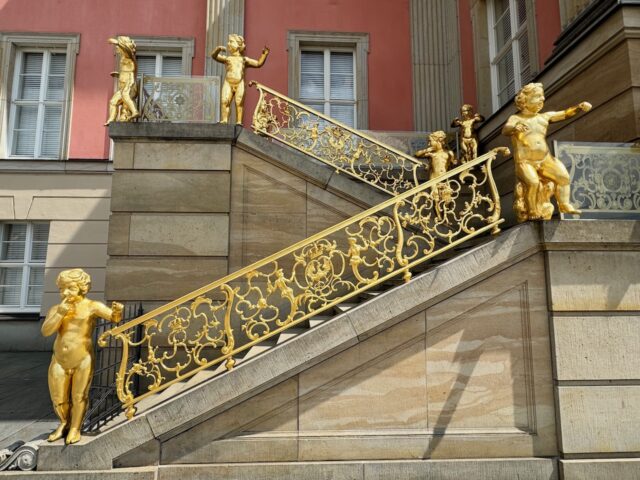
The Stadtschloss (City Palace) was once the royal residence of the Prussian kings but is now the seat of the Brandenburg Parliament. Its grand façade, with Corinthian columns and intricate sculptures, serves as a reminder of Potsdam’s royal past. Stop to admire the Ringer colonnade and the golden angels of the Angel Staircase on the side of the palace.
Dutch Quarter
The Dutch Quarter introduces an entirely different architectural flavour. Built in the 18th century for Dutch artisans invited to Prussia, its 150 neat red-brick buildings house stylish cafés, boutiques and galleries. Wandering these streets feels unexpectedly cosmopolitan and wonderfully relaxed.
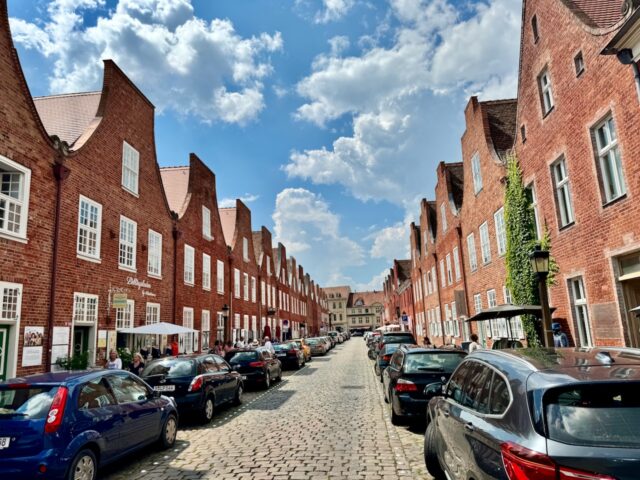
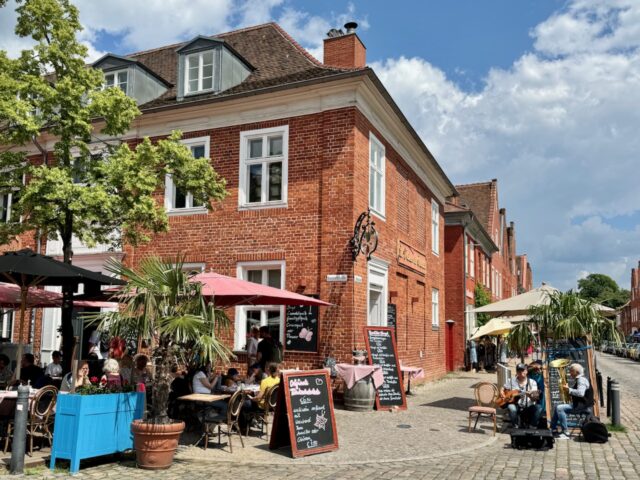
One eatery I can recommend in this quarter is Zum Vliegende Holländer (Benkertstrasse 5), an atmospheric restaurant that’s known for its schnitzels and roasts.
Other highlights in the old town
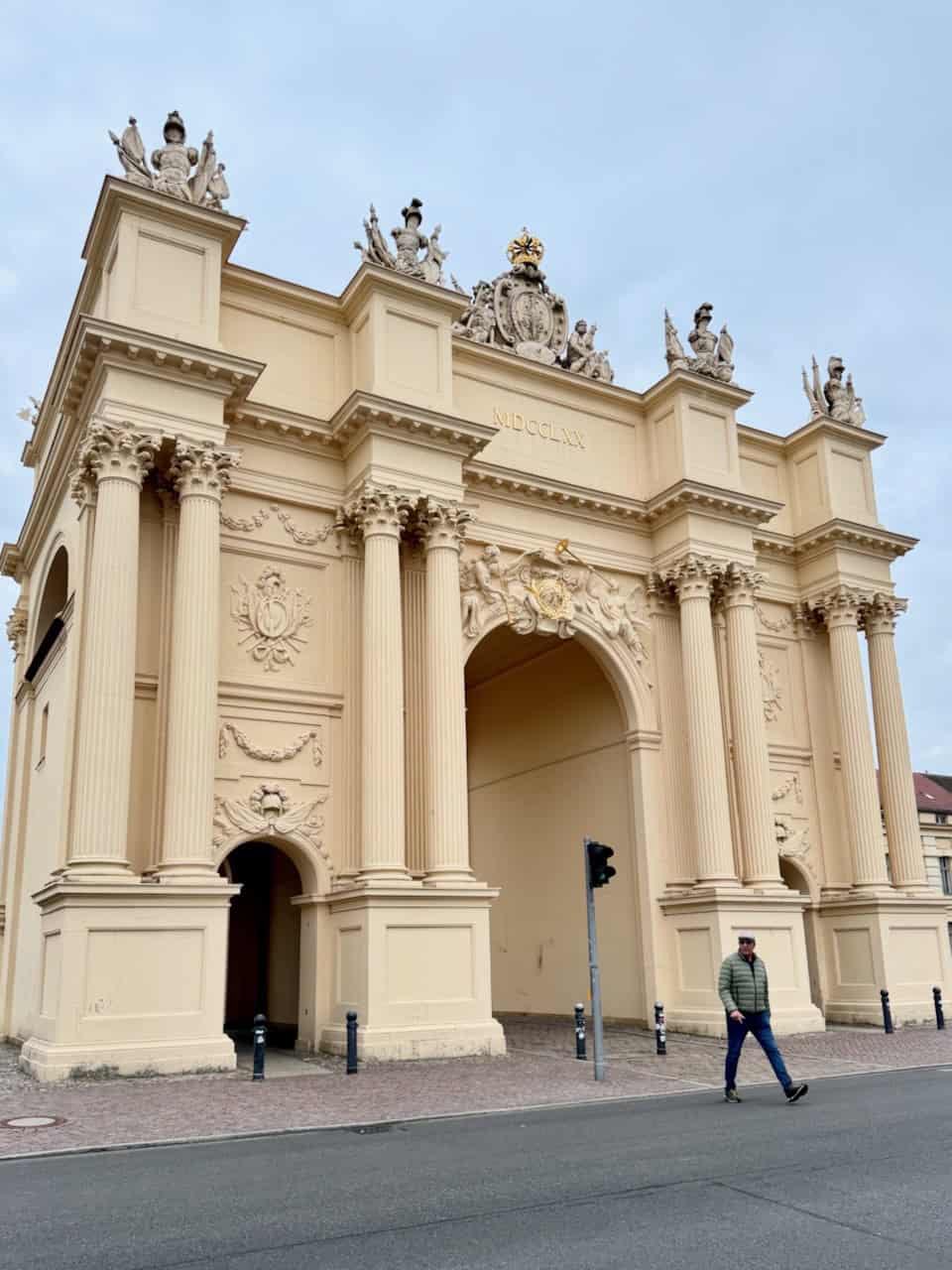
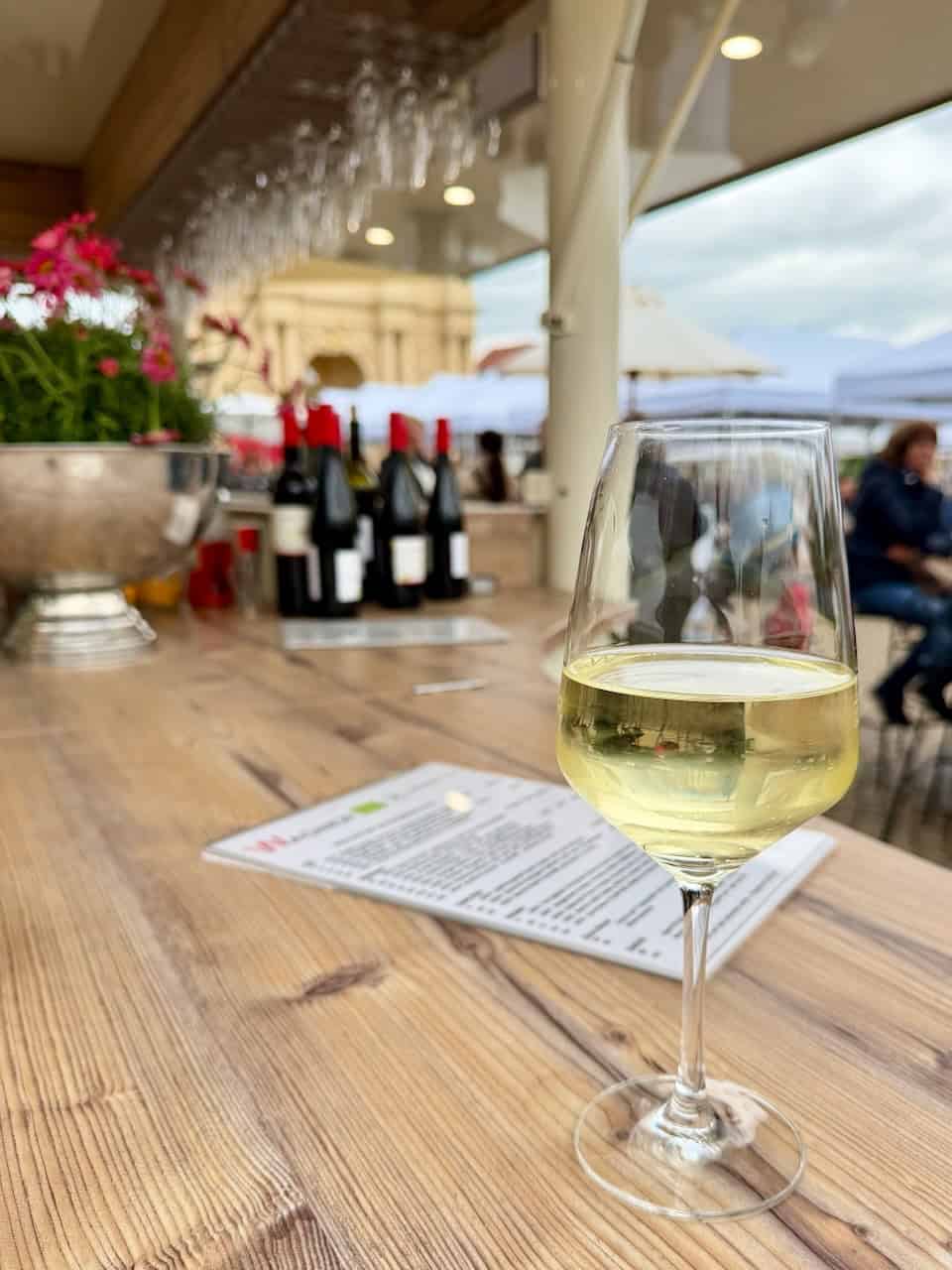
Another Potsdam landmark is the Brandenburg Gate. Smaller than Berlin’s version but older, as the locals will point out. Across the road from the Brandenburg Gate lies the Luisenplatz, an elegant square that just so happened to be the venue of a wine festival during my visit!
For a panoramic view of Potsdam, head up to the top of the Garrison Church (there’s an elevator).
Down the road from the Garrison Church, you’ll find the Potsdam Film Museum. It’s worth visiting for its fascinating insight into German cinema history, and features immersive exhibits on film-making, iconic productions and the legacy of nearby Babelsberg Studios, the oldest large-scale film studio in the world.
Sanssouci Palaces and Parks
Potsdam’s crowning glory is undoubtedly Sanssouci Palace, the intimate yet exquisite summer residence of Frederick the Great. Set amidst terraced vineyards and landscaped gardens, the Rococo-style palace embodies a lighter, more personal expression of royal luxury.
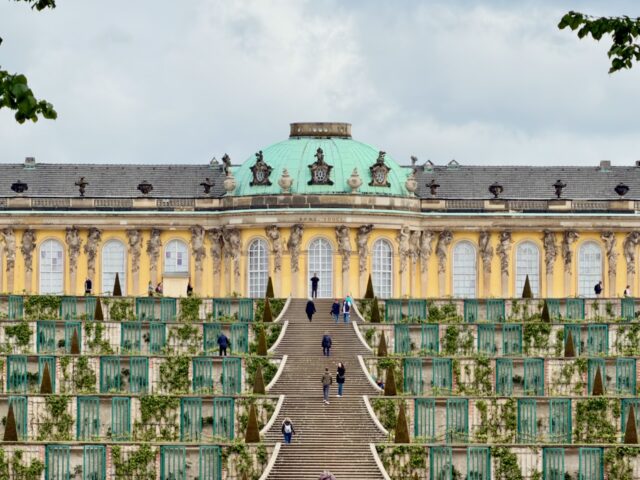
I recommend arriving early in the morning (by 10am), before crowds gather, for a more relaxing tour of the palace.
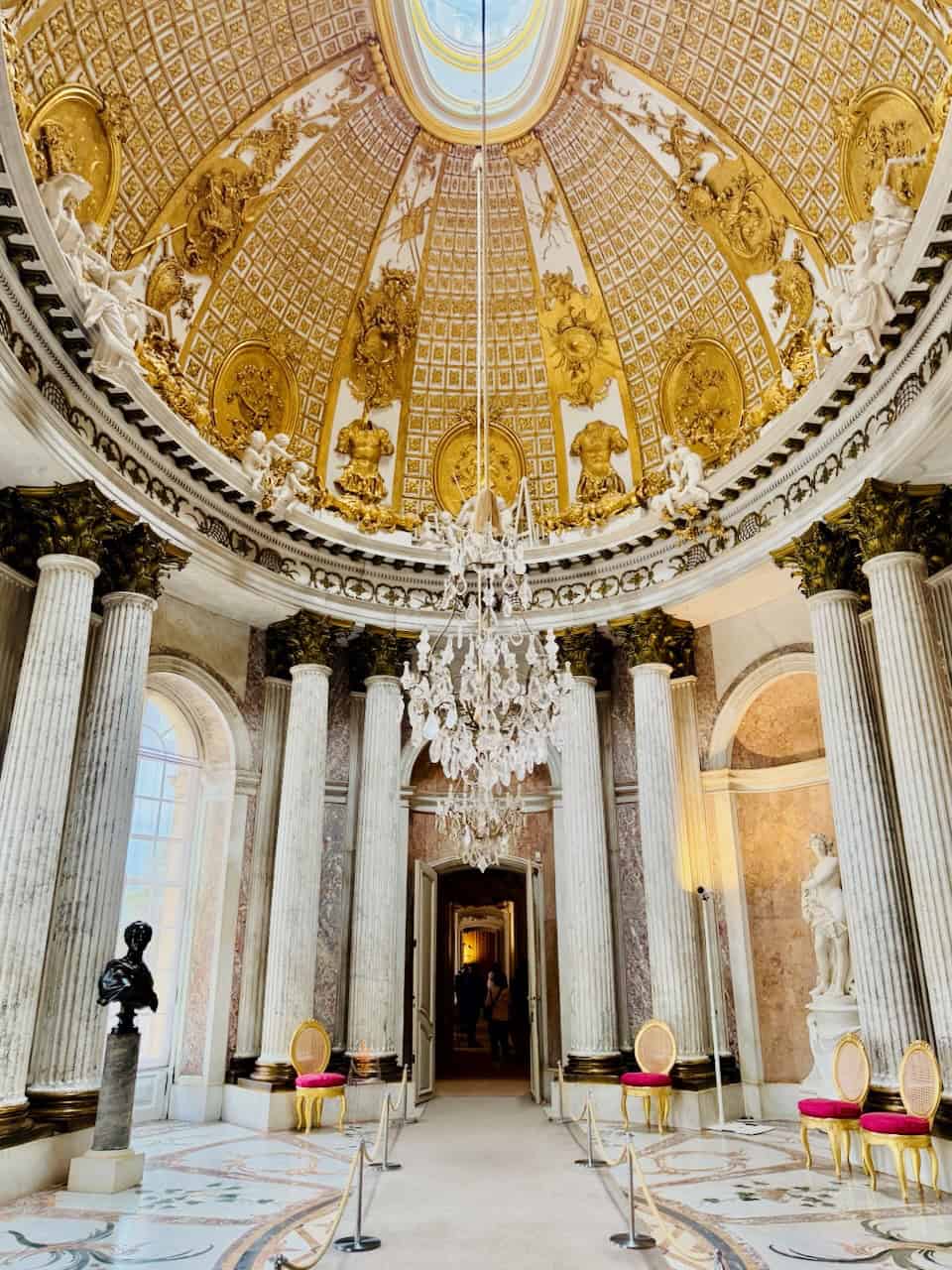
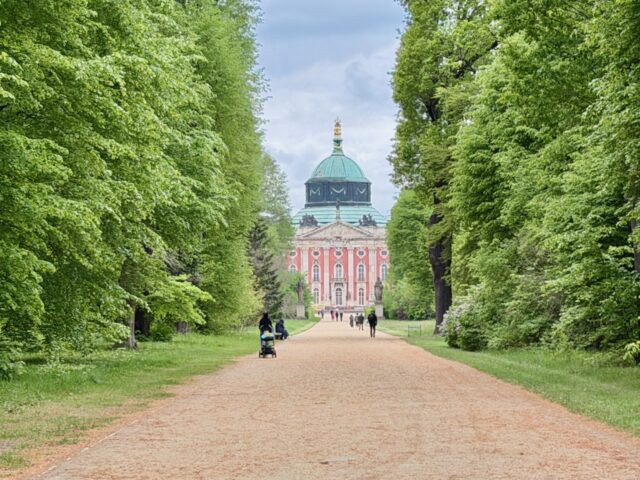
The gardens, filled with ornamental fountains, sculpted pathways, temples, follies and hidden viewpoints, are immense. One could easily spend an entire day exploring Sanssouci Park alone!
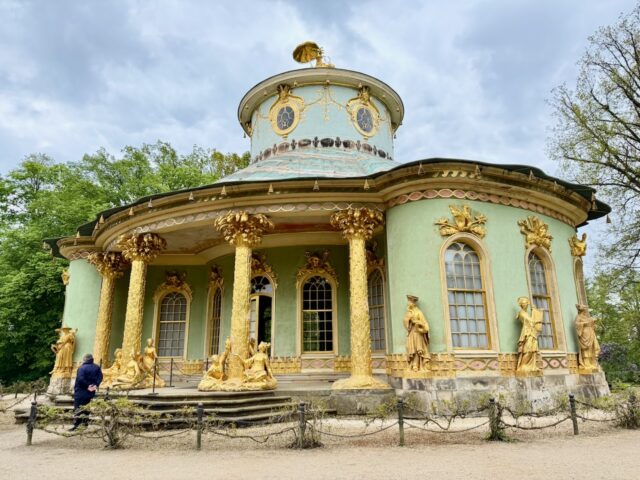
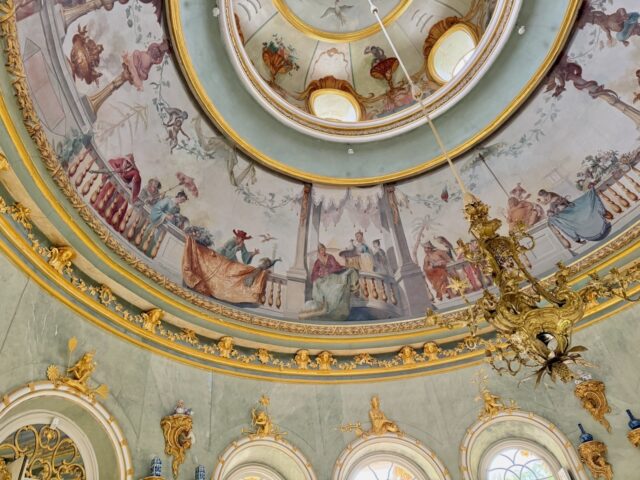
Don’t miss the Chinese House in the park. This little palace is famous for its exquisite Rococo architecture, gilded oriental-inspired details and idyllic setting, offering a fascinating glimpse into the 18th-century European fascination with Asian art and design.
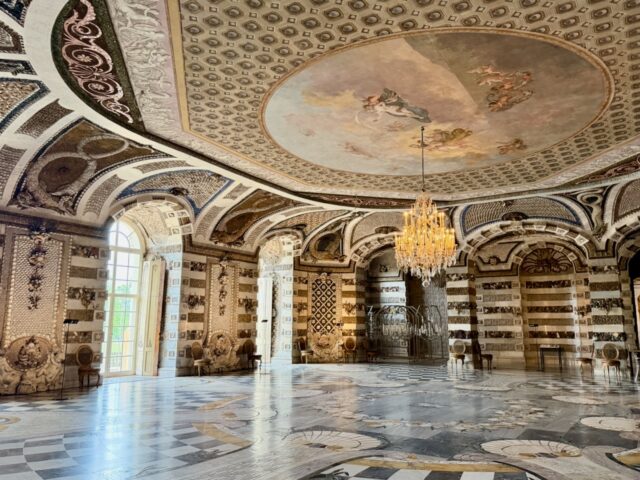
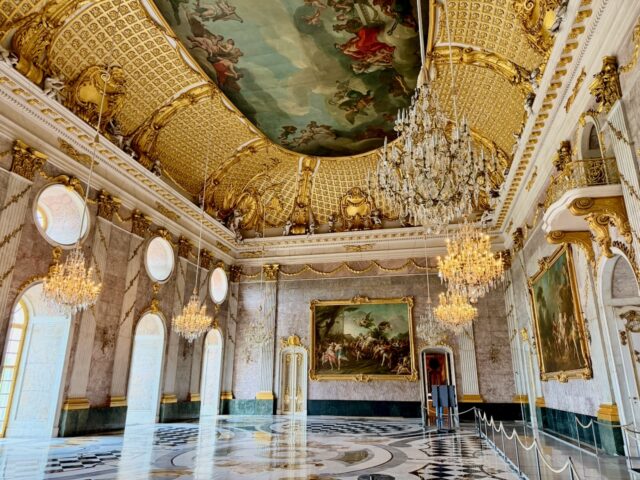
The other major palace in the Sanssouci complex that’s an absolute must-visit is the New Palace. Considered the last great Prussian Baroque palace, the New Palace is a breathtaking display of Prussian opulence, with lavishly decorated state rooms, grand halls and an architectural scale that vividly reflects the ambition and power of Frederick the Great. The Grotto Hall (the first stop on a tour of the palace), encrusted with seashells, minerals and fossils, is absolutely breathtaking. The last stop, the Marble Hall, is equally stunning! Read more about the Sanssouci palaces and parks.
Cecilienhof Palace
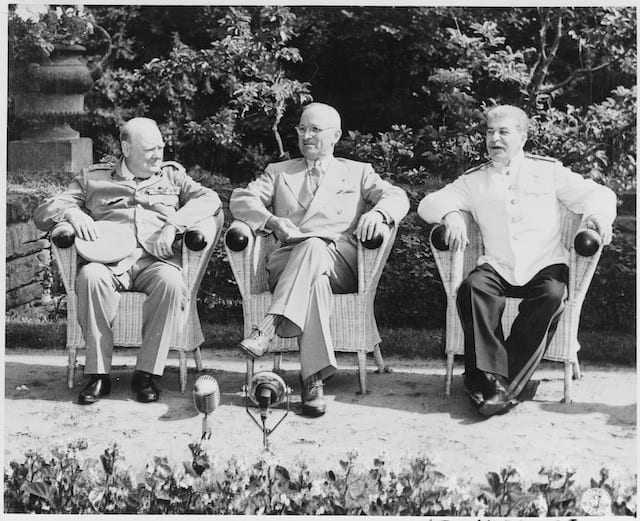
History enthusiasts will find the Cecilienhof Palace particularly compelling. It was here that world leaders gathered in 1945 for the Potsdam Conference, helping shape the geopolitical future of postwar Europe.
Alexandrowka Russian colony
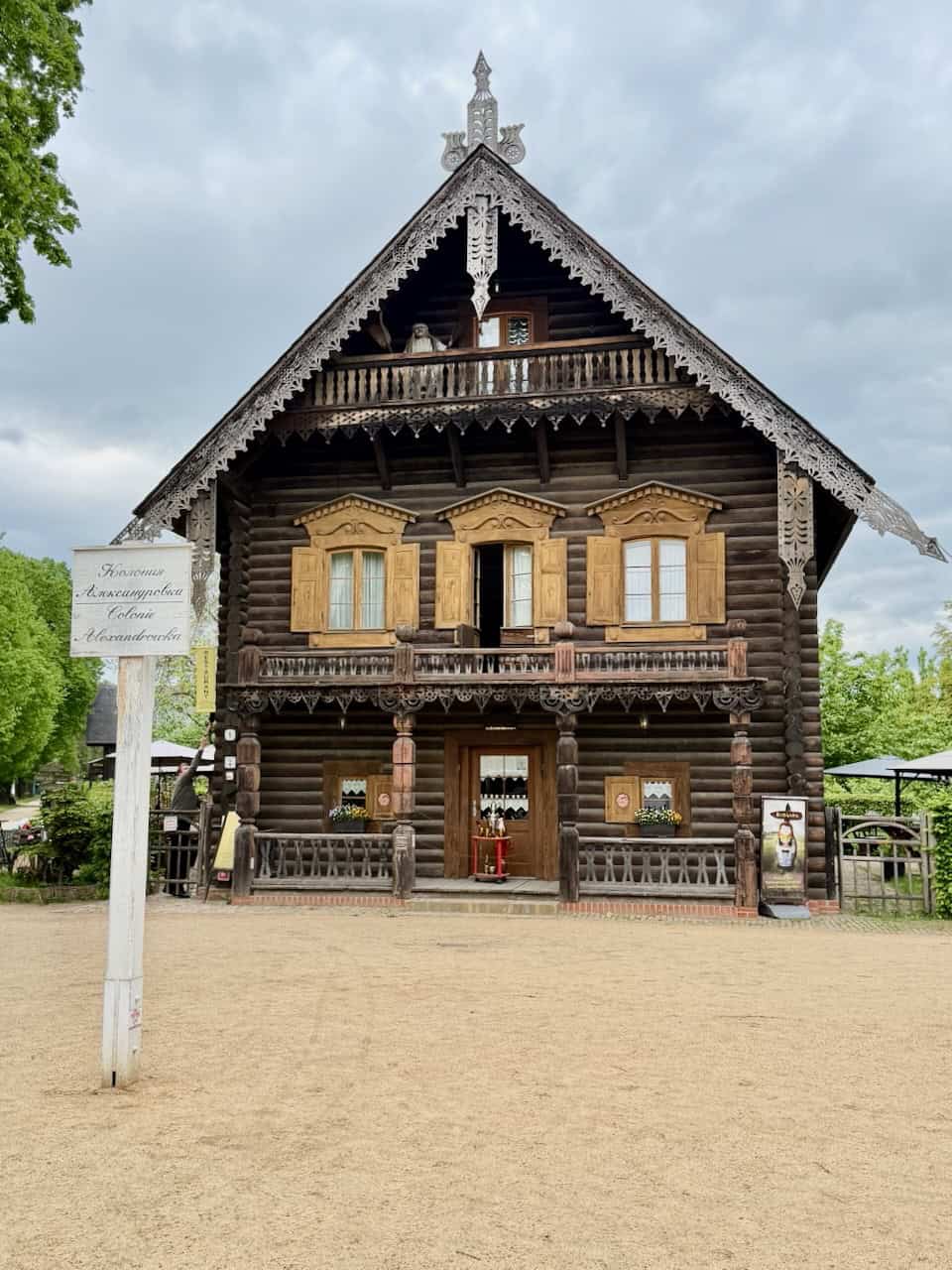
Part of the UNESCO World Heritage Site of Potsdam Castles and Parks, the Alexandrowka colony consists of 13 wooden houses built by King Frederik William III in the 19th century. The log cabin style houses were gifted by the king to signify the close relationship between the Hohenzollern and Romanov royal families.
Glienicke Bridge
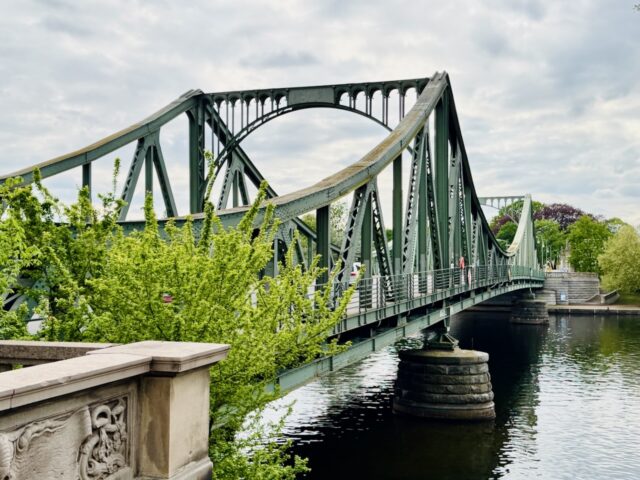
Glienicke Bridge is a famous Cold War-era bridge where East and West exchanged captured agents. The Steven Spielberg movie, “Bridge of Spies” starring Tom Hanks, was partially filmed here.
Potsdam lakes
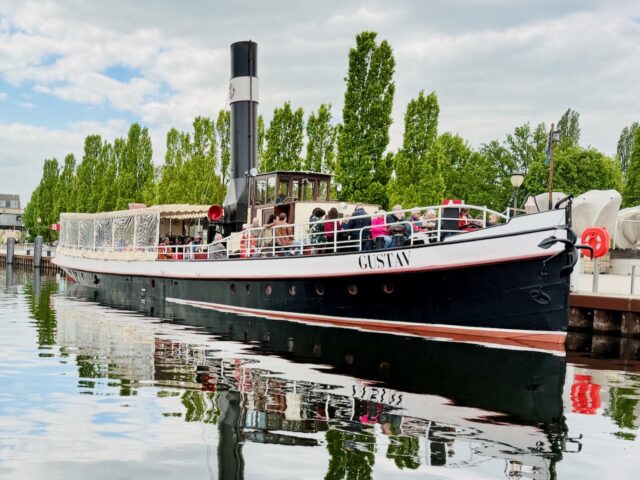
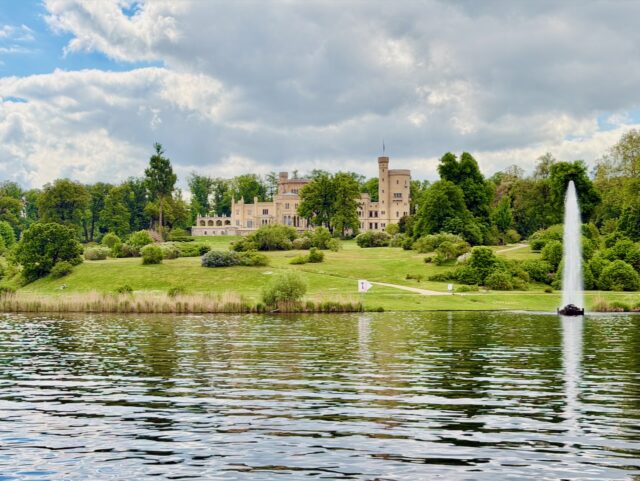
Potsdam’s appeal extends into its landscapes. Lakes, wooded areas and rivers weave through the city, creating countless opportunities for scenic walks, cycling and boat excursions. On sunny days, locals picnic beside the water or paddle leisurely along quiet channels. I loved the Weisse Flotte steamboat cruise (departs from the quay adjacent to Mercure Hotel Potsdam City) that sails down the Havel River to the Tiefersee and Jungfemsee (lakes).
Where to stay in Potsdam
There are many accommodation options in Potsdam. I stayed at the MAXX Hotel Sanssouci. Located just off Luisenplatz, the hotel is a stone’s throw from Sanssouci Park and is a short walk to the attractions in the Baroque old town.
Final notes
Travelling between Lübeck, Rostock, Erfurt and Potsdam by rail reveals Germany’s extraordinary diversity. Within a single journey, I got to experience medieval trading cities, Baltic coastlines, cathedral skylines and royal gardens. It was a wondrous trip, one which I would certainly recommend to anyone!
There are many great reasons to visit Germany and one point that stands out is its vast rail network. For this trip, I combined tickets with reserved seats on the ICE (InterCity Express high-speed trains) with the Deutschland Ticket, a monthly subscription ticket (€63/month) which covers unlimited travel on regional rail lines and local public transport.