Take a road trip in Australia’s island state of Tasmania, to explore the rugged landscapes and pristine white sand beaches that are a haven for outdoor adventure.
In this 5 day itinerary you’ll explore the island capital of Hobart, before heading north to the mountain biking town of Derby, then circling back along the East Coast for the scenic Bay of Fires and cute seaside towns of Bicheno and Swansea.


Our 5 day Tasmania east coast road trip makes an easy side trip from Sydney, with numerous daily flights to Hobart taking under 2 hours.
This article may contain affiliate links that provide commission on purchases you make at no extra cost to you. As an Amazon Associate I earn from qualifying purchases.
Overview – Tasmania 5 day Itinerary
In Hobart you’ll explore the world class MONA Art museum, scenic harbour, seafood restaurants and cultural heritage. Drive north to the former mining town of Derby and visit the sauna on the lake or perhaps try some mountain-biking.
Circle back along the east coast to the Bay of Fires for pristine white sand beaches, swimming and coastal walks with some great photos of the orange lichen covered boulders. Stay in the cute seaside town of Bicheno then on the return to Hobart, hike up to the scenic viewpoint of Wine Glass Bay in the Freycinet National Park followed by a lunchtime stop in Swansea as you head back to the airport.
- Day 1 – arrive on afternoon / evening flight from Sydney to Hobart, staying 2 nights in Hobart
- Day 2 – MONA Art museum and explore Hobart. Stay 2nd night in Hobart
- Day 3 – Drive from Hobart to Derby, staying 1 night in Derby
- Day 4 – Drive from Derby – Bay of Fires – Bicheno, staying 1 night in Bicheno
- Day 5 – Drive Bicheno – Wine Glass Bay – Swansea – airport and fly from Hobart to Sydney

Tasmania 5 Day Road Trip – Map
Click on the link for our Tasmania 5 Day itinerary map or on the image below, to see all the places we recommend.

Here’s what you should book in advance
Book Flights
- Day 1 – Flight Sydney – Hobart afternoon / evening flight. We flew with Jetstar.
- Day 5 – Flight Hobart – Sydney late afternoon / evening flight.
Book Accommodation

Book Car Hire
- 4 day car hire from Hobart Airport – check prices here
- Day 1 – Collect on arrival of flight from Sydney (afternoon / evening)
- Day 5 – Drop off at airport before return flight to Sydney (late afternoon / evening)
Alternatively, you could take a taxi on arrival from the airport into Hobart, as you don’t really need a car in Hobart. Then return to the airport early on the morning of Day 3 to collect the car and drive straight from airport to Derby.
Book activities
- Day 2 – MONA – book earliest ferry and museum tickets to MONA, book return ferry around lunchtime
- Day 3 – Book mid afternoon Floating sauna slot in Derby around 3pm

Our 5 day Tasmania road trip itinerary
Day 1 – fly from Sydney to Hobart
There are numerous flights through the day with Jetstar and a few other airline, and the flight time from Sydney to Hobart is 1 hr 50 mins. To maximise your sightseeing time in Sydney, we suggest arriving on an afternoon or evening flight from Sydney.
If you prefer more sightseeing time in Hobart, you could also arrive on a morning flight. For best price and choice of flight times, book well ahead since prices rise close to departure.

Day 2 – Hobart (2 nights)
You’ll be staying a couple of nights in Hobart, allowing one full day to see Tasmania’s capital. In the morning, we highly recommend visiting the amazing MONA Art Museum, allowing the afternoon and evening to explore more of Hobart.
If you prefer to see Hobart on an organised tour covering most of the things we saw including MONA we recommend this 1 day tour: Hobart City Sightseeing Tour including MONA Ticket
MONA – Museum of Modern and New Art
MONA houses the collection of David Walsh, Tasmanian born tech and gambling businessman and art collector, with the focus on modern and contemporary art. The museum has a particular personality, so expect sweary descriptions, some sexualised and challenging art, as well as very beautiful pieces (it’s family friendly but there are warnings in some galleries in case you are visiting with kids).
MONA is undoubtedly one of the top things to do in Hobart and Tasmania as a whole, so don’t miss visiting the museum, even if you think art isn’t really your thing. I also highly recommend taking the museum’s own ferry to MONA as it really enhances the experience to arrive by water, although you can also drive or take the bus.

For this itinerary we booked the earliest ferry from Brook Street Pier (around 9.15am) and returned at lunchtime (12.45 or 1.45). This allowed us the afternoon to explore the harbour and other areas of Hobart.
Located on wooded hillside with winery, the MONA galleries are carved deep underground, with a dimly lit atmosphere reminiscent of a gambling den or James Bond villain’s lair.
This is a house of illusion, with art you walk through and into, staircases like an Escher drawing, concrete caverns and oil filled pools (don’t touch!).

The older artworks (ancient Egyptian artefacts, Picasso plates, the odd impressionist) seem a bit out of place mixed in with the colourful and conceptual contemporary pieces; a bloated curvy Porsche or a room full of sparks and explosions.

MONA’s not just an art museum but also an experience, where you can wander around outdoor installations, sit on the lawn listening to music, attend special events and eat or sip wine to your heart’s delight.

To allow enough time to see the rest of Hobart, we recommend spending half a day at MONA, but if art’s your thing you could easily spend a full day there, since it’s a remarkable place.
To be honest, after visiting MONA, the rest of Hobart seemed a bit tame, but there are still a few things worth visiting.
Salamanca in Hobart
A short stroll from where you get off the ferry from MONA is the Salamanca neighbourhood, with 19th century sandstone warehouses that now house craft and art galleries. In front of the arts centre, the popular Salamanca market is held on Saturdays, while behind the old warehouses the Salamanca Square encloses cafes and pubs.

We ducked into The Whaler, an atmospheric pub with pretty stained glass details, that’s known for their lobster rolls. Once you’ve wandered around Salamanca Square, find the narrow passage that leads to Kelly Steps, and take the steep stone stairway up to Battery point.
This small residential area on the hill is filled with charming 19th century cottages, that were homes to those working in Hobart’s Maritime industry. Your walk will bring you through leafy Princes Park and back down to the road, to loop back to Salamanca Place.

Fisherman’s Market in Hobart
If you retrace your steps to Brooke Street Pier, where the MONA Ferry goes from, continue past Elizabeth Street Pier to the Fisherman’s Market in the marina. There are a number of seafood related businesses and takeaway outlets on floating barges moored in the Marina.
It’s a good place to buy some fresh seafood dishes, local Tasmanian oysters or fish and chips to eat on the wharf at places like Mako Seafood or Fish Business. Finish your seafood lunch with a scoop of ice cream from Van Diemans Land Creamery, trying some unique Tasmanian flavours like Pepperberry and honey.

Tasmanian Museum and Art Gallery
Facing the harbour front are three museums, which you could dip into depending on your time and interests.
We visited the Tasmanian Museum and Art Gallery which offers free entry, and was founded in the 1840s, to house the state’s art and cultural collections. The well curated collections are displayed around an airy glass roofed central hall.

This is a great place to understand more of Tasmania’s natural landscapes, colonial history and Aboriginal heritage. There’s also a reminder that Tasmania is a gateway to Antartica, in the exhibition covering nature, science and exploration in the Southern Oceans.
There are a couple more museums in Hobart that are close to the harbour;
Maritime Museum Tasmania – Collections from the maritime history of Tasmania, including the boatbuilding and whaling industries.
Mawson’s Huts Replica Museum – replicas of the huts used by the Douglas Mawson expedition to Antartica. The Australian geologist and explorer was the sole survivor of a three man expedition in 1912, and endured a month returning alone to the expedition base of Mawson’s huts.
If you have time to venture a little further from the centre of Hobart, the Cascades Female Factory Historic Site offers insights into the untold stories of convict women and girls, at the UNESCO listed buildings where they were imprisoned. There are various timed tours covering aspects of the female convict experience.
Bruny Island
If you decide to tack on an extra day in Hobart to this 5 day itinerary, we recommend a day trip by ferry to Bruny Island, which is known for its seabirds, seals, dolphins and whales, as well as walking trails, beaches and rugged coastline.
You can get there on the Sealink Bruny Island Ferry, with a journey time of 20 minutes and multiple ferries running throughout the day.
If you prefer for all the arrangements to be taken care of, book this day tour with a guide who will show you the best things to do on the island: Hobart: Full-Day Bruny Island Tour with Guide.
Dinner – Bar Wa Izakaya
If you like seafood, you must try the famous Tasmanian oysters. Many restaurants in Hobart serve them, but we enjoyed the relaxed atmosphere and Japanese sharing plates at Bar Wa Izakaya, one of the coolest restaurants in Hobart (216 – 218 Elizabeth Street). If you’re not familiar with Japanese food, the friendly staff will talk you through the menu.

Day 3 – Drive Hobart to Derby (1 night in Derby)
Today, you’ll drive north from Hobart towards Derby, a former mining town that has reinvented itself as a mecca for mountain bikers and lovers of outdoor adventure.
We booked in for a late afternoon sauna on the lake, and broke up the journey with a visit to the Bonorong Wildlife Sanctuary to see wallabies, wombats and Tasmanian Devils. Our late lunch was at the small town of Branxholm, just before we reached Derby.
Day 3 – Timings
- Leave 9am – Hobart – Bonorong Wildlife Sanctuary – 30 mins drive or 45 mins if driving from airport
- Arrive 9.45 – Bonorong Wildlife Sanctuary – 1 hr visit
- Depart 10.45 – Bonorong Wildlife Sanctuary – Branxholm – 3 hrs drive
- Arrive 1.45 – Branxholm – Lunch stop – 45 mins
- Depart 2.30 – Branxholm – Derby – 10 mins drive
- Arrive 2.40 Derby – book Sauna or Mountainbike activities from 3pm

Bonorong Wildlife sanctuary
As a way of breaking up our day and to see something of the Tasmanian wildlife up close, we stopped at Bonorong Wildlife Sanctuary, just north of Hobart.
I’m not a fan of captive animal experiences, but Bonorong Wildlife Sanctuary makes it clear that it’s not a zoo, but a wildlife rescue and sanctuary, which will reintroduce animals back into the wild wherever possible.

Wandering around the open air enclosures, you get a chance to see some of Tasmania’s smaller native species, such as wombats, Tasmanian Devils and other marsupials that have been injured or are being rehabilitated.
Although the Tassie Devil looks very cute, apparently they are quite aggressive and definitely not to be stroked! The Forester Kangaroos seemed to be taking it very easy when we were there, but they range freely around a large area of the sanctuary.

Part of the sanctuary’s role is in education and there was an interesting video presentation, showing how the vets perform surgery and treat the injured animals.
Lunch at Branxholm or Derby
Our visit to the wildlife sanctuary took around an hour, then we drove for 3 hours to Branxholm, a small town that’s 10 minutes before you get to Derby. We grabbed a quick lunch at the cute Tin Timbers Cafe, in a hundred year old weatherboarded building.
The cafe has an outside seating area and is known for their home cooked pies, a staple of Australian roadside diners. As an alternative, you could continue to Derby for lunch, since there are several excellent cafes.

Sauna on the lake Derby
Just a further 10 minutes drive down the road, we reached the town of Derby and parked in the public car park by the river, ready for our pre-booked lakeside sauna experience.
This former tin mining town enjoyed a burst of prosperity in the 19th century, which was curtailed in 1929 when a local dam burst after heavy rain, flooding the valley.
In the last ten years, Derby has become a hub for mountain-biking and other outdoor activities, with the Blue Derby mountain-bike trails running through temperate rainforest around the town.

We were here for something a little more relaxing, with a booking at the wood fired floating sauna on Lake Derby. The sauna is extremely popular, so book your slot well ahead. You can reserve the whole sauna for a private session of up to 5 people, or otherwise join a small group shared session.

From the car park in the centre of Derby, it was a 10 minute walk across the river to the sauna, where we were greeted by the sauna master. He had already stoked the wood-fired stove, so all we had to do was sit in the heated sauna looking through the window at the lake, then jump into the water whenever we needed to cool off.
It was a really fun way to spend an hour, and after our session we sunned ourselves on the small beach nearby, with another chance to cool off and swim in the lake.

More things to do in Derby
If you are into mountain biking, or can’t get a reservation at the sauna, try to arrive in Derby around lunchtime and pre-book one of the experiences available through the Blue Derby website, or hire bikes along the main street in town.
Mountain-bike providers are listed on the website and most provide shuttles to take you to the trailheads, so that you can cycle back into town.

There are several places to eat in Derby, including the Two Doors Down cafe for coffee and pastries or The Hub for pizza and beer in the evening.
Tip: If you are self-catering, you need to stock up with provisions before arriving in Derby, since the nearest grocery store is in Branxhome.
There’s a good range of holiday accommodation in and around Derby. If you have a car you can also stay at nearby hamlets like Winnaleah and Branxholme. Check all the accommodation in Derby Tasmania.
Day 3 – Drive Derby to Bicheno (1 night in Bicheno)
After picking up breakfast at a cafe in Derby, you’ll take the road north towards Gladstone, making a short photo stop at the scenic Little Blue Lake, which gets its startling colour from the minerals in the water.
Next drive to Binalong Bay, where you’ll spend most of the day on the gorgeous stretch of coastline known as the Bay of Fires. After an afternoon of swimming from the white sand beaches, scrambling over boulders and diving into turquoise water, drive on to the cute holiday town of Bicheno, where you’ll spend the night.

Timings
- Leave 10am – Derby – Little Blue Lake – 20 mins drive
- Arrive 10.30am – Little Blue Lake – 30 mins photo stop
- Leave 11am – Little Blue Lake – Binalong Bay (Bay of Fires) – 1hr 20 mins drive
- Arrive 12.30am – Binalong Bay / Bay of Fires – stay 3-4 hrs
- Depart 4pm – Binalong Bay – Bicheno – drive 1hr 15 mins
- Arrive 5.15pm – Bicheno – stay night
Little Blue Lake
After picking up a breakfast coffee and pastry at one of the cafes in Derby, we made a brief photo stop at Little Blue Lake, a short drive from Derby. This old tin mining pit gets its intense turquoise colour from the minerals in the water, and there’s a small parking area and viewpoint.
A short walk along a trail takes you to further viewpoints set above the lake, from where you can take more photos. It’s difficult to get down to the lake itself and in any case swimming is discouraged due to the high mineral content.
Tip: Be sure to navigate to Little Blue Lake, just off the road to Gladstone, rather than Blue Lake which is a larger but not easily accessible lake nearby.

Bay of Fires
From Little Blue Lake, we continued towards Gladstone and looped back towards the coast heading for Binalong Bay, the main beach hub for the Bay of Fires coastline. Note that the road to the Bay of Fires beaches is accessed from Binalong Bay, and there’s no shortcut in from the north.

The Bay of Fires conservation area is notable for the string of pristine sandy beaches, interspersed by huge granite boulders coloured with orange lichen. In many places along the coast, the boulders create rock pools where you can swim in calm, clear water when the sea is rough.
In local Aboriginal language, the area is known as Larapuna, and was given its ‘Bay of Fires’ name by an 18th century navigator who saw the fires of Aboriginal people burning as he passed the coast.

There’s easy public parking along the beach at Binalong Bay, where we left the car and then wandered along the gorgeous white sand Binalong Beach to a stand of boulders at the northern end. This is where we initially based ourself, for a refreshing swim in the clear turquoise waters.
We could easily have just stayed here to relax, but spotting the small path that runs over the boulders northwards and around the headland, we decided to follow it. Scrambling and jumping over boulders, the views were stunning, and we made it within sight of Jeanneret Beach, before turning back.

The whole coastline is incredibly photogenic and the drive along a small road north from Binalong Bay takes you past numerous lovely beaches, like Jeanneret, Swimcart, Cosy and the Gardens.
It’s also popular for visitors with tents and campervans, who come to use the free camp grounds that are set behind many of the beaches. Find more information about the Bay of Fires campsites and facilities on the National Parks Website.
After our walk and swim, we returned to the car park and enjoyed a relaxed lunch at The Hub pizza and beer, on their raised deck with a great view over the beach.

Bicheno
Leaving Binalong Bay in the late afternoon, it took us just over an hour to reach the attractive holiday town of Bicheno, where we were to spend the night. While Bicheno has a pretty beach and walks along the foreshore, it’s also an excellent base to explore this part of east coast Tasmania.

As we arrived in the late afternoon, there was just time for a swim and walk over the orange lichen rocks of the headland, to Waubs Harbour, a small working fishing port.
We were too late for a tasting at the Waubs Harbour Whisky Distillery, but enjoyed reading about the harbour’s history as an oyster hatchery and former whaling centre.
On the shore close to the harbour, we found a couple of excellent places to eat at The Gulch wine bar and the Lobster Shack.

Seafood at The Lobster Shack
We’d heard good things about the local seafood at The Lobster Shack, so this was our choice for early evening dining, overlooking the rocks from their deck. True to its name, this casual diner is a great place to try locally caught Tasmanian seafood, including lobster, oysters and scallops which thrive in Tasmania’s cool waters.

The cafe is an offshoot of a lobster fishing and wholesale business, so you can be sure that all the seafood is super fresh. We enjoyed sitting outside with a view of the marine reserve that’s popular with divers for its kelp and sponge gardens, although we had to keep a close eye out for dive bombing seagulls!
From here it was a short walk back across the Whalers Lookout Scenic Reserve to the centre of Bicheno and our accommodation.

If you have more time in Bicheno, you might like to take an evening Penguin Tour, where you can ethically view the Bicheno fairy penguins returning to their burrows – you can pre-book the Bicheno Penguin Tour here.
From Waubs Harbour there are also glass bottom boat tours, to see seals and other marine wildlife in the underwater reserve.

Day 4 – Drive Bicheno – Wine Glass Bay – Swansea – Hobart airport
Today’s drive starts in the charming town of Bicheno, where you’ll have an hour or two in the morning to shop, swim or see the famous blowhole.
Then it’s on to Freycinet National Park, with its parking and visitor centre. There are a number of lovely walking trails, but the hike to the viewpoint of Wineglass Bay is easily achievable and offers stunning views.
Retracing your steps from Wineglass Bay Lookout to the car, you’ll continue driving to the heritage town of Swansea and stop for lunch overlooking the sea. Then it’s time for the scenic drive back to Hobart airport, to catch an evening flight back to Sydney.
Day 4 – Timings
- 9 -11am – walk around Bicheno
- Leave 11am – Bicheno – Freycinet National Park (Wine Glass Bay) – drive 40 mins
- Arrive 11.45am – Freycinet National Park – Walk to Wineglass Bay lookout – 1.5 – 2 hrs
- Leave 1.45 – Freycinet National Park – Swansea drive 1 hr
- Arrive 2.45 – Swansea – late lunch, allow 1 hour
- Leave 3.45 – Swansea – Hobart Airport – drive 1.5 hrs
- Arrive 5.15pm – Hobart Airport
- Flight around 8pm Hobart to Sydney

A wander around Bicheno
On our final morning we had enough time to explore Bicheno and dipped into a charming local craft market, as well as browsing in some of the clothing and souvenir shops. While we’d already walked most of the Foreshore path, we hadn’t made it to the Bicheno blowhole, so this was our last stop before heading out.

It probably wasn’t the best day to see the Bicheno blowhole, since the seas were calm when we visited.
On windy days when the seas are rough, pressure builds up under the flat base of rocks, sending a plume of spray high into the sky, to soak the unwary. It’s probably not worth making a detour for, but fun to take a look if you’re in the area.
Tip: Before you leave Bicheno, pick up some snacks for your hike to Wine Glass Bay lookout. Although the Freycinet Visitor Centre has water stations to refill your bottle, they don’t seem to sell any food there.
Freycinet National Park
In under an hour from Bicheno, we’d arrived at the Freycinet National Park, one of Tasmania’s most popular national parks. This park covers the Freycinet Peninsula, with the sweeping beach at Wine Glass Bay, backed by a granite mountain range, known as The Hazards.
Before starting any activities in the park, we called in at the Visitor centre near Coles Bay, to purchase a Tasmania Parks Pass. Once this was done, we drove a little further to the parking area – from here the only way into the park is on foot.
We only had time for a short walk, but it’s a popular trip to make the 3 day bush-walk around the peninsula, although you need to take all food, water and camping gear with you.
If you prefer to visit the Freycinet National Park and Wine Glass Bay on a 1 day tour from Hobart, we recommend this: Hobart: Wineglass Bay, Freycinet Bay and Richmond Tour (includes transport, guide and park fees)

Hike to Wine Glass Bay Lookout
Since this was the last day of our Tasmania trip, we opted for the much shorter hike to the viewpoint overlooking Wine Glass Bay. The walk takes around 45 mins up and a little less on the way down, but you’ll want to allow extra for photo stops as there are plenty of tempting viewpoints on the way up.
Luckily we had bought some snacks with us, since there was no food to purchase at the visitor centre, only refills for our water bottles.

We climbed steadily uphill on a twisting track, until we reached the metal boardwalk with fantastic views over Wine Glass Bay. The bay’s name comes not from the elegant curve of a wineglass, but from the wine-red blood of whales that were hunted here in the 1820s and then butchered in the bay.
From the lookout, it’s possible to continue down the other side of the ridge to Wine Glass Bay itself, but of course this would take more time and also a certain level of fitness. There were numerous signs warning the over-ambitious walker of the steep climb back up from the beach on the return to the lookout!

If you want to do that whole trek to Wine Glass Bay and back again, you’ll need to allow around 3.5 hours round trip and pack plenty of food and water.
Our climb to the viewpoint gave us all the thrill of the glorious view without the exertion of a much longer day hike, although we were still pretty sweaty once we got back to the car!
If you prefer to visit the Freycinet National Park and Wine Glass Bay on a 1 day tour from Hobart, we recommend this: Hobart: Wineglass Bay, Freycinet Bay and Richmond Tour (includes transport and park fees)
Lunch stop at Swansea
A further 1 hour drive brought us to the small seaside town of Swansea, which was established in the 1820s and is one of the oldest towns in Tasmania. It grew up around the military outpost of Waterloo Point and you can see quite a few heritage buildings in Swansea.
These days it’s a great base to make some visits to nearby vineyards, go cycling or sample some of the fresh oysters that are farmed on Tasmania’s east coast.
There are a few places to eat in Swansea, but we stopped at Alimento (2 Franklin Street). It’s a deli, cafe and wine bar that does brunch, lunch and stays open into the evening. They have a nice outdoor deck from which you can just see the sea, with plenty of seating inside too. The menu is inspired by the Pintxos dishes of the Spanish Basque Country.

It’s worth wandering down the road as there’s a small East Coast Heritage Museum, and some gift shops and galleries. Across the road is a grassy park and children’s playground, set above the beach where you could have a picnic, buying provisions at Morris’ General Store.
Drive to Hobart airport
From Swansea its was a further 1.5 hour drive back to Hobart Airport, where we arrived by around 5.30pm in time to take an 8pm flight back to Sydney. The A3 road had some pretty views over farmland and vineyards, hugging the coast for part of the way.
That was the end of our 5 day road trip in Tasmania, but if you have time, you could easily add on another night in Hobart to explore more of the city.
We’d packed in a lot into this short trip, but had a great taste of what Tasmania’s east coast has to offer; fantastic beaches, hiking, outdoor adventure and some delicious seafood and cool climate wines.
If you are visiting Sydney, I’d highly recommend this side trip to get a sense of Tasmania’s more temperate climate, natural beauty and stunning landscapes.
Tours from Hobart to see the places mentioned
If you don’t have time to organise this 5 day itinerary yourself, you can still see many of the places we visited on 1 day tours from Hobart:
Hobart City Sightseeing Tour including MONA Ticket – a great overview of Hobart in one day, including the stunning MONA art museum, a guided tour of Hobart and a stop at the Royal Tasmanian Botanical Garden.
Hobart: Wineglass Bay, Freycinet Bay and Richmond Tour – includes transport, guide and park fees for Wine Glass Bay and the Freycinet National Park, with a winery stop for lunch and visit to the picturesque visit of Richmond.
Hobart: Full-Day Bruny Island Tour with Guide – this is one of the most popular day tours from Hobart, for wildlife spotting, hiking, swimming and sampling some local oysters and other produce.
More information on all the things to do in Tasmania is found on the Discover Tasmania official tourism website.
Read Next
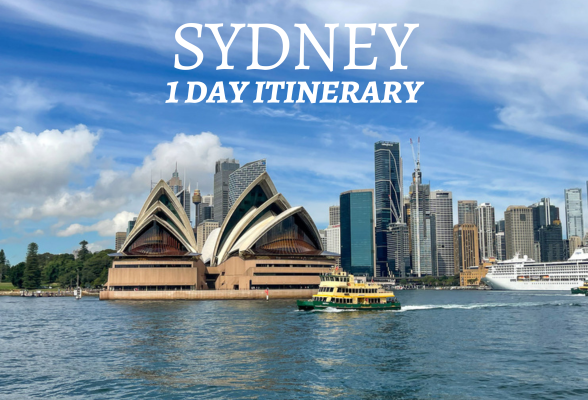
One day in Sydney – an itinerary for first time visitors
More Australia articles
8 stunning coastal walks in Sydney, Australia
3 days in Sydney, Australia – things to do and places to eat
The Bondi to Coogee walk – a scenic coastal trail in Sydney

Pin it


This article is originally published at Heatheronhertravels.com



![बफ़ल क्रीक, क्वींसलैंड में करने योग्य चीज़ें: आश्चर्यचकित न हों! [2026 Update]](https://www.ytravelblog.com/wp-content/uploads/2014/07/IMG_9087.jpg "बफ़ल क्रीक, क्वींसलैंड में करने योग्य चीज़ें: आश्चर्यचकित न हों! [2026 Update]")